
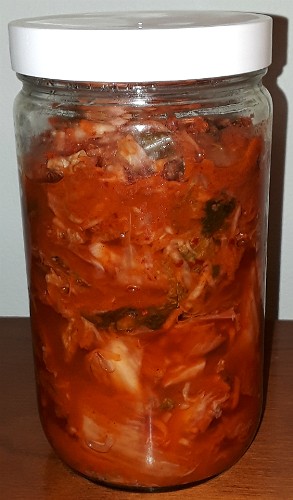
Ingredients
- 3 – 3 ½ lb. Napa Cabbage, torn into bite-size pieces
- 1 lb. Radishes, shredded
- 1 lb. Carrots, shredded
- 8 Spring Onions, chopped
- 1 bulb Garlic, chopped
- 3 tbsp. Himalayan or Redmond Real Salt (about 3% by weight of the produce)
- 1 tbsp. Korean Chili flakes*
- 1 tbsp. Sugar
- ⅓ cup Gochujang Paste
- ⅓ cup Soy Sauce
- ⅓ cup White Vinegar
*Korean chili flakes, or Gochugaru, are bright red and feature less heat than crushed red pepper. Adjust accordingly if substituting. Aleppo pepper would be a comparable substitute.
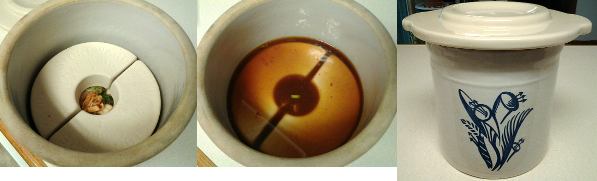
Remove outer layers of Napa cabbage and any signs of wilting. Cut off the end of the core, wash the leaves, and tear into bite-size pieces by hand. Toss with 3 tbsp. Himalayan or Redmond Real Salt in a large bowl. Shred carrots and radishes with a food processor. Chop onions and garlic and add to cabbage along with remaining ingredients and mix. The salt should have extracted some of the water from the cabbage while the other ingredients were being prepared. Add to fermenting vessel and place weight on top of the kimchi. Liquid should cover the kimchi fairly quickly. Cover with lid and leave to ferment, preferably around 60° F, for a minimum of one week. Longer fermentation times will enhance sourness and depth of flavor.Transfer to jars and refrigerate. Makes 3 quarts.
I find the human evolution lesson of fermented foods to be fascinating. Fermenting foods is about creating an environment where the “good” bacteria – the “pro” of probiotics – can thrive and discourages the growth of the “bad” bacteria that causes food to spoil and makes us sick.
Probiotic bacteria is naturally on the surface of our fresh fruits and vegetables, even the non-organic ones in the big box grocery stores. Our bodies do not manufacture the good bacteria that is necessary for proper digestive function and it is important to get them through diet or supplements. They are also what makes fermented foods safe to eat months after they have been created and were vital to our survival as a species because of our need to preserve food.
Salt is central to making the whole thing work. Adding the proper amount of salt – about 3% by weight – to vegetables creates a pH environment that bad bacteria do not like and they find it difficult to thrive. Salt also draws water out of our veggies and placing a weight on top of fermenting foods creates a liquid barrier between any airborne nasty bacteria and the happily fermenting produce beneath the surface. I say happily because probiotic bacteria love the pH environment created by adding salt. As they munch away, they produce lactic acid which further discourages the growth of bad bacteria, adding to the value of food preservation.
Our bodies interacted with our environment in such a way that we need probiotics for digestive function and our taste buds recognize salt as one of our most important flavors. Apart from survival, fermented foods offer a potent and complex taste sensation.
I’ve adapted this recipe for my own taste buds and according to the availability of ingredients. I don’t get too hung up on authenticity because…well…I don’t live in Korea. Some people may not think my kimchi is hot enough, but I quit thinking of hot foods as a dare a long time ago and this is just about right for my Midwestern palette.
It really is remarkable how well this preserves fresh produce. If you only have one or two people in your household, getting through a big bag of mixed greens before it spoils can be iffy sometimes. I once discovered a jar of homemade kimchi in the back of the refrigerator that was six months old and it was still perfectly delicious.

 Schmecken!
One thought on “How to Make Kimchi.”