
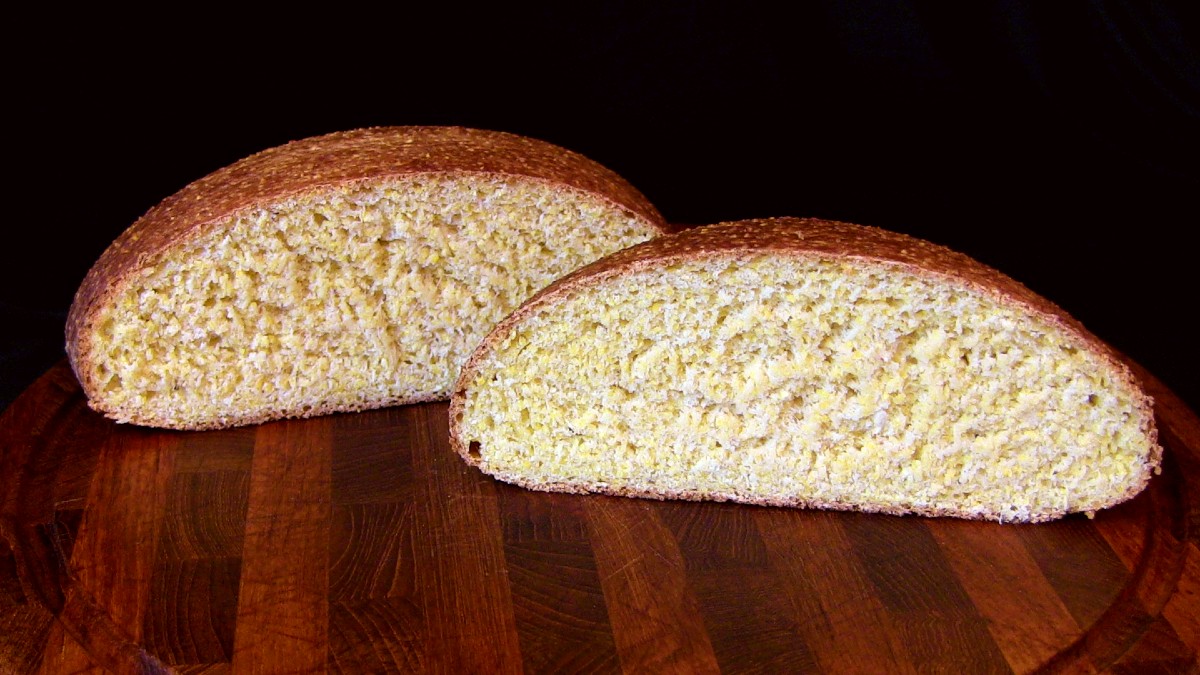
As the weather cools down, soups and chili fit the season and it’s nice to have a really good bread for dunking. Two things about this cornbread got my attention: it only needs one rising time and it uses yeast to rise instead of the baking soda and baking powder typical of American-style cornbread.
I compared about a half-dozen recipes and tested a few batches before settling on this combination as one that works well for me. My one contribution to the genre is that I’ve added an egg. An egg can help a bread rise and make it a little less dense and I thought this bread really benefited from that.
It’s great to have a bread that is ready to go in the oven in half the time of other homemade breads. It’s light and holds together well; it doesn’t dry out after one day and crumble into pieces like the typical skillet cornbread does.
Ingredients:
- 326 grams Bread Flour (2 ⅓ cups)
- 218 grams Fine Corn Meal (1 ½ cups)
- 50 grams (¼ cup) Granulated White Sugar
- 2 tsp. Yeast (1 Packet)
- 2 tsp. Sea Salt
- 25 grams (2 tbsp.) Vegetable Oil
- 1 Egg
- 272 grams warm Water ( scant 1 ¼ cups)
Directions:
Step 1: Combine the dry ingredients and mix well. Add the vegetable oil, egg and water and knead for ten minutes. This is an extremely sticky dough, so if you have a stand mixer with a dough hook you should definitely use it.
Step 2: Generously dust a surface with flour and shape the dough into a round ball and set aside to rise for an hour on a baking tray covered with a silicone mat or parchment paper. The dough will not rise much, but will have a nice oven spring.
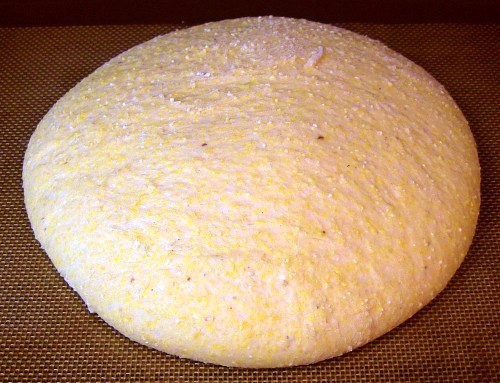
Step 3: Bake for 30 minutes in an oven that has been preheated to 425°F. Rotate the baking tray half-way through to help with even browning. Let cool on a wire rack.
Notes:
There’s a certain school of thought that says bread should only be made of whole grain flour, salt, water and sourdough yeast, and, as much as I like reading Michael Pollan, I think he gets he gets his shorts in a bit of a wad on this subject. There are other ingredients that have perfectly legitimate roles to play.
Sugar is important in bread because it is hygroscopic, meaning it retains moisture. Adding sugar helps prevent bread from drying out so it can help a loaf stay moist. Oils are fats and fats help keep the interiors of breads tender while keeping the exteriors delicate and crisp. Adding an egg helps with giving dough a good rise.
There’s a kind of puritanism that views white flour as an abomination. However, completely 100% whole grain breads tend to be dense, without enough gluten to get a good rise, and they dry out quickly. I find that about 60% white flour to 40% whole grain flour is kind of a sweet spot. It’s enough to get a decently risen loaf with plenty of character from the whole grain.
Whole wheat flour tends to go rancid fairly quickly and inexpensive, high-protein white flour from Canada and the United States literally saved millions of people the world over from malnutrition in the 1800’s. Check out episode two of Victorian Bakers for a real eye opener about how treacherous it was to be a member of the working class in England at that time just trying to eat. It’s right out of Charles Dickens because … it’s right out of Charles Dickens. (All four parts of the Victorian Bakers series are entertaining and educational.)
There’s gotten to be a thing where some people insinuate that the kind of yeast people buy in the grocery store might as well be derived from plutonium and that commercial yeast is compromising people’s immune systems. There are many different strains of saccharomyces cerevisiae and some strains are simply better than others at fermenting the sugars in flour. Science has helped us get better at identifying them. Some strains of yeast are better than others when used to brew beer, but if you try using brewing yeast to make bread you’re likely to be disappointed. If you want to make sourdough, fine, make sourdough. But condemning commercial yeast because it’s not “artisanal” enough is just kind of silly. Then again, I guess you can’t spell “artisanal” without spelling “anal.”

 Schmecken!