
A friend who was traveling had to layover in the Amsterdam airport and brought home a cake called “Ontbijtkoek.” I’m not exactly sure how to pronounce it. This commercial is the best I can do.
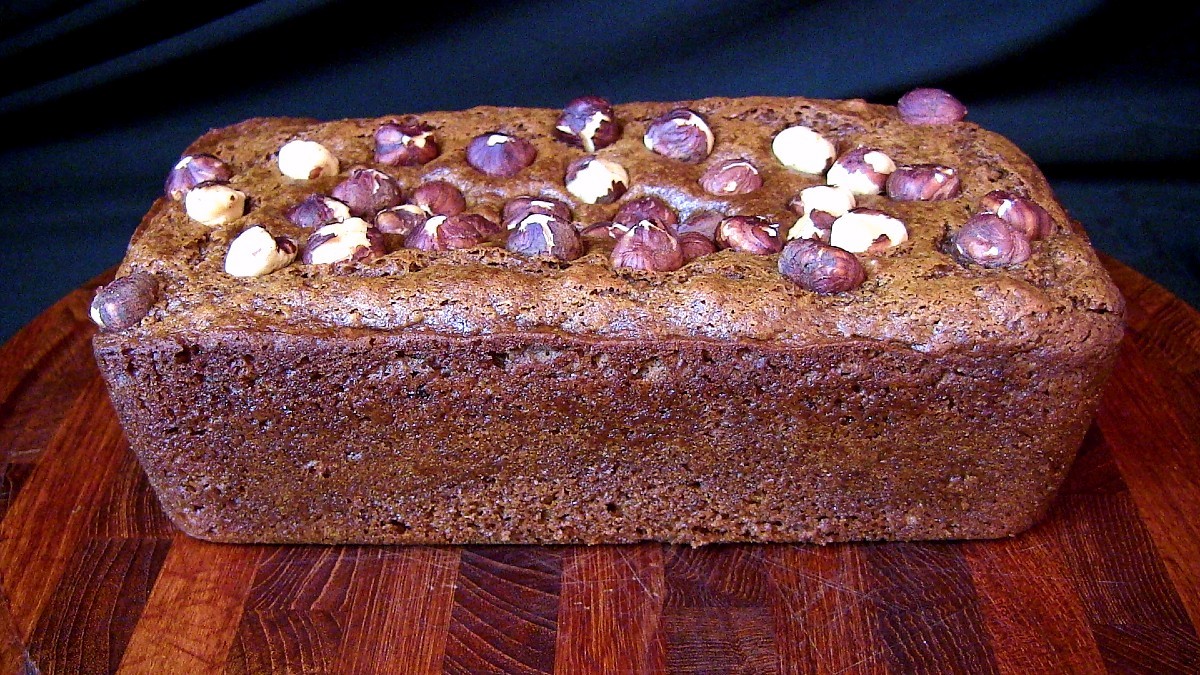
The cake from the airport probably measured four inches high, was covered in hazelnuts and had a distinct flavor of orange peel. The texture was fairly light. We liked it so much I thought I would try to recreate it. As I soon discovered, the commercial versions of ontbijtkoek may be lighter and less dense than the traditional versions, perhaps due to featuring less rye flour than has been typical of that style. It’s possible that a lighter product is more appealing to a mass market.
Most of the traditional recipes for ontbijtkoek I found online that were in English were basically the same recipe but I went with this one from Ena Scheerstra as the basis because it features more spices than the others. It’s kind of a cross between a cake and a quick bread and traditional ontbijtkoek features rye flour as one of the main ingredients. The flavor is reminiscent of gingerbread. None of the traditional recipes I found online had hazelnuts or orange peel. The texture is similar to banana bread.
I did quite like the spice flavor of the traditional recipes, so I tried to make a hybrid of the two versions. To make it more like the cake my friend bought in the airport, I’ve added orange zest and arranged hazelnuts on top. I’ve added an egg to give the bread more rise. I’ve also altered the ratio of white flour to rye flour from 50/50 to 60/40 in order to give it a little lighter texture while still keeping the rye flavor. I think the orange zest may actually be optional since the cake is so flavorful without it, but I do quite like having the crunch from the hazelnuts.
Dry Ingredients:
- 145 grams (1⅓ cups) All-Purpose Flour
- 95 grams (⅔ cup) Rye Flour
- 1 tbsp. Baking Powder
- ½ tsp. Sea Salt
- 1 tsp. Cardamom, ground
- 1 tsp. Cinnamon, ground
- ½ tsp. Ginger, ground
- ½ tsp. Coriander, ground
- ¼ tsp. Cloves, ground
- ¼ tsp. Nutmeg, freshly ground
- ¼ tsp. Black Pepper, freshly ground
- ⅛ tsp. Aniseed, crushed
Wet Ingredients:
- 1 cup Milk
- 100 grams (¾ cup) Brown Sugar
- 170 grams (½ cup) Honey
- 75 grams (¼ cup) Molasses
- 1 Large Egg
- 1 tsp. Vanilla Extract
- Zest of 1 Orange (optional)
Topping:
36 Hazelnuts
Directions:
- Preheat the oven to 300°F.
- Mix all-purpose flour, rye flour, baking powder, salt and spices in a bowl.
- In a small saucepan, heat milk, brown sugar, honey, molasses, egg, vanilla extract and orange zest, if using, until the brown sugar is dissolved and the ingredients are blended.
- Combine the wet and dry ingredients and mix until the ingredients just come together. Overmixing will affect the rise of the bread.
- Spray a 9 x 5 inch loaf pan with non-stick cooking spray and pour the batter into the pan.
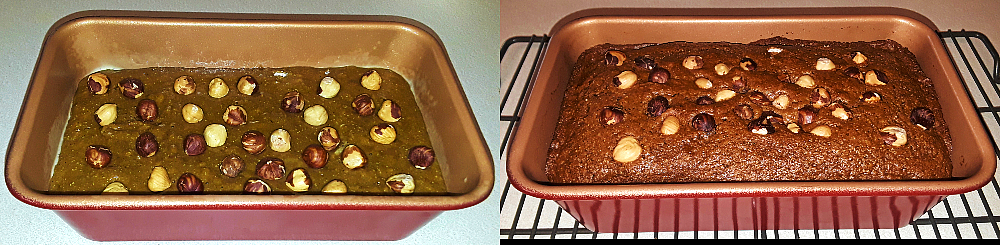
- Arrange 36 hazelnuts across the top of the batter in a randomized pattern.
- Bake on the center rack for 70 minutes.
- Remove from the oven and allow to cool. Many people think it tastes better the next day.
Notes:
The Dutch have a game called “koekhappen” in which slices of ontbijtkoek are hung from tree branches and children try to take bites out of them without using their hands.

Spiced Honey Cakes go back to at least Roman times, but the modern version of gingerbread in Europe can be traced to an Armenian monk who later became a saint named Gregory of Nicopolis. In the year 991, he traveled from modern day Turkey to France to escape persecution from the Persian Army.
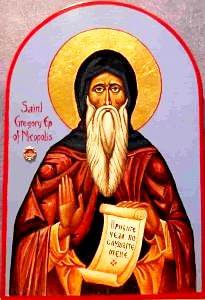
Gregory became a popular holy man and he taught the French his recipe for a cake featuring honey and spices in the tradition of his homeland in Armenia. To this day, the tradition of making gingerbread lives on in the Loire Valley of France where he lived. From there, the recipe spread across Europe and England, with bakers innovating with local ingredients, like rye flour, along the way. This Dutch version owes its long list of spices to the influence of India because of the Dutch East India Company.
In short, the whole European tradition of gingerbread making can be traced to Saint Gregory of Nicopolis. Ontbijtkoek is a regional variation on this ancient tradition and is perfect to serve for breakfast at Christmas time.

 Schmecken!