
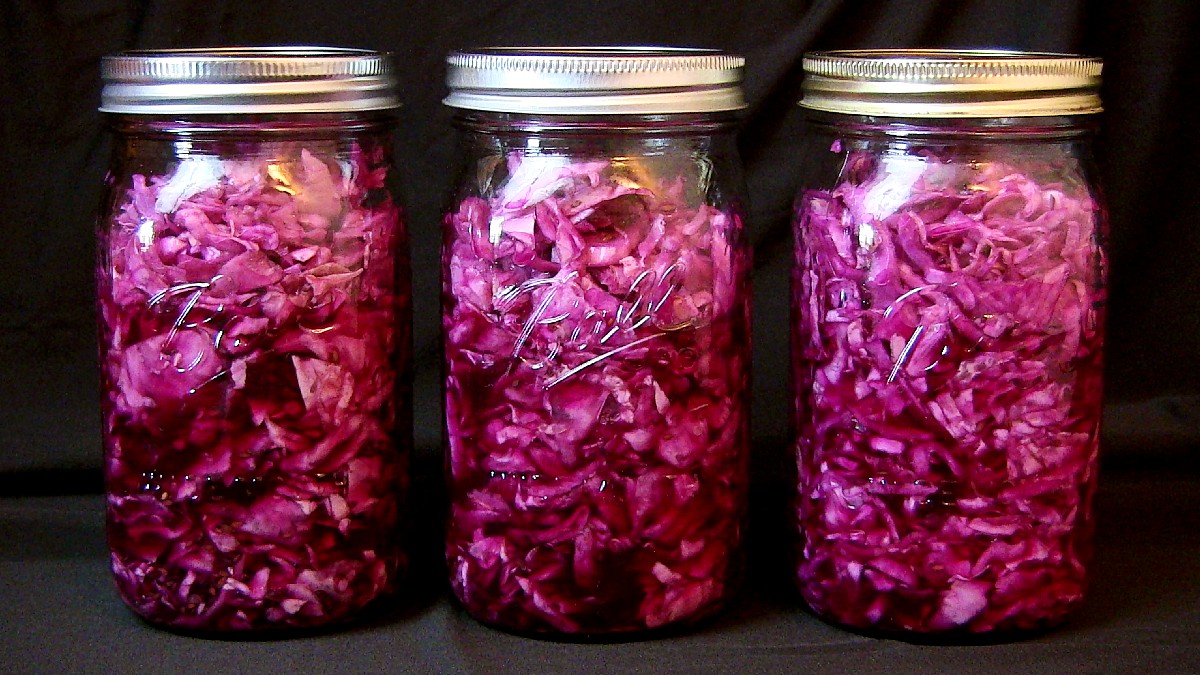
I’m struck how old school food preservation methods like fermentation and home canning are suddenly, urgently, relevant again for their original purposes – to ensure a steady supply of nutritious produce at the household level.
I had one quart of homemade kimchi left when sequestration was imminent and decided to give sauerkraut a try in order to have a supply of probiotic-rich fresh produce. After three weeks of fermentation, the result is a salad that is as fresh and crisp as the day it was first made and loaded with anthocyanins and enzymes.
Ingredients:
- 2-3 lbs. (1 – 1 ½ heads) Red Cabbage, core removed and shredded
- 46 grams (3 tbsp.) Redmond Real Salt or fine grind Himalayan Pink Salt
- 1 tbsp. Caraway Seeds
- 1 tbsp. Dill Seeds
- ½ tbsp. Juniper Berries, lightly crushed (optional)
- 1½ cups Water
- ½ cup White Distilled Vinegar
Directions:
Step 1: Remove outer leaves and core a large red cabbage. Run the cabbage through the shredder blade of a food processor.
Step 2: In a large bowl, mix together the cabbage, salt and spices. The amount of salt used should be about 3% of the weight of the produce for safe fermentation and that works out to about 3 tablespoons of Redmond Real Salt or Himalayan Pink Salt for an average-sized red cabbage.
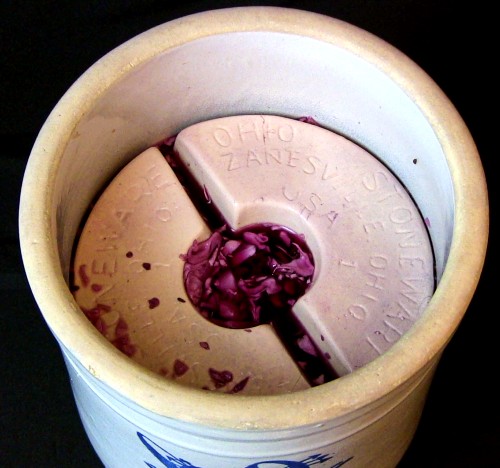
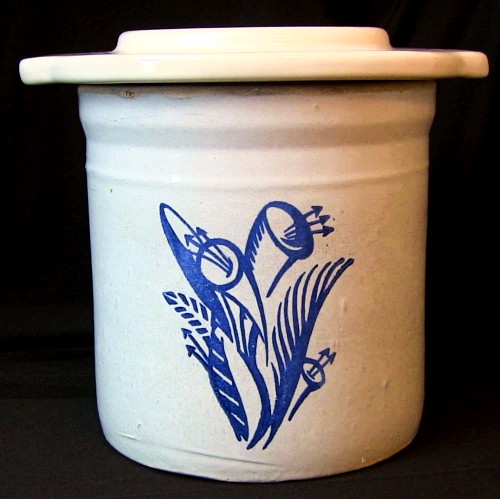
Step 3: Transfer the mixture to a freshly cleaned fermentation vessel and add the water and vinegar. Press down the mixture with weights so that liquid covers the cabbage. Cover the vessel and allow to ferment for at least three week.
A little water may need to be added to cover the mixture.
Step 4: After the desired fermentation time, transfer the sauerkraut to sterilized jars and refrigerate. It will keep for months.
Notes:
The Ohio Stoneware Company makes fermentation kits that can be ordered from Ace Hardware online and delivered to a store in your area for pickup.

 Schmecken!
One thought on “Homemade Sauerkraut”