
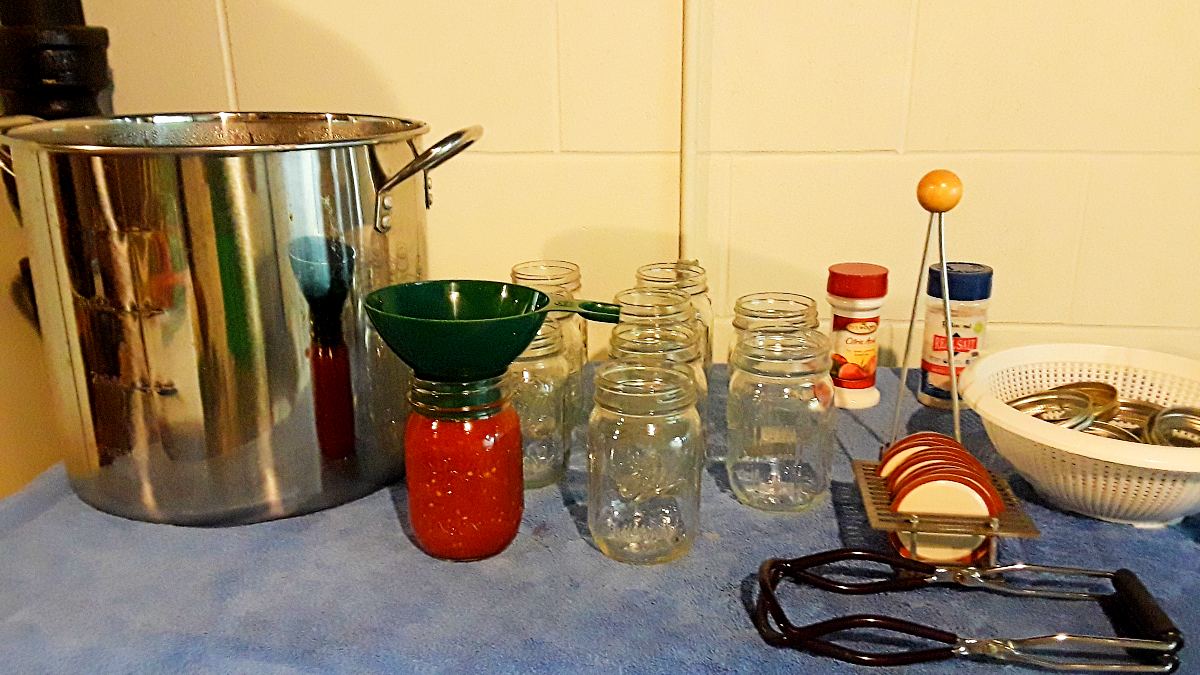
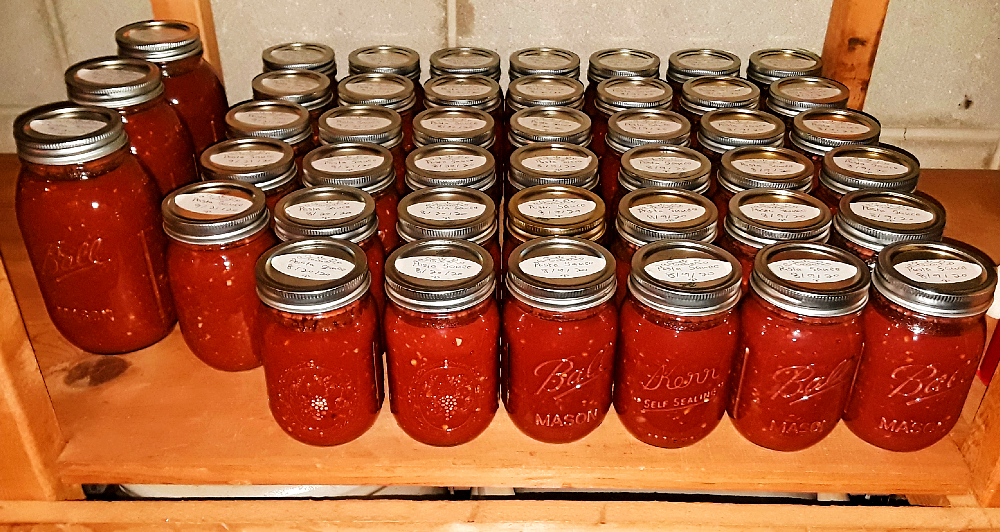
Over the years, I’ve come up with a very good recipe for canning our own pasta sauce with tomatoes grown in our garden. I’ve placed a great deal of emphasis on being able to produce a large batch easily with a minimum of fussiness. This recipe makes a versatile sauce that tastes great and makes the production process as smooth as possible.
There’s no messing around with removing the skins and seeds from tomatoes like many traditional recipes call for. We eat the skins and seeds all the time so why do they need to be removed for sauce?
Traditionally, homemade sauce calls for hours of simmering in order to reduce a batch down to the desired consistency, but that, inevitably, leaves your cooking pot with scorching on the bottom that is a real headache to clean up. I’ve found that thickening up a sauce using canned tomato paste is a lot easier than reducing down by simmering.
I purchase minced garlic to make life easier and a food processor makes short work out of the tomatoes, onions and pepperoncini.
Processing a season’s worth of tomatoes is easier if you do smaller batches more frequently throughout the summer. As clusters of tomatoes ripen, puree and freeze the pulp until you have one or two gallons worth. Canning becomes a more manageable job that can be done in a few hours on a weekend afternoon. It’s more pleasant than doing an all-day marathon.
This is a versatile base sauce that is good on its own, or you can add herbs and spices to give it a new flair when the occasion calls for throughout the year.
Sauce Ingredients:
- 1 Gallon Roma Tomatoes, puréed
- 18 oz. Tomato Paste ***
- 3 cups Red Onions, puréed
- ½ cup Minced Garlic
- 1 cup Pepperoncini, puréed
- 1 cup Roasted Red Peppers, puréed
- 2 tbsp. Kosher Sea Salt or Redmond Real Salt
- 1 tbsp. Brown Sugar
***The tomato paste is variable because the water content of different types of tomato can vary so much. Add tomato paste until you have the desired thickness of sauce.
Canning Ingredients:
Add to jars per pint before filling up with sauce
- ¼ tsp. Citric Acid
- ½ tsp. Kosher Salt or Redmond Real Salt

Directions:
Step 1: Use a food processor to purée tomatoes, onions and pepperoncini. Add the rest of the sauce ingredients and bring up to a simmer. Add more tomato paste as may be necessary in order to achieve the desired consistency.
Step 2: Sterilize jars and canning rings in the water bath canner by bringing them up to a boil.
Step 3: Drain jars and add ¼ tsp. citric acid and ½ tsp. sea salt per pint to each jar. This is very important for food safety purposes.
Fill the jars with sauce up to the neck of the jar leaving one-inch headspace. Run a paper towel around the rim of the jars so they remain clean and can form a seal with the lids.
Dunk brand new canning lids in simmering water for 20-30 seconds and place them securely on the jars and screw on the bands. Return them to the water bath canner with the jars completely covered and bring to a rolling boil. Process at a full boil for 40 minutes.
If using a pressure canner, fill the canner to the manufacturer’s recommended water level and process at 11 lbs. pressure, pints for 20 minutes and quarts for 25 minutes. Allow the canner to depressurize naturally. The time to depressurize is factored into the time needed for food safety.
Remove and allow to cool. Check the seals when cooled. I like to remove the rings and wash the jars and rings and towel dry. It just looks nicer.
It’s a good idea to consult the USDA Complete Guide to Home Canning for all the science of food safety. One of the reasons this recipe can be done with the water bath canning method is because it does not contain meat, mushrooms or low-acid vegetables like peppers and celery. If it did, that would require using a pressure canner to assure food safety.
Notes:
Roma tomatoes are a preferred variety because they have a lot of pulp instead of water and therefore make a thicker sauce. Of course, as home gardeners we raise a variety and they all go in the sauce at some point if we have an excess rather than see them go to waste.
This last year, in 2020, we had our most successful tomato crop ever. Besides Roma and Cherry tomatoes, the Brandywine was a hit, but the real star was one called Fourth of July.
True to its name, we had a tomato ready for eating exactly on the Fourth of July. And it kept on producing steadily and abundantly until almost October. It produces a medium-sized fruit that is nicely balanced between meaty and juicy.
Roma tomatoes produce a gargantuan amount of fruit that all seem to ripen at the same time. We will definitely be featuring the Fourth of July more from now on.

 Schmecken!
2 thoughts on “Canning Pasta Sauce”