

Bierocks are a kind of portable sandwich with a pocket of filling inside a yeasted dough bun. The filling is usually made with pork and onions. The origin is thought to be Eastern European and they are regional hits in the United States. In Nebraska, a pork-filled gut bomb called a Runza is quite popular.
I wanted to make a lighter version so I came up with a very flavorful combo made out of ingredients that are usually found in the average kitchen. Bierocks freeze extremely well and are great to make ahead for lunches or for a potluck.
To serve, simply thaw and microwave for 35 seconds. The champagne mustard is a perfect accompaniment.
Bun Ingredients:
- 540 grams (4 ½ cups) Bread Flour
- 50 grams (¼ cup) Sugar
- 28 grams (4 tbsp.) Dry Milk Powder
- 2 tsp. Active Dry Yeast
- 2 tsp. Salt
- 50 grams (¼ cup) Vegetable Oil
- 1 Large Egg
- 270 grams (1 ¼ cups) Warm Water
- 1 tbsp. Melted Butter for brushing
Filling Ingredients:
- 2 Large Carrots (150 grams) peeled and diced
- 2 Medium Stalks Celery (100 grams) diced
- 1 tsp. Salt
- ½ tsp. Black Pepper
- 1 tsp. Herbs de Provence
- 2 tbsp. Butter
Directions:
Step 1: Combine the dry ingredients for the buns. Add egg, oil and warm water, mix and knead for about 8-10 minutes. Set aside in an oiled bowl, cover and let rise until doubled in size – about an hour.
Step 2: Peel carrots and dice. Dice celery. Steam until cooked through – about five minutes. Add butter, salt, pepper and Herbs de Provence and stir until the butter is melted. Set aside to cool.
Step 3: After the dough has doubled in size, knead it for a second time. Weigh out three ounce portions and work with the hands to form a cohesive ball. Flatten out enough to be able to place a dollop of filling in the middle. It’s probably 1 ½ to 2 tablespoons worth.
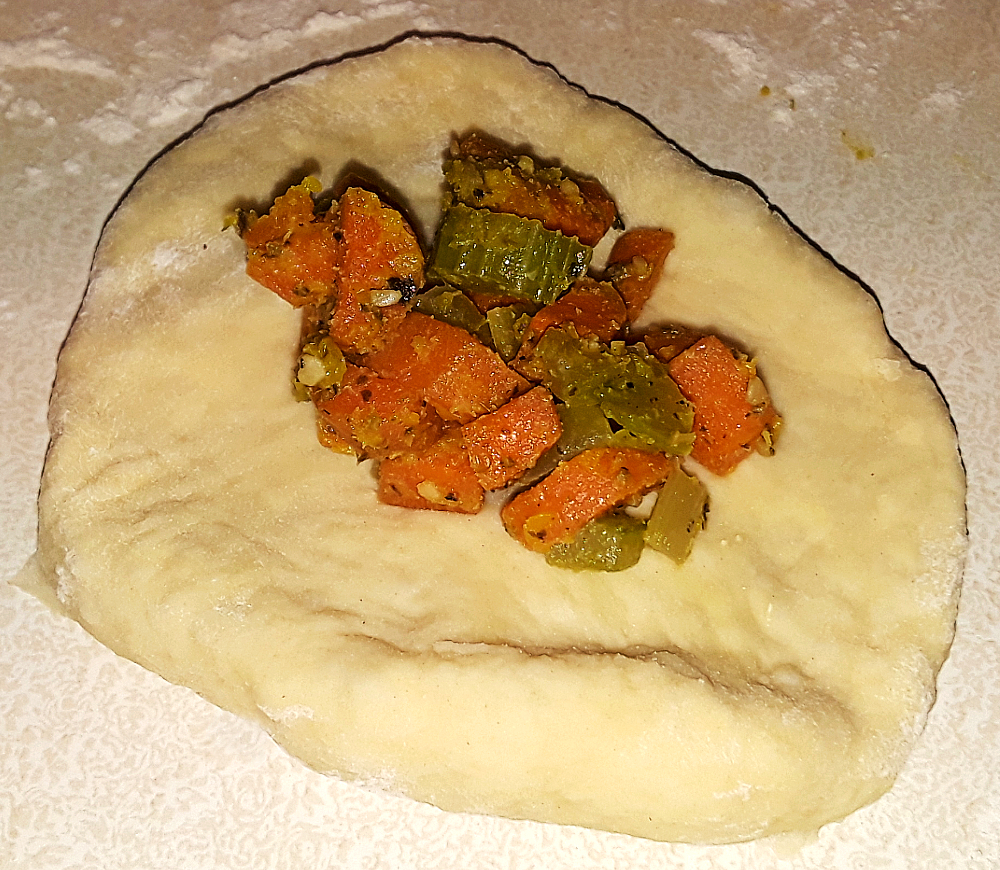
Bring together the edges of the dough around the filling and pinch to seal. Cup the bun in the palms of the hands and shape into a smooth ball. Place on a sheet tray covered with parchment paper or silicone mat. After all the buns are formed, allow to rise for about an hour.
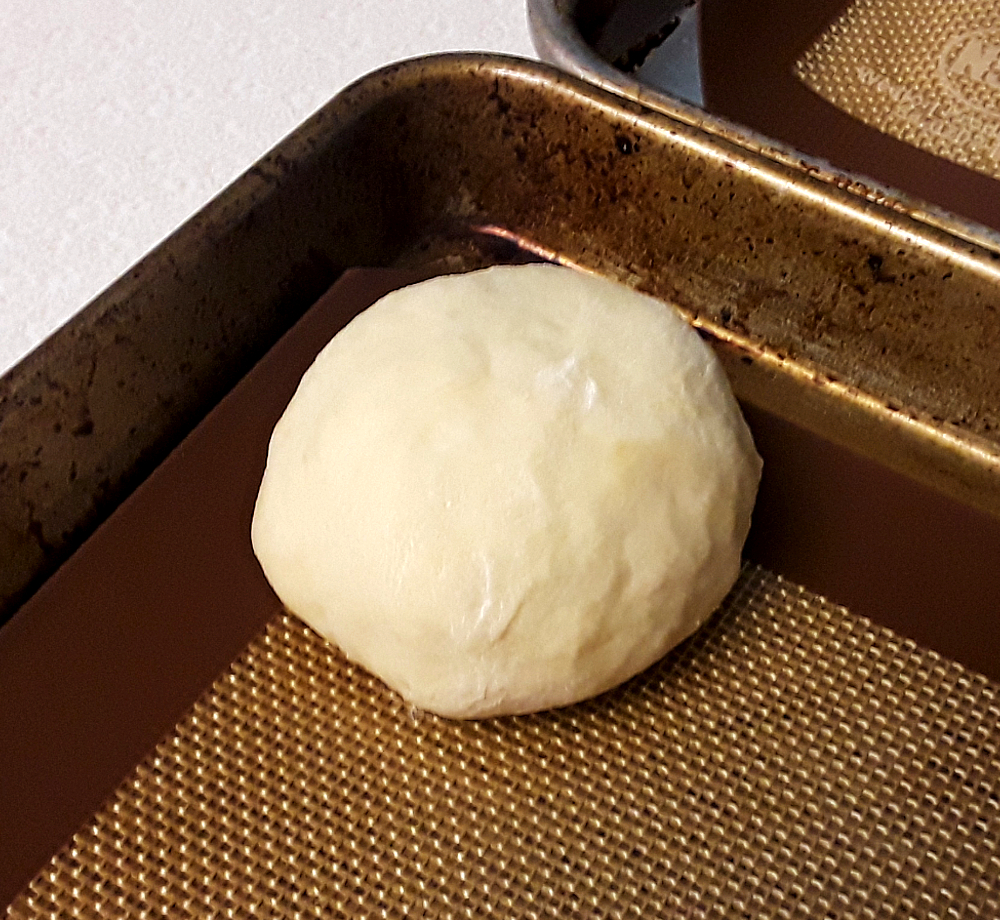
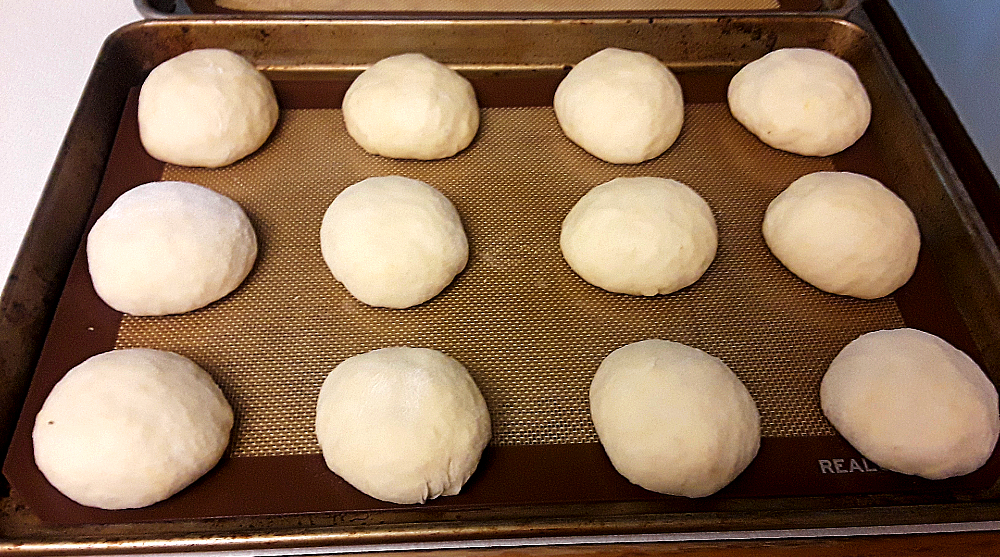
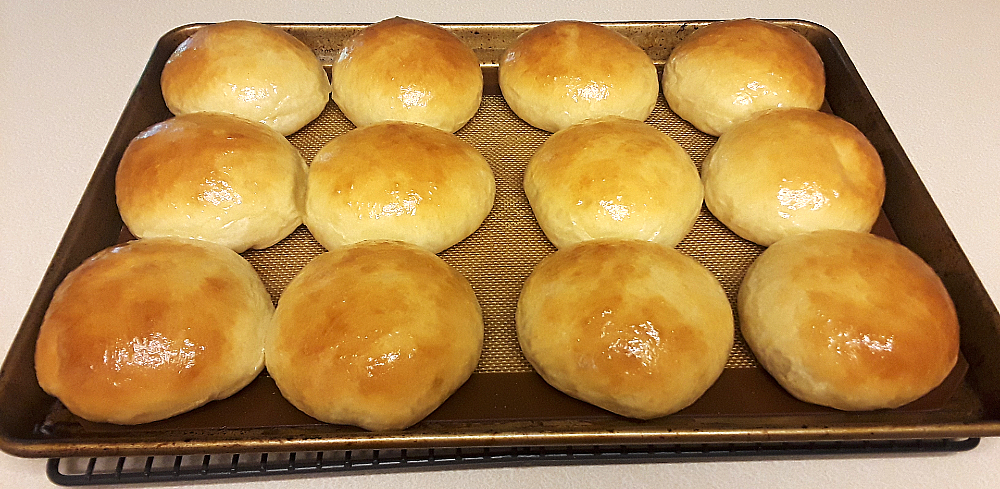
Step 4: Preheat the oven to 375°F. Bake for 18-20 minutes. Brush with one tablespoon of melted butter when finished baking.
Champagne Mustard
- ⅔ cup Coleman Dry Mustard Powder (2 oz. tin)
- 1 cup Sugar
- 3 Large Eggs
- ⅔ cup Champagne Vinegar
Mix mustard powder and sugar. Add eggs one at a time, beating well. Gradually add vinegar while continuing to mix well.
Microwave for two minutes, stir and microwave for another two minutes. Refrigerate. Good for up to six months.
Notes:
In her book History of Food, Maguelonne Toussaint-Samat tells a story about the origins of the French expression “he thinks himself the Pope’s mustard maker” which is applied to persons who are vain and self-important.
Pope Clement VII, a member of the Medici family, was passionately fond of mustard, and ate it at every meal. Naturally the Roman court made no haste to imitate the Pontiff, and mustard appeared at every banquet. People went to great pains to prepare mustard, add refinements of their own, and present the results to the Pope in person. The Pope would taste it, meditate gravely, and if he liked it would never refuse a favour asked by the happy man who had tickled his palate and stimulated his appetite. Thereafter the jealous would call one of these successful intriguers “the Pope’s mustard maker”, particularly if the person concerned seemed very vain of his new honours.
Another story goes that Pope John XXII had a nephew who was no good at anything, not even bright enough to qualify for a cardinal’s hat – which in those days meant you were very dim indeed. Casting around for some suitable office for the young man, therefore, the Pope anointed him mustard-maker. However, this anecdote seems rather contrived.

 Schmecken!