

I once shadowed former Nepali refugees while they cooked and recorded recipes for a book. It’s a shame, but evidently that project will not see the light of day.
I was faithful to every detail as the cooks prepared the dishes. Over time, however, as I made the dishes for myself at home, I wound up condensing a lot of steps and using time-saving convenience items like pre-ground spices when I was in a hurry.
The pandemic really forced changes when fresh ingredients weren’t always easily at hand. I’ve deviated from the original recipe for this dish by substituting dried chili flakes for fresh Thai chilis. I use ground cumin instead of grinding cumin seeds with a mortar and pestle like the Nepali cooks do. They also use the mortar and pestle to grind fresh ginger into a mash. I happily use ginger puree out of a tube.
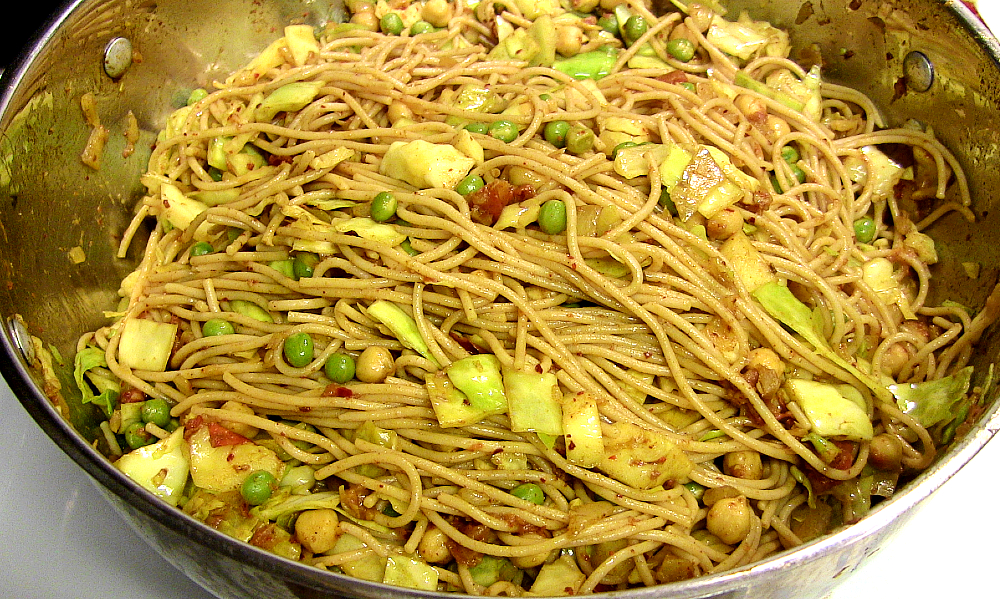
This is a vegan dish that will please anyone and I do think the flavor stays true to the original.
The combination of whole wheat pasta and beans and peas provides all the essential amino acids for a complete protein. The Nepali cooks keep a bowl of dried peas and garbanzo beans soaking in water at all times since they are such a useful staple. The flavor of reconstituted dried peas is a revelation and they provide a delightful fresh pea flavor with a little bit of crunch. Canned peas are no substitute.
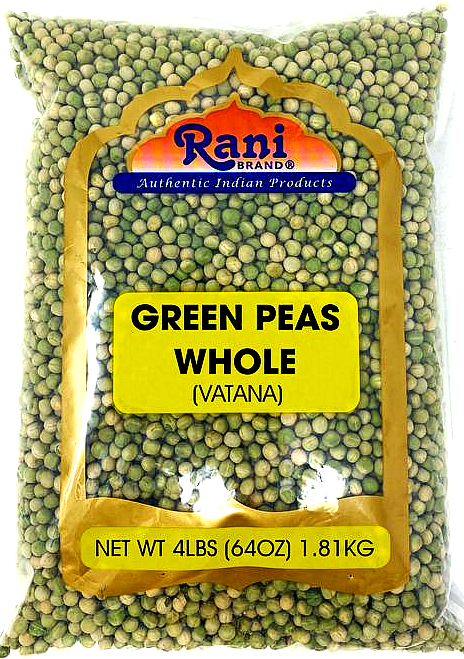
Dried whole peas called Vatana can be found at Indian grocery stores, but if that is not an option, feel free to substitute a 16 oz. can of garbanzo beans instead.
Ingredients:
- ¼ cup dried Whole Garbanzo Beans
- ¼ cup dried Whole Peas
- 170 grams (6 oz.) Whole Wheat Spaghetti, broken in half
- 4 cups Green Cabbage, chopped
- 1 – 1 ½ cups Onion, chopped
- 2 Roma Tomatoes, diced
- 1 tsp. Ground Cinnamon
- 1 tsp. Ground Cumin
- 1 tsp. Ground Turmeric
- ½ tbsp. Sea Salt
- 1 tsp. MSG (optional, but highly recommended. Read more about MSG here.)
- 1 tsp. Crushed Red Chili Flakes (Aleppo Pepper works great.)
- 2 tbsp. Fresh Ginger purée
- 1 – 2 tbsp. Lime Juice
Directions:
Step 1: Soak the peas and beans overnight in a bowl of water with ¼ tsp. baking soda. The baking soda will help tenderize.
Step 2: Bring a large pot of water to boil, break the pasta in half and cook until tender. Drain and rinse with cold water to stop cooking. Coat with about 2 tbsp. vegetable oil. Don’t forget to break the pasta in half. It’s much easier to eat that way.
Step 3: Heat 3-4 tbsp. vegetable oil in a wok or large skillet. Reduce temperature to medium and add onion, sautéing until tender. Add diced tomatoes and spices and continue to sauté for 2 to 3 minutes. Add the cabbage, peas and beans and mix well. Add ¼ cup water, cover and cook until the cabbage is cooked through – about 15 minutes.
Mix in the whole wheat pasta and 1 or 2 tbsp. lime juice and serve.
Notes:
Many of the dishes of the cooks from Nepal and Burundi that I shadowed are vegetarian and make use of the complementary proteins found in whole grains and legumes. Most plant foods lack some of the essential amino acids needed to form a complete protein. However, the amino acids found in grains complement those missing in beans and when combined can provide the protein needed for a balanced diet. Around the world, combinations of beans and rice, corn and beans, lentils and millet, and peas and wheat make use of protein combining.
Traditional farming practices made use of inter-planting grains and legumes and modern agronomy is confirming that crops utilizing this technique grow faster and need less weeding than single-crop fields. In “Diet for a Small Planet,” Francis Moore Lappe points out that an acre of grains can produce five times more protein than an acre devoted to raising cattle or other meat. An acre devoted to the production of leafy greens can produce 15 times more protein than an acre of meat production.
Information credited to The Africa News Cookbook.

 Schmecken!