

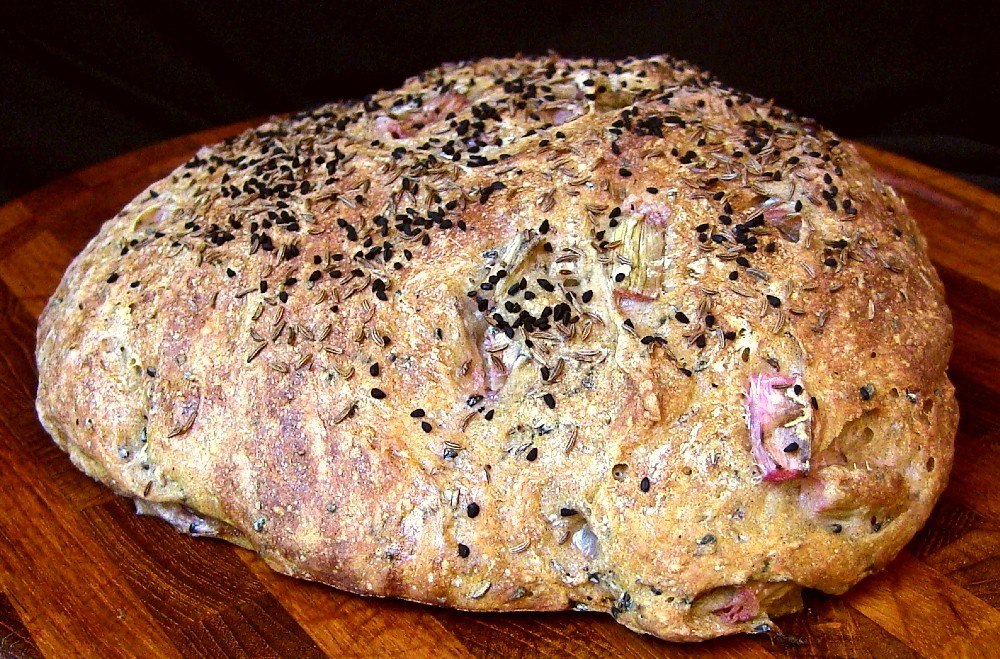
This is an extraordinary bread that welcomes summer by showcasing rhubarb paired perfectly with rye and caraway. The large chunks of rhubarb really pop and lend moisture to the final bake. This makes great toast that doesn’t need a thing on it.
No-knead breads use a tiny amount of yeast and longer fermentation times to mimic some of the qualities of artisanal sourdough breads. I’ve found 24-36 hours of fermentation time to be the sweet spot for my tastes.
Ingredients:
- 385 grams (2 ⅔ cups) All-Purpose or Bread Flour
- 68 grams (⅓ cup) Rye Flour
- 2 tsp. Sea Salt
- ¼ tsp. Active Dry Yeast
- 4 tsp. Caraway Seeds, plus extra for sprinkling
- 2 tsp. Charnushka Seeds, plus extra for sprinkling (see Notes)
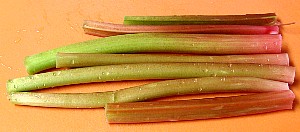
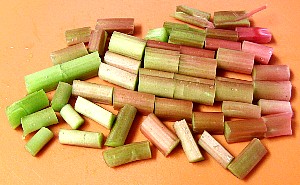
- 140 grams (1 cup) Rhubarb, sliced into ½” – 1″ chunks
- 340 grams (1 ½ cups) Water
Directions:
Step 1: Combine dry ingredients. Add rhubarb. Add water and mix by hand just until the mix holds together without working the dough. You do not want to develop the gluten. You may need to mist with a little water to get all the flour to adhere to the dough.
Step 2: Set aside in a food-grade container, cover with plastic wrap or a lid and ferment at room temperature for 24-36 hours.
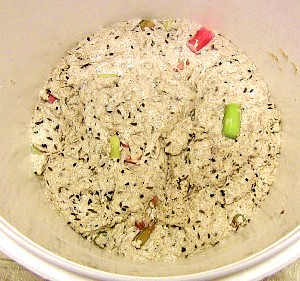
Step 3: After a 24-36 hour fermentation time, dust a surface with flour and shape the dough into a ball. Transfer to a baking sheet covered with parchment paper or a silicone mat. Sprinkle the dough with caraway and charnushka seeds. Let the dough raise for about an hour.
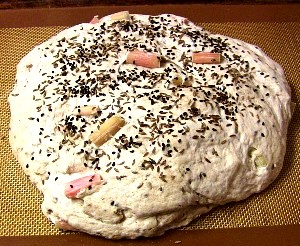
Step 4: Preheat the oven to 450°F. Bake for 40 minutes. Use a spray bottle to give 15 spritzes of water in the oven every 5-10 minutes. This helps develop a chewy crust. Turn the bread around half-way through the bake in order to ensure even baking. Let cool on a wire rack.
Notes:
I first came across charnushka seeds on a loaf of Russian black bread and I have to confess I’ve only used them for making rye breads. I should be more adventurous. Used in cooking from India and Africa on through Northern Europe, these tiny black seeds pack a punch. They contain quinine and I don’t think it’s too big a stretch to compare their taste to tonic water; they have a bitey little puckering quality. They’re flavor is like getting a concentrated spark of oregano.
They go by a variety of names. You might find them called Kalonji seeds at an Indian grocery store or Black Seeds at an African store. Or Black Cumin. Or Black Caraway. Or Nigella, which is probably the most accurate because their Latin name is Nigella Sativa.
In the Hebrew Bible they’re called Ketzah. The Prophet Muhammad praised the seeds for their curative properties and claimed they were healing for all diseases except death. Black Nigella seeds in honey were found in King Tut’s tomb. Cleopatra and Queen Nefertiti used the oil of the seeds as a beauty aid. In Auyurvedic medicine, the seeds are appreciated for their bitter, warming stimulant properties.

 Schmecken!
Love how the bread came out from the oven!😍 That’s gonna be a great addition to a dining table or just a quick bite when leaving home running😜
Charnushka Seeds…wow I didn’t know that but looks so tempting! Since I never seen them in my local groceries, they’re rare find…hopefully the luck come to me😊
LikeLiked by 1 person
Thank you for the wonderful comment! I’ve gotten charnushka seeds through Penzys before. I’ve seen them called nigella seed frequently too.
LikeLiked by 1 person
Thank you for the info! I just visited Penzys, and realized there are so many of them I don’t know what flavor is like😂 When shopping through online, smell test is impossible and today’s situation all spices are packed airtight. Lucky you, enjoy your charnushka seeds until I get my own👍💕
LikeLiked by 1 person