
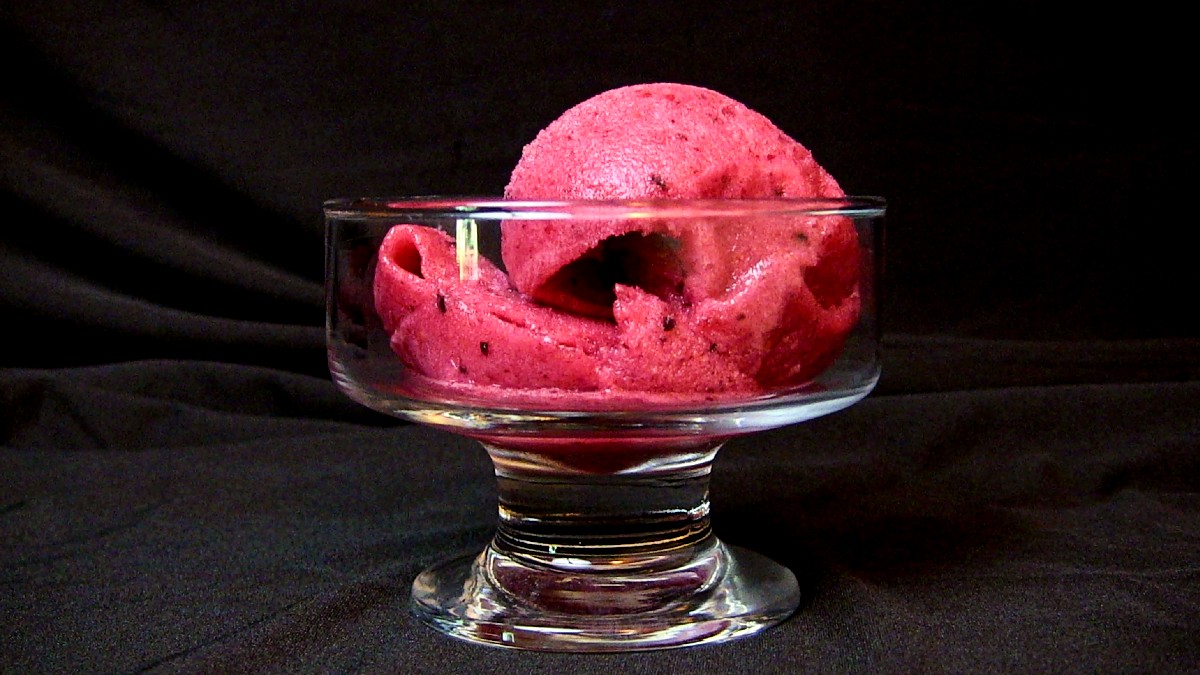
Sorbet is a light and refreshing way to enjoy the fruits of summer. Rhubarb is an ideal base not only because the high fiber content gives sorbet structure, but also because the tartness complements and supports the flavor of other fruits.

We have seven Victoria Rhubarb plants and one Canada Red. In season, it can feel like we live on a small rhubarb farm. We’ve had to be creative to find ways of using so much. My partner, Debra, makes a wonderful curry with rhubarb and I make a yeasted No-knead Rhubarb Rye Bread. Excess amounts can be made into Rhubarb Shrub or Rhubarb Juice and canned.
It took about nine tries to get this sorbet right. At first, I tried adding small amounts of spices like cinnamon and cayenne to jazz things up, but I thought those flavors just got in the way. I tried using corn syrup because it was supposed to make the sorbet smoother. I thought it was just weird. The final version was the simplest and best.
Ingredients:
- 1 lb. Rhubarb, cut into one-inch chunks
- 4 cups Water
- 2 cups Sugar
- 1 to 2 cups other Fruit (mango, peach, pear or frozen berry blend work well)
- 1 tbsp. Lemon Juice
Directions:
Combine rhubarb, water, and sugar, and bring to a boil. Simmer for 10 minutes on medium heat, stirring occasionally. Refrigerate and cool the mixture thoroughly. Add lemon juice and other fruit and puree in a blender. Churn in an ice cream maker for 20 minutes and freeze. Makes 2 quarts.
Notes:
Victoria Rhubarb is the most common variety and was first introduced in 1837 by the English nurseryman, Joseph Myatt, who named it in honor of Queen Victoria.
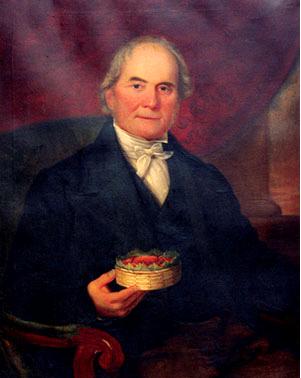
Joseph Myatt was a pioneer of rhubarb and strawberry growing in England. He was from humble origins but developed a thriving produce business in London.
A direct descendent of his maintains an extensive website on his life and I am reprinting sections describing the creation of Victoria Rhubarb in their entirety.
From https://josephmyatt.weebly.com/
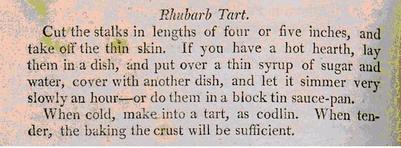
In the early nineteenth century rhubarb was not known as a food, but an expensive medicine called ‘physic’ sold by apothecaries. It was grown in Russia and Turkey where the roots were dried and powdered for use as a laxative. Around 1800 some English people had started to grow edible rhubarb; cultivating exotic plants was a common hobby among wealthy gentlemen. One of the first known references to rhubarb as a food is a tart recipe from Maria Elizabeth Rundell’s 1807 cookbook, reprinted in Alan Davidson’s Oxford Companion to Food.
In 1815 gardeners at the Chelsea Physic Garden discovered by accident that if the rhubarb plant was covered and kept in darkness it produced sweeter, more tender shoots, so-called ‘forced rhubarb’. Another factor that started the change from medicinal plant to food was the arrival in England of cheaper and more accessible sugar imported from British colonies in the West Indies. Mary Eaton’s 1823 cookbook contained recipes for rhubarb tart, sherbet, soup, pie, pudding and sauce. The popularity of rhubarb was growing.
Joseph Myatt obtained a dozen rhubarb roots from his friend Isaac Oldacre. Mr Oldacre was an English gardener from Derbyshire who had risen to the position of gardener for the Emperor of Russia in St Petersburg. He had returned to England in 1814 bringing innovative gardening ideas and a supply of plants and seeds, including roots of Russian rhubarb. Mr Oldacre was now employed at the estate of the eminent botanist Sir Joseph Banks where he developed new methods for raising mushrooms in sheds and growing pineapples in hothouses. Isaac Oldacre and Joseph Myatt were the same age; perhaps they had worked together as gardeners at Prestwold Hall or elsewhere in years past.
Joseph Myatt’s first rhubarb crop at Camberwell was described as “of a kind imported from Russia, finer and much earlier growing than the puny variety cultivated by the Brentwood growers for Covent Garden”. Experimenting with forced rhubarb, Joseph developed large plants with enhanced flavour and texture and different colours. Famously, in 1824 Joseph sent his sons, James and William, to the Borough Markets with five bunches of rhubarb, of which they sold only three. The next week they took ten bunches, all of which were sold. Some have said that they took a recipe for rhubarb tart with them to promote sales. It was reported at the time that Joseph was ridiculed by green-grocers and his fellow market gardeners as “the man who sold physic pies”. It must have seemed ludicrous then to willingly eat a laxative pie. One green-grocer reportedly told Joseph’s sons that their previously esteemed father had taken leave of his senses. Joseph persisted with optimism. His positive attitude and intuition paid off; before long, rhubarb had become a favourite dessert on Victorian tables. Rhubarb production at Myatt’s Ground increased year by year.
Rhubarb production was still underway on a large scale at Manor Farm; by the 1850s it had become a familiar fruit in British cuisine. At the height of the season a thousand bunches a day were coming off Manor Farm. Joseph Myatt experimented with different hybrids of rhubarb producing cultivars of differing colour and flavour. One stalk of Myatt’s famous ‘Victoria’ rhubarb was said to have weighed up to seven pounds. ‘Linnaeus’ was another successful variety, first released in 1842. Joseph also managed to produce his ‘Early Eracta’ rhubarb in late winter, a great sales and marketing coup. In those days fruit was very welcome in the cold months when few fresh foods were available. In addition to selling rhubarb for food, the Myatts sold rhubarb plants to commercial and home gardeners.
The Quarterly Review (vol 89) of 1851 described the increased popularity of rhubarb: “Mr. Joseph Myatt of Deptford, a most benevolent man now upwards of seventy years of age, was the first to cultivate rhubarb on a large scale. The foot-stalks of the physic-plant are now regarded as a necessary rather than a luxury in culinary management. The most frugal table can display its rhubarb pudding or tart, in season.”
This account of the development of rhubarb was written in 1875: “Of late years this has become a much sought-for and important vegetable, but half a century ago it was scarcely known in the London market. The late Mr. Myatt, of Deptford, is looked upon as being the father of Rhubarb growers. The Deptford and neighbouring market gardeners at first thought that Myatt was mad upon the subject; but they soon found out that this was a paying job, and consequently took to growing it, as did the majority of the London market gardeners. Now it is almost universally grown.”

 Schmecken!
I’m a big fan of rhubarb, so would love the sorbet.
Thanks for the thorough background information about this tasty vegetable. 🙂
LikeLiked by 1 person
Thank you! The history stuff is a bit longwinded but I’m a nerd for that stuff.
LikeLiked by 1 person
It’s much appreciated! 🙂
LikeLiked by 1 person
Wow what a coincidence! Tomorrow is National Creative Ice Cream Day and rhubarb sorbet absolutely sounds creative flavor👀👍💕✨ Sounds like there was a long way reaching to this yummy in your kitchen but congrats! The beautiful red sorbet looks lovely❤️
I’ll talk about sorbet too on tomorrow’s post. Wish we could exchange our sorbet to have a little party🤗🎉
LikeLiked by 1 person
Creative Ice Cream Day sounds like something people should support because it makes them good citizens. And it’s yummy. It will be fun to see what you have planned.
LikeLiked by 1 person
I agree😊🍦🍨🍧 Let’s have some fun tomorrow🙌💕✨
LikeLiked by 1 person