
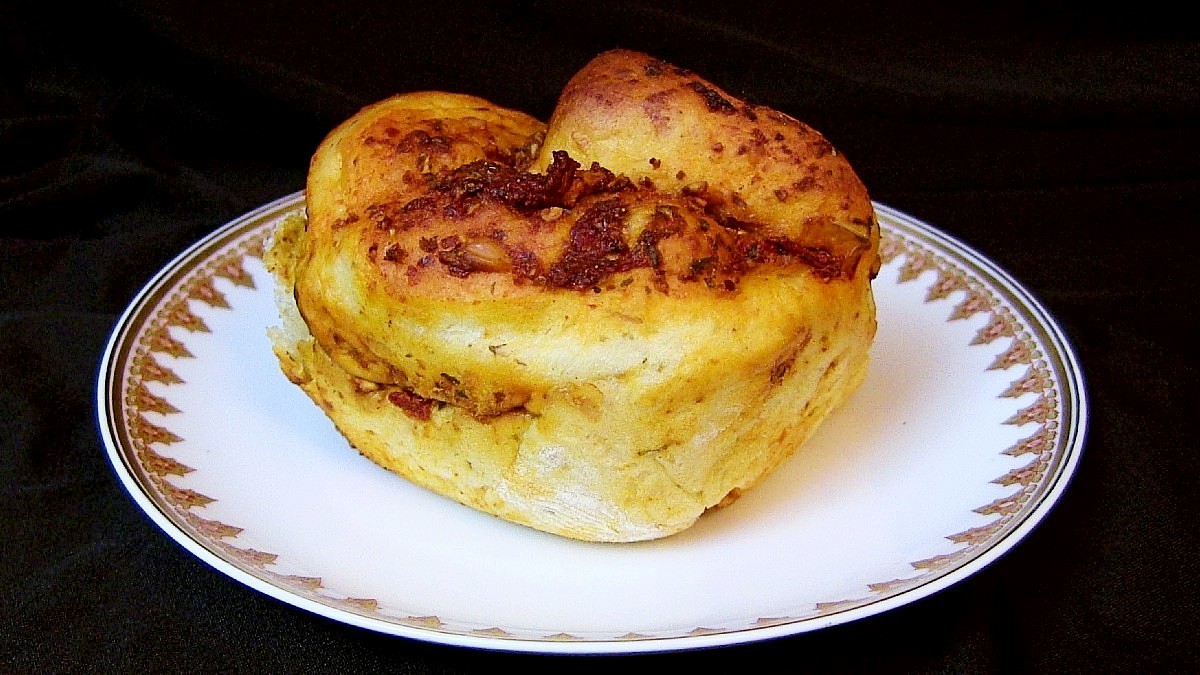
Pita con Sarde look like cinnamon rolls but the filling is a savory blend of peppers, garlic and anchovy. The Italian immigrants who settled on the south side of Des Moines, Iowa in the early 1900s made these as their own regional variation on a Calabrian dish called Pizza con la Sardella.
Des Moines chef George Formaro remembers his father making the spicy paste used in Pita con Sarde by rehydrating and fermenting dried chilis in a large crock and mixing them with assorted spices and salted anchovy. Tumea & Sons Restaurant are known to feature Pita con Sarde and supply them to Graziano Brothers market.
A Des Moines-based blogger named Monica Riccio grew up on Des Moines’ south side among the Italian community there and did a brilliant job of reverse-engineering a recipe based on the memories of her and her husband. I altered her recipe because I wanted to make a larger batch that would fill a 9″x13″ baking dish and freely admit to using convenience items like tomato and anchovy paste from a tube. I also wanted to feature the roasted Ausilio Thin Skin Italian Peppers I grow in my garden while they’re in season and skip the rehydrating and fermenting process of the traditional method.
Ausilio Thin Skin Italian Peppers are another great Des Moines story. I first heard about the peppers in 2017 when CBS Sunday Morning talked about them in a feature story on The Doomsday Vault and how important seed saving is for genetic diversity and preservation of heritage plants. The seeds for this variety were brought from Italy to America in the early 1900s. Giovanni and Rachel Ausilio saved seeds from the peppers they grew and passed them down to their daughter, Theresa Ausilio Riccelli, who then passed that tradition down to husband and wife couple Chad and Michele Ogle-Riccelli. Chad and Michele’s children are the fifth generation to carry that tradition forward. In 2015, Chad and Michele compiled a massive amount of documentation about their family peppers and contacted the Seed Savers Exchange based in Decorah, Iowa.
Toby Cain was an employee of the Seed Savers Exchange at the time and writes an account of how the Ausilio Thin Skin Italian Pepper came to be preserved and available to anyone who would like to grow them in an article that appears on the Grinnell University website. Toby writes that when the documents arrived in October, 2015 it was the most thorough documentation they had seen in their collection up to that point.
A delegation from the Seed Savers Exchange visited the home of Chad and Michele Ogle-Riccelli in Des Moines later that month for dinner and Theresa Ausilio Riccelli handed over a jar of seeds that the Seed Savers Exchange have been propagating ever since. Included in the meal that night were Pita con Sarde.
I’ve been purchasing seedlings of the peppers at Chef George Formaro’s Gateway Market and growing them in our garden since 2018. They’re an important part of the homemade pasta sauce we preserve through canning and enjoy all year long.
This year, in 2023, I decided to grow them from seed and have included an account of that after the recipe.
Ingredients:
Dough:
- 600 grams (5 cups) Bread or All-Purpose Flour
- 60 grams (¾ – 1 cup) Grated Parmesan Cheese
- 28 grams (4 tbsp.) Dry Milk Powder (optional)
- 2 tsp. Italian Herb Seasoning
- 2 tsp. (1 packet) Instant Dry Yeast
- 2 tsp. Sea Salt
- 2 tbsp. Olive Oil
- 1 Large Egg
- 330 grams (1½ cups) Warm Water
Filling:
Roasted Bell Peppers are easily available in jars at grocery stores and can be used in this recipe as a substitute for homegrown peppers. Ausilio Peppers are medium heat, so adjust to taste with crushed red pepper flakes.
- 150 grams (1 cup) Roasted Red Peppers, finely diced or puréed (See How to Roast Peppers after the recipe)
- 2 tbsp. Minced Garlic
- 2 tbsp. Olive Oil
- 1 tbsp. Anchovy Paste
- 1 tbsp. Tomato Paste
- 1 tbsp. Smoked Paprika
- 2 tsp. Italian Herb Seasoning
- 2 tsp. Crushed Red Pepper Flakes (This amount could vary depending on the heat of your roasted peppers)
Directions:
Step 1: Combine flour, cheese, milk powder, Italian herb seasoning, yeast and salt for the dough. Add egg, olive oil and water and mix well. Knead for 10 minutes and set aside in an oiled bowl. Cover and let rise until doubled in size, usually about an hour.
Step 2: Mix the ingredients for the filling together to form a paste.
Step 3: Knead the risen dough to form a smooth ball. Let the dough relax for about five minutes. Dust a countertop with plenty of flour. Use a rolling pin to roll out the dough until it is approximately ¼ inch thick, dusting liberally with flour to prevent sticking.
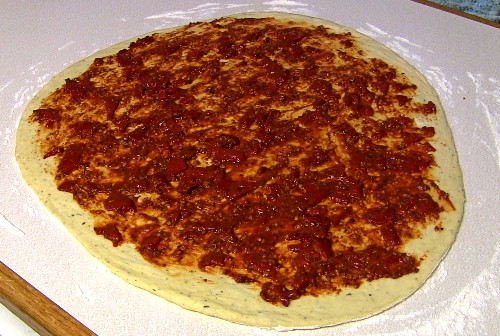
Step 4: Spread the filling around the outer edge of the dough with a spatula. Continue spreading the rest of the filling from the outside in to the middle.
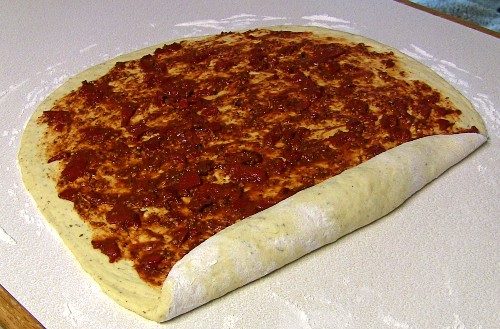
Step 5: Roll up lengthwise from one end to the other to form a cylinder. Slice into approximately two inch rounds and arrange in an oiled 9″ x 13″ pan. Place the thinner outer slices in the middle of the pan and fill up the rest of the pan with the fatter rolls from the inner part of the cylinder. The rolls will bake better that way. Let rise for about 30 minutes.
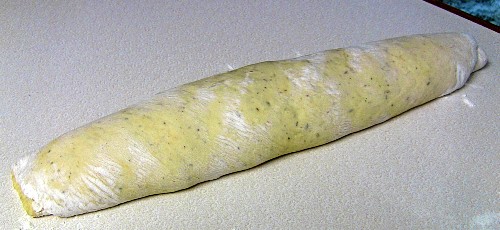
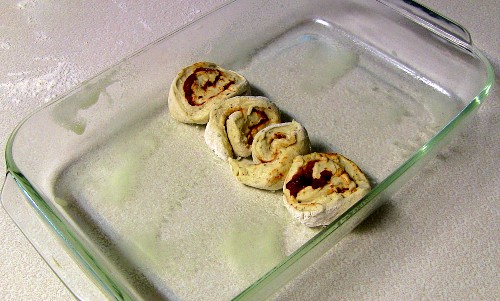

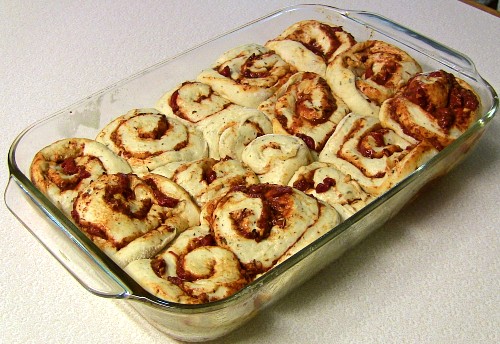
Step 6: Place the baking dish on a sheet tray and bake in an oven that has been preheated to 375°F. for about 30 minutes.
If you really want to gild the lily you can brush on a tablespoon of melted butter when they’re fresh out of the oven.
How to Roast Peppers:
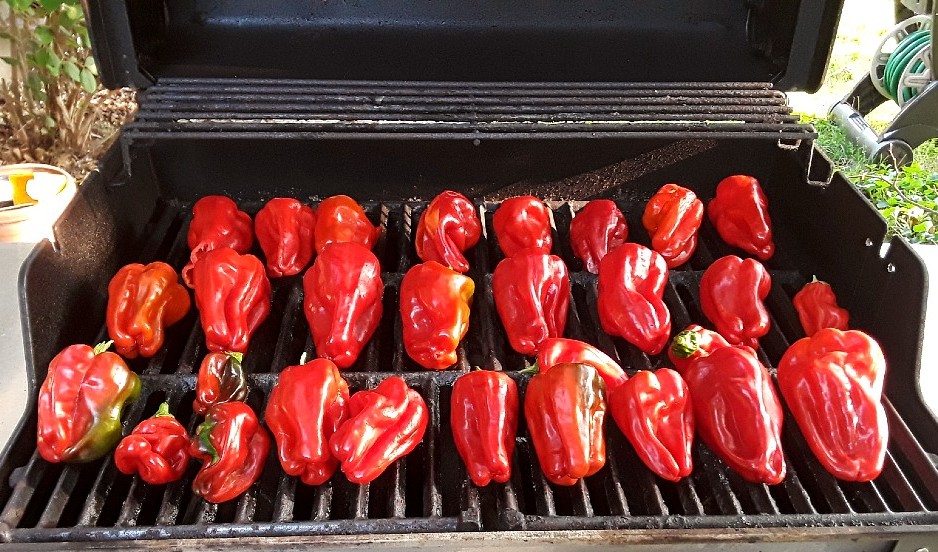
Roasting peppers concentrates their sweetness and adds a touch of smokiness. Peppers can be roasted over fire on a grill, in a skillet on a stovetop, baked in an oven at 400°F. or using the oven’s broiler setting.
Use tongs to rotate the peppers in order to get a good blackened char all over the skin. Place the peppers in a Ziplock bag or a bowl covered in plastic wrap and allow the steam to loosen the thin outer layer of skin. Once cooled, the thin, blackened outer layer can be easily removed.
Growing Notes:
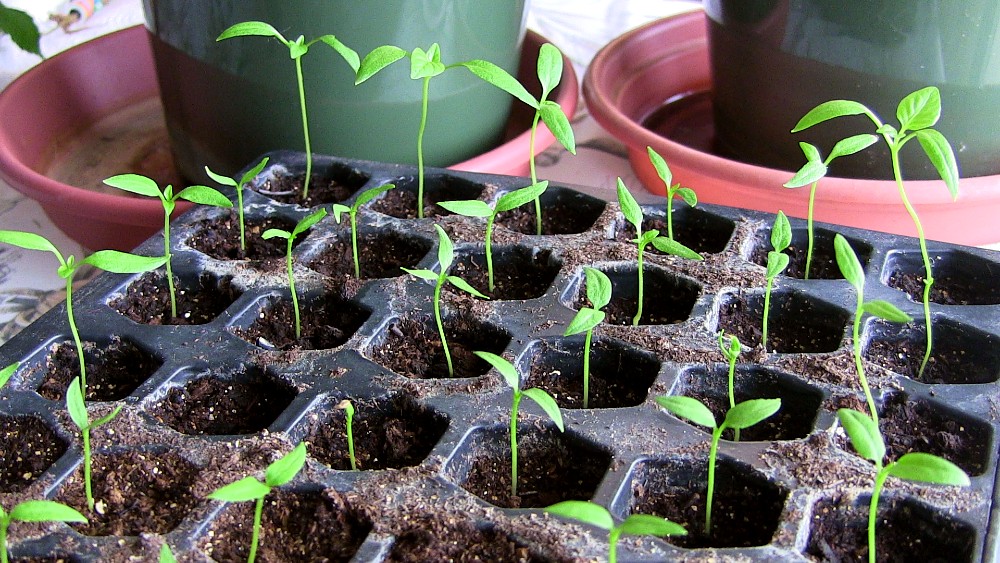
I started growing seedlings for Ausilio Thin Skin Italian Peppers in mid-February, 2023. I started earlier than is often recommended because we don’t have a south-facing window much less a greenhouse. Needed equipment includes a seed starter tray with lid, heat mat, LED grow light and a proper seed starter soil mix.
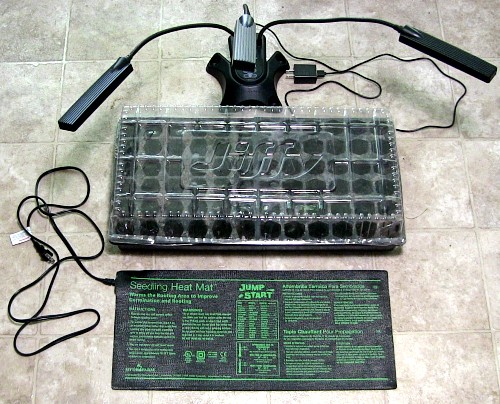
I used a spray bottle to water the soil twice a day and the seeds started to sprout after a week. Most sources I read said to expect about 50% germination for peppers, but of the 36 seeds I planted, 34 sprouted. After the seeds sprouted, I took the lid off the tray during the day and only put it on for overnight to retain heat. Young seedlings can get moldy and die if they don’t get ventilation.
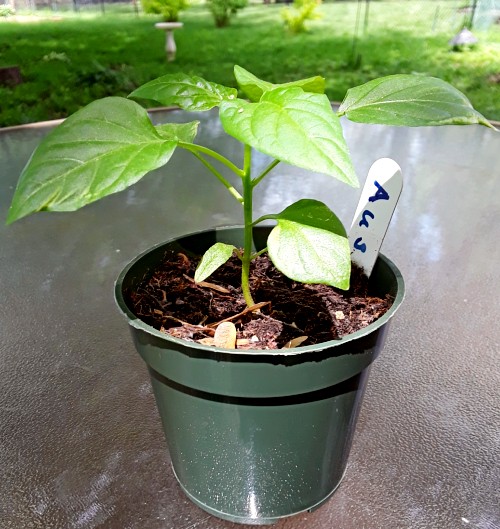
After about five weeks of growth, the seedlings had developed their true leaves and were ready to be potted up into their own containers with proper potting soil. All seedlings had their own pot by April 1st. I augmented the natural light of our west window with LED grow lights until about 9:00 pm. The extra light was vital to successful growth.
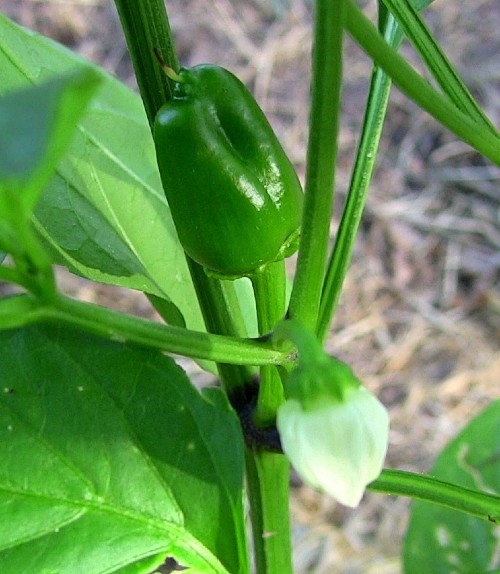
As the weather warmed to above 70°F. in April, I was able to get the plants outside for extra light and heat and get them used to a little breeze. That process is called “hardening off” and their growth really shot up. By mid-May they were ready to be planted in the garden. The seedlings were planted in the garden on May 21st and the first pepper was sighted on June 23, 2023.
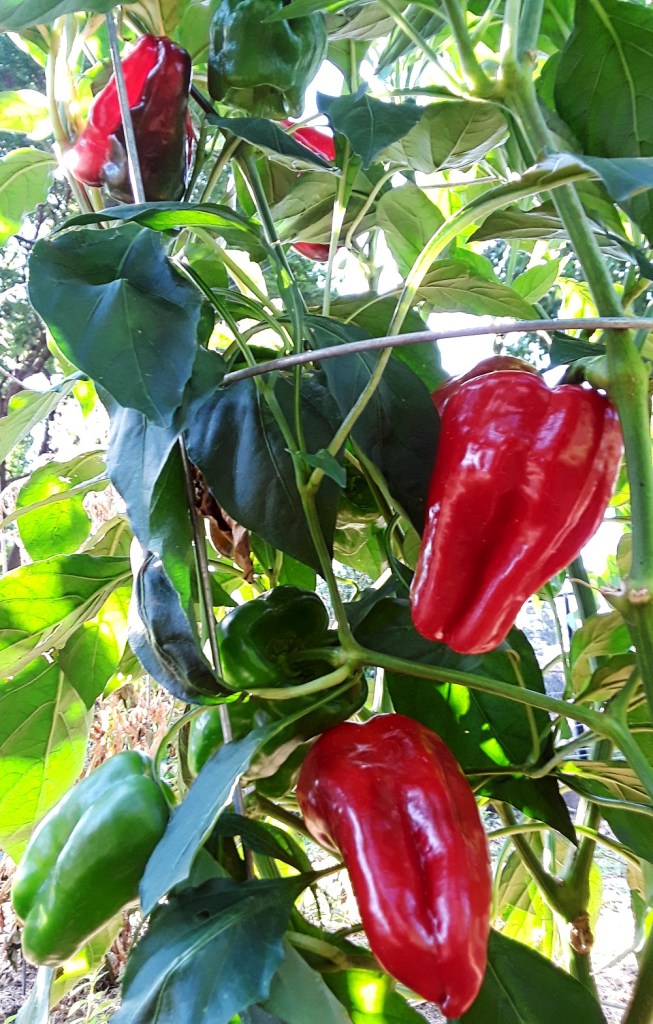
Ausilio Thin Skin Italian Peppers are abundant producers throughout the whole season and are a pleasure to eat raw, stuffed or added to pasta sauce.

 Schmecken!
These rolls look so irresistible, and the filling, with all the peppers and anchovies is so unique and tasty.
I hope to try this soon, though I’m going to skip the process of growing the peppers myself! 🙂
LikeLiked by 1 person
Ha ha, that seems quite sensible. I hope you like it. I’ve certainly benefitted from the great flavors in your recipes!
LikeLike
Thank you! 🙂
LikeLike
We love this blog!! We are excited to try your recipe. It looks amazing! Thank you for helping us preserve our heritage.
LikeLiked by 1 person
Thank you for your wonderful comments! I really wanted to do justice to your story. It’s such a great Des Moines story and I’m excited to think that Pita con Sarde might be a unique Des Moines twist on a traditional Old World dish. My recipe is not traditional but I hope it is in the right ballpark and that people will think it’s accessible and not too hard to try making.
LikeLike
These are extra yummy with home grown peppers as the main ingredients😋👍
LikeLike
It is extra fun when you grow an ingredient.
LikeLiked by 1 person