

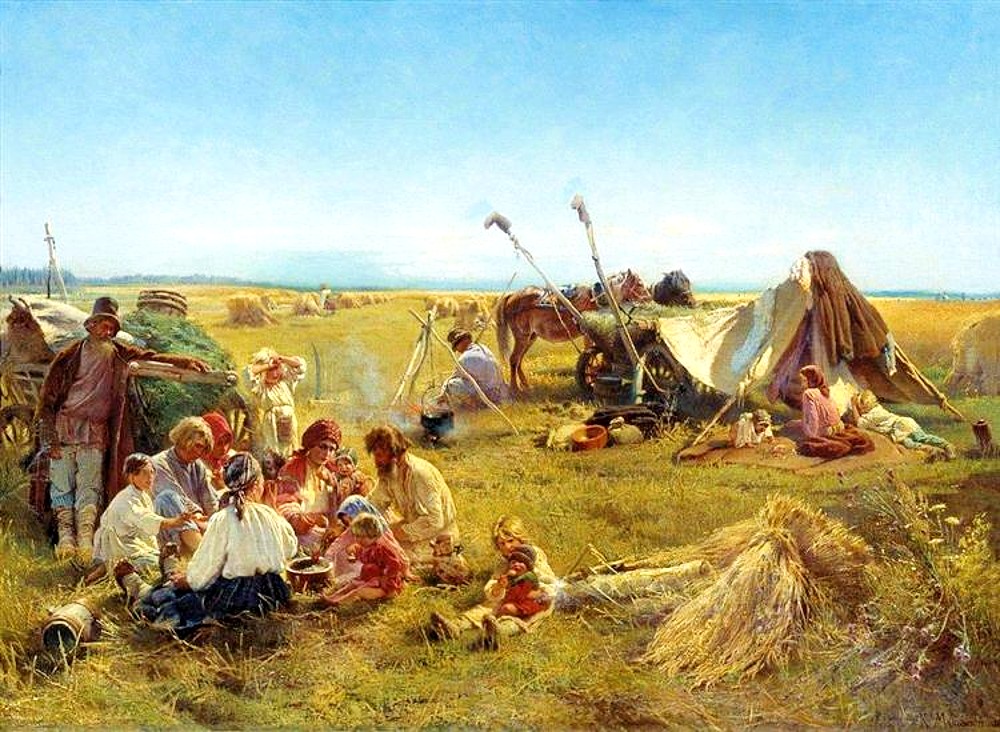
According to History of Food by Maguelonne Toussaint-Samat, the ancient Greeks and Romans positively hated rye flour. Throughout the recorded history of the early civilized world, the rye plant seems to have been universally despised.
Somewhere in the Middle Ages, for reasons unexplained, people in Central Europe and Scandinavia spontaneously started liking the flavor of rye. These are my people.
Peasants in Central and Northern Europe grew rye and wheat plants together for sound agricultural reasons. While wheat was the staple grain in the warm climates of Egypt, Mesopotamia and Southern Europe, it grew less well in the colder northern regions. The rye plant thrived in cooler temperatures. Growing both plants together reduced the risk of a bad harvest for people in the North.
The harvested grain was called maslin. Rye flour has a low gluten content and produces tough, dense breads on its own. Breads made with rye flour benefit from the high gluten content of wheat flour. This combination of rye and wheat formed the basis of all the rye breads to come from Central Europe and Scandinavia, from light Lithuanian Lietuvaitė, to dense Scandinavian Rugbrød, to hearty German Pumpernickel and Russian Black Bread.
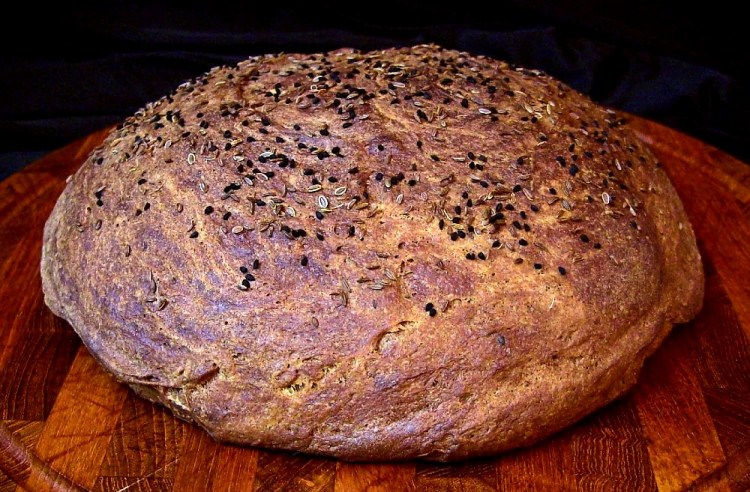
This recipe is definitely on the darker, heartier end of the spectrum and has gone through many variations over the years. The addition of unsweetened cocoa was the final touch of perfection. It is a staple bread in our household, drawing on the Eastern European heritage of our ancestors which I’m convinced is somehow tied up in our food craving DNA.
Ingredients:
- 327 grams (2⅓ cups) White Bread Flour
- 218 grams (1⅔ cups) Fine Dark Rye Flour
- 2 tsp. (1 packet) Active or Quick-Rise Dry Yeast
- 2 tsp. Sea Salt
- 1 tbsp. Unsweetened Cocoa Powder
- 4 tsp. Caraway Seeds, plus extra for sprinkling
- 2 tsp. Charnushka Seeds, plus extra for sprinkling
- 2 tsp. Dill Seeds, plus extra for sprinkling
- 1 Egg
- 3 tbsp. Molasses
- 375 grams (1⅔ cups) Warm Water
Directions:
Step 1: Combine dry ingredients and mix well. Add egg, molasses, and warm water. Knead for 8-10 minutes. This is a wet dough and rye flour is notoriously sticky; using the dough hook on a stand mixer is highly recommended.
Step 2: Set aside in an oiled bowled and let proof until doubled in size – usually about an hour.
Step 3: Knock back the dough and knead for several minutes on a floured surface. Form the dough into a smooth ball and place on a baking sheet covered with a silicone mat or parchment paper. Use a spray bottle to lightly mist the dough with water and sprinkle with more caraway, dill and charnushka seeds. Let rise for about another hour. Misting the loaf with water about half-way through helps prevent it from drying out.
Step 4: Preheat the oven to 450°F. Bake for 40 minutes. Use a spray bottle to mist the dough with 10-15 sprays every ten minutes to replicate the steam injection of commercial ovens. This helps develop a chewy crust. Turn the loaf around in the oven at the half-way point to ensure even baking. Let cool on a wire rack when baking is finished.

 Schmecken!
One thought on “Rye Bread Recipe with Molasses and Cocoa”