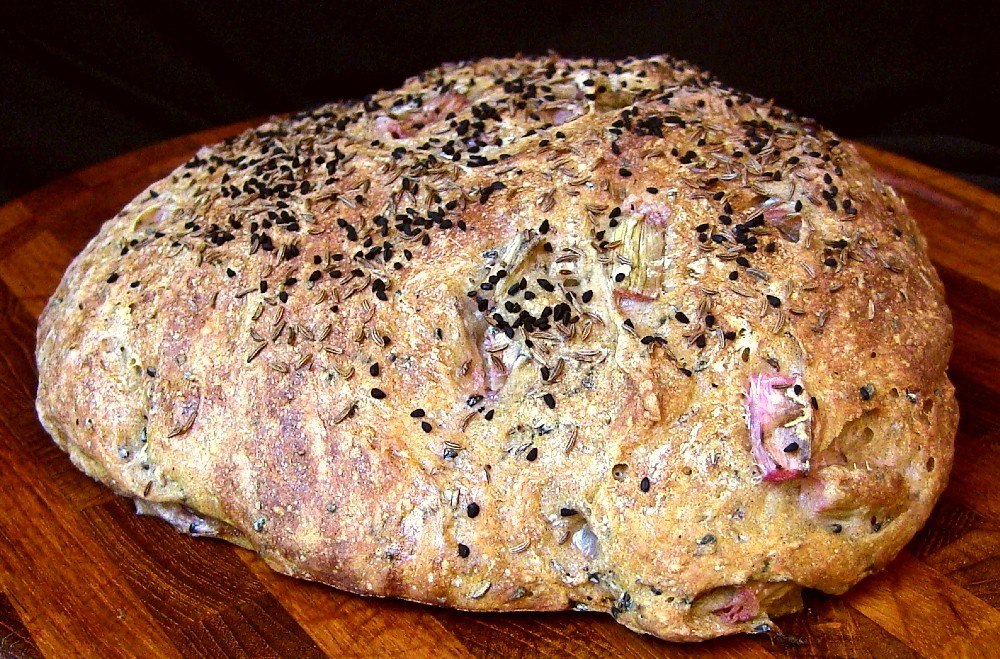
This is an extraordinary bread that welcomes summer by showcasing rhubarb paired perfectly with rye and caraway. The large chunks of rhubarb really pop and lend moisture to the final bake. This makes great toast that doesn’t need a thing on it.
No-knead breads use a tiny amount of yeast and longer fermentation times to mimic some of the qualities of artisanal sourdough breads. I’ve found 24-36 hours of fermentation time to be the sweet spot for my tastes.
Ingredients:
385 grams (2 ⅔ cups) All-Purpose or Bread Flour
68 grams (⅓ cup) Rye Flour
2 tsp. Sea Salt
¼ tsp. Active Dry Yeast
4 tsp. Caraway Seeds, plus extra for sprinkling
2 tsp. Charnushka Seeds, plus extra for sprinkling (see Notes)
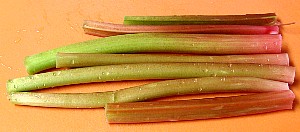
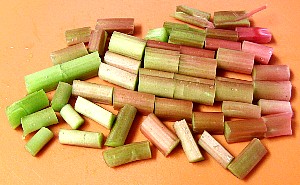
Step 1: Combine dry ingredients. Add rhubarb. Add water and mix by hand just until the mix holds together without working the dough. You do not want to develop the gluten. You may need to mist with a little water to get all the flour to adhere to the dough.
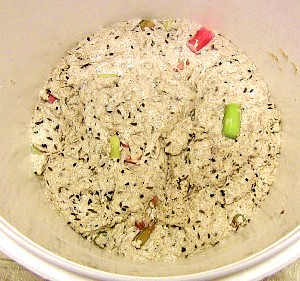
Step 2: Set aside in a food-grade container, cover with plastic wrap or a lid and ferment at room temperature for 24-36 hours.
Dough after fermentation
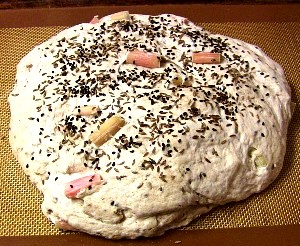
Step 3: After a 24-36 hour fermentation time, dust a surface with flour and shape the dough into a ball. Transfer to a baking sheet covered with parchment paper or a silicone mat. Sprinkle the dough with caraway and charnushka seeds. Let the dough raise for about an hour.
Dough after raising
Step 4: Preheat the oven to 450°F. Bake for 40 minutes. Use a spray bottle to give 15 spritzes of water in the oven every 5-10 minutes. This helps develop a chewy crust. Turn the bread around half-way through the bake in order to ensure even baking. Let cool on a wire rack.
Rhubarb Rye Loaf
Notes:
I first came across charnushka seeds on a loaf of Russian black bread and I have to confess I’ve only used them for making rye breads. I should be more adventurous. Used in cooking from India and Africa on through Northern Europe, these tiny black seeds pack a punch. They contain quinine and I don’t think it’s too big a stretch to compare their taste to tonic water; they have a bitey little puckering quality. They’re flavor is like getting a concentrated spark of oregano.
They go by a variety of names. You might find them called Kalonji seeds at an Indian grocery store or Black Seeds at an African store. Or Black Cumin. Or Black Caraway. Or Nigella, which is probably the most accurate because their Latin name is Nigella Sativa.
In the Hebrew Bible they’re called Ketzah. The Prophet Muhammad praised the seeds for their curative properties and claimed they were healing for all diseases except death. Black Nigella seeds in honey were found in King Tut’s tomb. Cleopatra and Queen Nefertiti used the oil of the seeds as a beauty aid. In Auyurvedic medicine, the seeds are appreciated for their bitter, warming stimulant properties.
I’ve had it in mind for some time to start a project in which I reinvent recipes from old church cookbooks of the Upper Midwest. My plan is to broaden the flavor profiles of the dishes and reduce the over-reliance on sugar and salt as the dominant flavor enhancers.
I want to cut down on the pre-packaged convenience foods that became so common as ingredients in the 1960s and ’70s. At the same time, it wouldn’t be Midwestern cooking if practicality weren’t an important feature; I won’t be hand-harvesting my own salt or rendering my own artisanal lard.
The Upper Midwest of the 1960s and ’70s is the cultural heritage I grew up in and it’s one that doesn’t really exist anymore. Earl Butz was the Secretary of Agriculture in the early ’70s and famously told farmers to “get big or get out.” Around the same time, Garrison Keillor began The Prairie Home Companion radio show featuring his stories about Lake Wobegon. Even at that time there was an air of wistful nostalgia about a uniquely Upper Midwest culture that was still recognizable but seemed to be fading away.
The 1980s Farm Crisis changed rural culture permanently. A hard-edged, nihilistic rural Southern sensibility overwhelmed the quirky charm of Upper Midwest regionalism. Well, I, for one, miss Jello salads and polka shows on TV. Like Joni Mitchell said, “You don’t know what you got till it’s gone.”
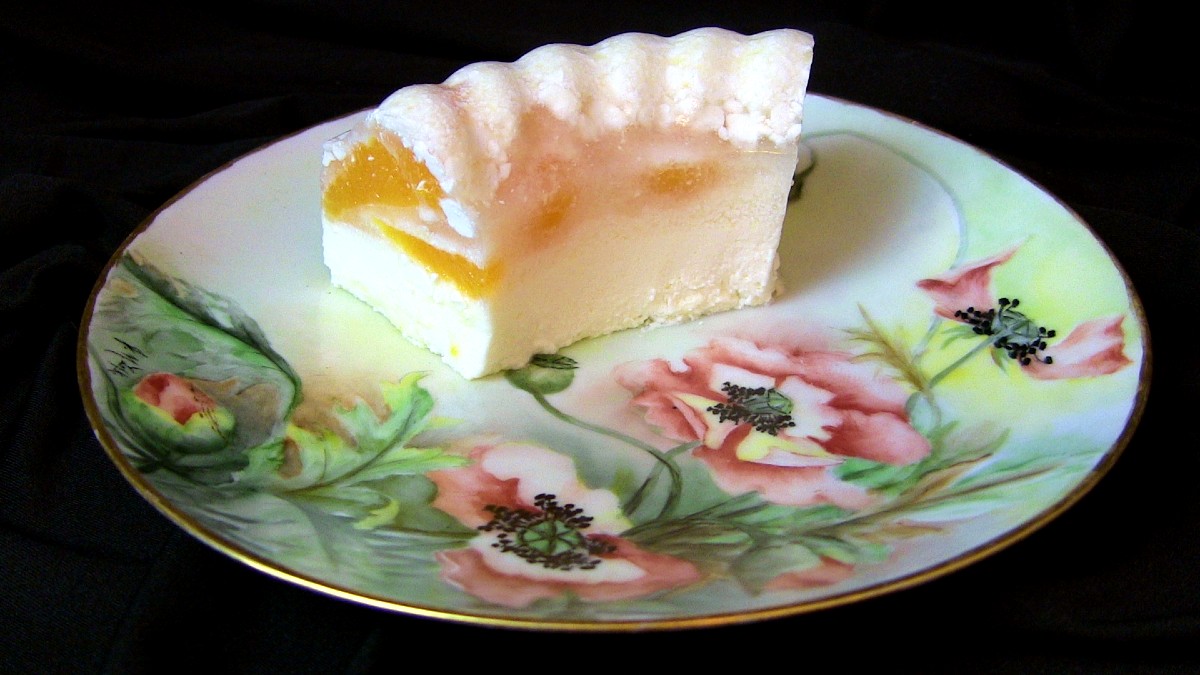
The Happy Wanderers with Stan and Yosh Schmenge on SCTV
Ingredients:
341 grams (1 ½) cups Water
114 grams (½ cup) Lime Juice
18 grams (2 tbsp.) bulk Unflavored Gelatin 250 bloom OR 2 packets Knox Unflavored Gelatin OR 8 sheets Unflavored Gelatin
227 grams (1 cup) Cottage Cheese
15 oz. can of Unsweetened Mandarin Oranges, drained
1 cup Heavy Cream
2 tbsp. Granulated White Sugar
Directions:
Step 1: Make whipped cream by whisking 1 cup heavy cream and gradually adding two tablespoons of granulated white sugar.
Step 2: Combine cold water and cold lime juice in a medium sauce pan. Sprinkle gelatin onto the liquid and whisk. Let sit for 2-3 minutes. Heat the mixture over medium-low heat until the gelatin is completely dissolved. Gelatin dissolves at about 100°F. Do not let boil. The gelatin will not set if it is brought to a boil.
Step 3: Remove the pan from the heat. Drain the can of mandarin oranges and add to the mixture. Stir in the cottage cheese. Fold in the whipped cream.
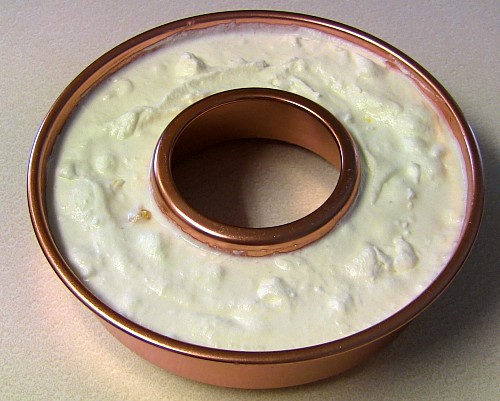
Step 4: Use a little non-stick spray to coat a mold that is at least 6 cups. Transfer the mixture to the mold and refrigerate until set. Times can vary with gelatin dishes but plan to give it at least six hours.
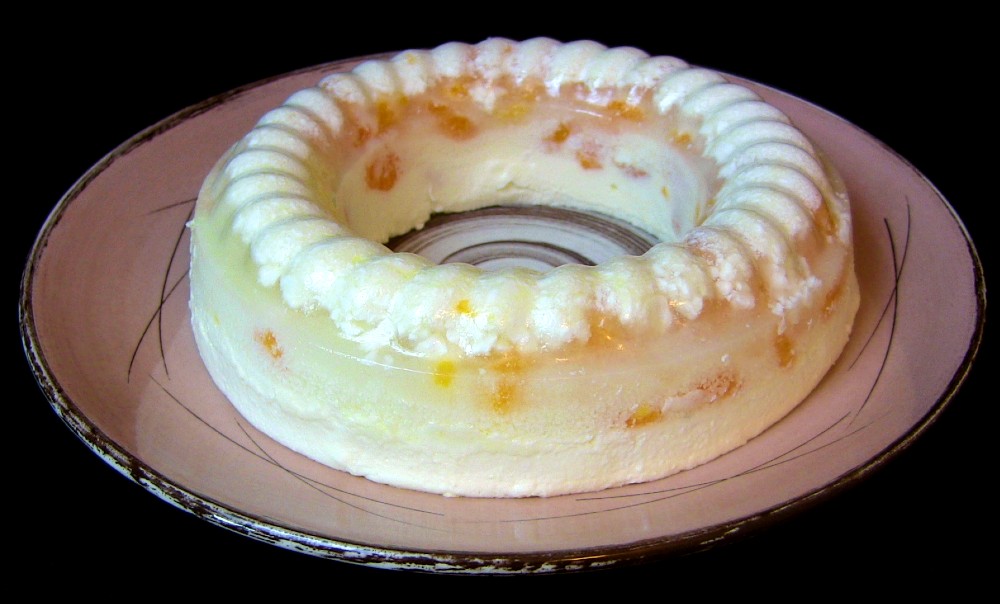
Step 5: After the gelatin is thoroughly set, use a spatula to gently pull away from the sides of the mold. Place a plate on top of the mold and flip. Allow the gelatin to drop from the mold naturally. Remember: gravity isn’t just a good idea, it’s the law.
Hot Cross Buns have been associated with Easter for centuries. They actually predate Christianity and go back all the way to ancient Egypt. According to the article Hot Cross Buns by Mitch Stamm and Karen Goodpaster, which appeared in a publication put out by The Bread Baker’s Guild, people at the time of the Pharaohs made small round breads topped with crosses to celebrate the gods.
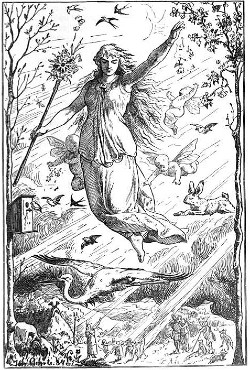
The goddess Eostre/Ostara flies through the heavens. “Ostara” (1901) by Johannes Gehrts. From Wikimedia Commons
Greeks and Romans made a similar sweetened roll as a tribute to Eostre, the Goddess of Light. The word “Easter” is derived from her name. Early Christians celebrated the resurrection of Christ at the same time of year as the pagan Spring celebration in order to avoid detection by the Roman authorities. It was natural that the sweet rolls in honor of Eostre would be adapted to the Christian Easter celebration.
To the Egyptians, the cross symbolically divided the bun to represent the four phases of the moon or the four seasons. To Christians, it represented Jesus on the Cross. Spices used in the dough came to represent the spices used to embalm Jesus after crucifixion. The inclusion of orange or lemon peel reflected the bitterness of his time on the Cross.
I’ve chosen to leave spices out of the dough because I think the flavors get in the way more than they enhance. I tried the Paul Hollywood method of making the cross with a flour and water paste, but found the result to be a little leathery so I use an icing instead.
Yield: 12 Hot Cross Buns
Ingredients:
450 grams (3 ¾ cups) Bread Flour
66 grams (⅓ cup) Sugar
28 grams (4 tbsp.) Dry Milk Powder
4 tsp. (2 packets) Active Dry Yeast ***
2 tsp. Salt
2 large Eggs
50 grams (¼ cup) Vegetable Oil
170 grams (¾ cup) Warm Water
55 grams (⅓ cup) Raisins
63 grams (⅓ cup) Dried Apricots, diced
20 grams (4 tsp.) Preserved Lemon, rinsed and diced (zest from 1 Lemon as substitute)
1-2 tbsp. Butter, melted for brushing
*** SAF Gold Instant Yeast is highly recommended, if available, since this is such a dense and sweet dough.
Icing for the Cross
57 grams (½ cup) Confectioners Sugar
½ tbsp. Water
½ tsp. Vanilla Extract
Directions:
Step 1: Combine flour, sugar, milk powder, yeast and salt. Add eggs, oil and warm water, mix and knead for about 8-10 minutes. Transfer to a bowl coated with vegetable oil, add the raisins, dried apricots and lemon. Use your fingers to poke the fruits throughout the dough until they’ve been evenly distributed.
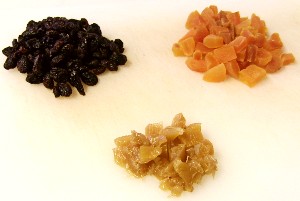
Raisins, Apricots and Preserved Lemon
Cover and let rise until approximately doubled in size. This may take several hours since this is such a dense dough.
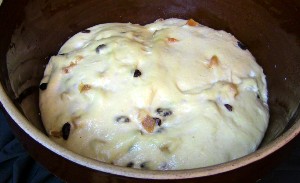
Dough after rising
Step 2: After the dough has risen, knead it for a second time. Weigh out 85 gram (3 oz.) portions and work with the hands to form a cohesive ball. Cup the bun in the palms of the hands and shape into a smooth ball. Place on a sheet tray covered with parchment paper or silicone mat. After all the buns are formed, allow to rise for an hour. Spritzing a little water on with a spray bottle occasionally helps to keep them from drying out.
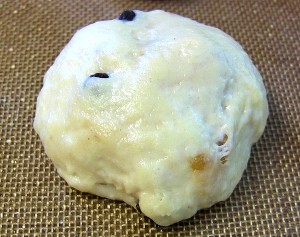
Bun after rising an hour
Step 3: Preheat the oven to 375°F. Bake for 15-18 minutes, rotating the tray half-way through to ensure even baking. Brush with melted butter and allow to cool thoroughly.
Step 4: Mix together the ingredients for the icing and stir until smooth. Use a piping bag or a zip lock bag with a tiny corner of the bag snipped off to pipe an “x” shape across each bun.
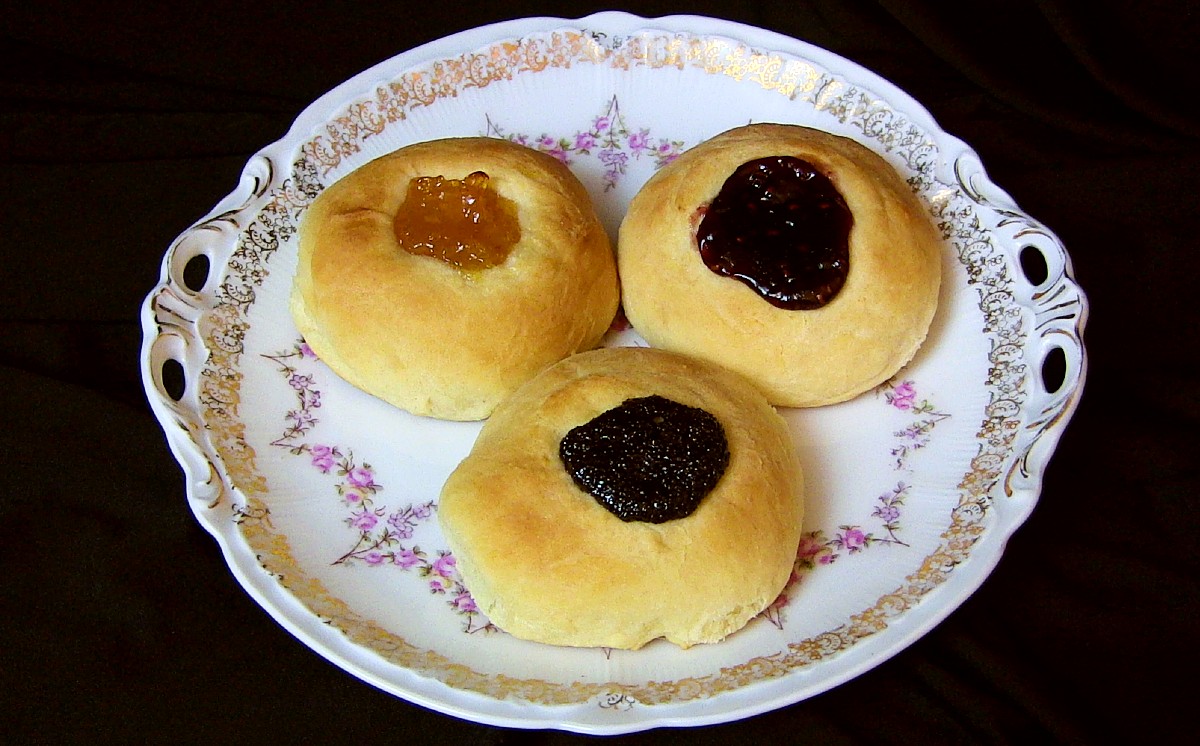
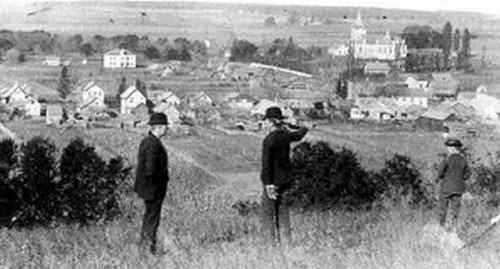
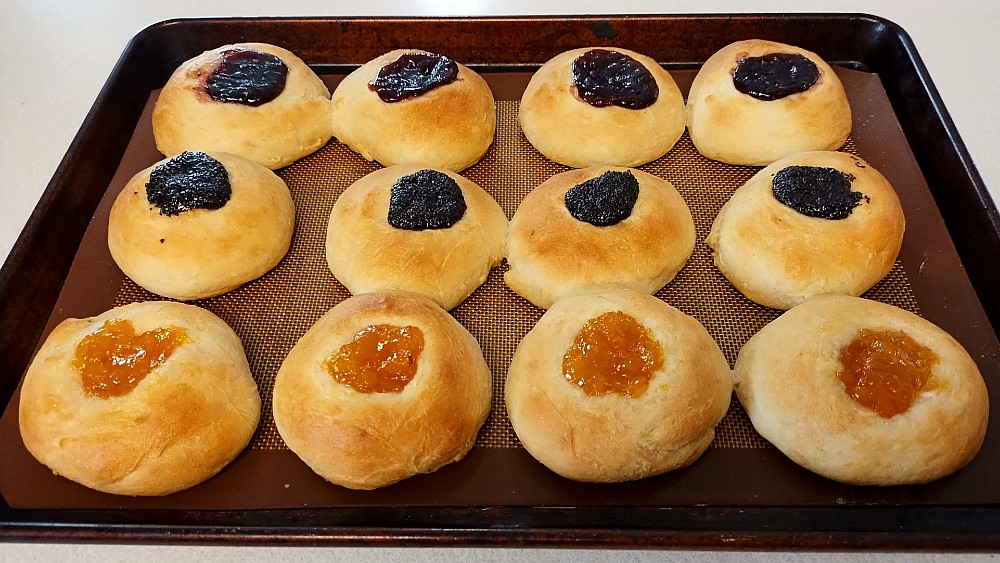
Kolaches are a pastry that is closely linked to the heritage of the Czech immigrants who settled in Eastern Iowa. This recipe may have come from a woman who emigrated from Bohemia in the mid-1800s and settled in the small but very important Czech community of Spillville, Iowa and was handed down through generations. It’s a heritage recipe and I’ve made an effort to preserve it in a modern recipe format so that it can live on while staying true to its authentic roots.
Who was Mrs. Cerny? That’s a mystery. However, clues point to Spillville, Iowa and the possibility that the famous Czech composer Antonin Dvořák was served kolaches made by Mrs. Cerny in the summer of 1893 when Dvořák spent a summer there among the Bohemian immigrants who formed that community and was inspired by the wide-open landscape to compose works that had a profound influence on American music.
Spillville, Iowa
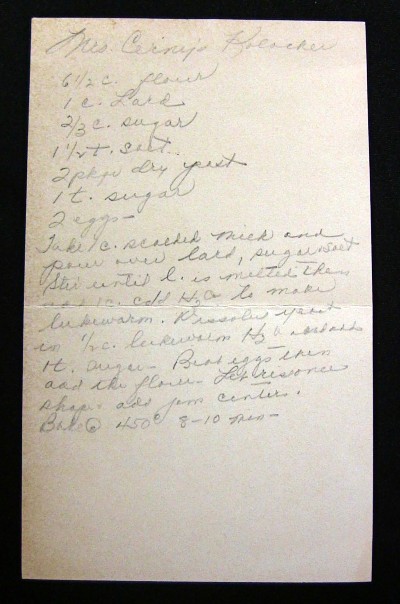
Her recipe, written in faded pencil on a blank piece of card stock by my partner Debra’s grandmother, was in the collection of family recipes Deb inherited when her mother passed away.
Mrs. Cerny’s Recipe for Kolaches
Deb’s grandmother, Irma, was born in Spillville, Iowa in 1907, married in 1930 and made her home in Iowa City from then on. She was a member of St. Wenceslaus Church in Iowa City, which is where Deb grew up learning how to make kolaches from all the Czech grandmas in the congregation. However, Deb does not have a recollection of a family named Cerny from her time growing up there.
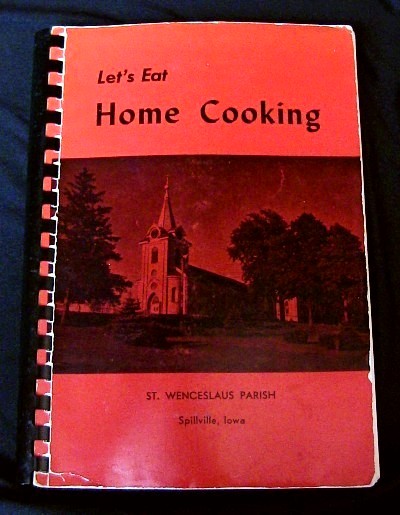
Even though there is no mention of Mrs. Cerny in a cookbook published by the St. Wenceslaus Parish of Spillville, Iowa called “Let’s Eat Home Cooking,” published in 1962, other recipes for kolaches in the book are very similar to the one attributed to Mrs. Cerny in Deb’s collection.
“Let’s Eat Home Cooking,” 1962, St. Wenceslaus Parish of Spillville, Iowa
I did some detective work and I think it’s very likely that Mrs. Cerny was Marie Gottfried Cerny, who was born in 1828 or ’29 and lived in the village of Varvažov in the South Bohemian Region of the Czech Republic before emigrating to Spillville, Iowa with her husband Jan. She passed away in 1910, and she and Jan are the only people named Cerny who are buried in the St. Wenceslaus Cemetery in Spillville.
Marie Cerny’s grave in St. Wenceslaus Parish Cemetery in Spillville, Iowa
Marie Cerny’s nameplate on her grave
Marie and Jan Cerny raised a family in Spillville and there is a record of one of their daughters, Anna Frances Cerny, marrying in Spillville in 1871. Their roots in that community run deep. It seems entirely probable that when Deb’s grandmother went out into the world she took Mrs. Cerny’s recipe for kolaches with her because people in Spillville continued to respect Mrs. Cerny so much.
Antonin Dvořák was probably the most famous composer in the world when he served as the church organist at St. Wenceslaus Parish in Spillville, Iowa during the summer he spent there in 1893. I imagine he ate a kolache or two in the church basement that year. Marie Cerny, and Deb’s ancestors, would have been active members of the parish at that time.
The Altar at St. Wenceslaus Parish in Spillville, Iowa
During the time he spent in Spillville, Dvořák felt at home with his Bohemian roots and the inspiration he derived from his time there led him to compose two works which now count among the most popular pieces of the international chamber repertoire: String Quartet No. 12 in F major, known as “The American String Quartet,” and String Quintet No. 3 in E flat major.
Iowa Public Television did a lovely little segment about this piece of Iowa history.
Antonin Dvořák in Spillville, Iowa
When I came across the faded, handwritten recipe for Mrs. Cerny’s Kolaches I thought it would be fun to make them as written and see how they turned out. As is often the case with old home recipes, the measurements were not as exact as people now expect. Experienced bakers can make adjustments on the fly because they have a good idea how dough is supposed to look; novice bakers may struggle and get frustrated. I believe I’ve stayed very true to her recipe with only a few minor tweaks that will aid anyone who tries to make these.
I’m happy to say the final product matches my memory of the kolaches I used to get at Sykora Bakery in the Czech Village of Cedar Rapids, Iowa when I lived there in the 1990s.
The Bakery in Czech Village, Cedar Rapids, Iowa, circa 1903.
I was at the dedication ceremony of the National Czech & Slovak Museum & Library in Czech Village when Sykora Bakery was visited by President Bill Clinton, President Václav Havel of the Czech Republic and President Michal Kováč of Slovakia on October 21, 1995. According to the owner, Bill Clinton had a cherry kolache and Hillary Clinton had an apple strudel.
Deb and I are part of a unique generation that have links to people who were alive in the 19th century and can still recall the flavors of their cooking. I think it is important to keep some of these old, region-specific recipes alive.
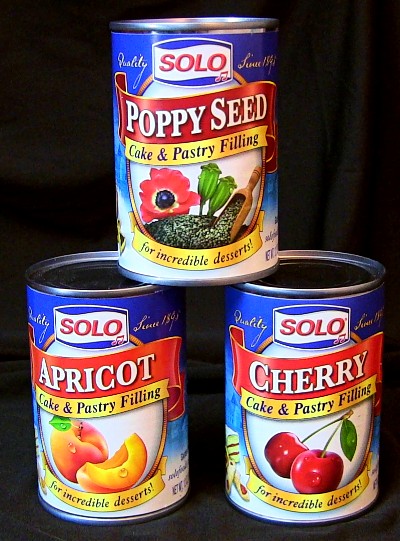
Instead of making the filling from scratch, I feel quite comfortable with using the ready-to-use pastry fillings from the Solo Foods Company. Solo Foods was founded by John Sokol, who was a Czechoslovakian immigrant who came to Chicago in 1889. Their flavors are about as authentic as it gets.
Solo Pastry Fillings
While we cannot say for certain who Mrs. Cerny was, it can certainly be asserted that Mrs. Cerny made a kolache worthy of acclaim.
Yield: 24 Kolaches
Ingredients:
820 grams (6 ⅔ cups) All-Purpose or Bread Flour
132 grams (⅔ cups) Granulated White Sugar
4 tsp. (2 packages) Active Dry Yeast
1 ½ tsp. Fine Sea Salt
2 Large Eggs
226 grams (1 cup) Lard ***
227 grams (1 cup) milk, scalded
227 grams (1 cup) Water
Pastry filling for the center of the kolaches
*** 191 grams (1 cup) Vegetable Shortening if using as a substitute for lard
Directions:
Step 1: Combine flour, sugar, salt and yeast.
Step 2: Take 1 cup scalded milk and pour over the lard. Stir until lard is melted and then add 1 cup cold water to make the whole mixture lukewarm.
226 grams Lard
Lard melted with scalded milk and cold water added
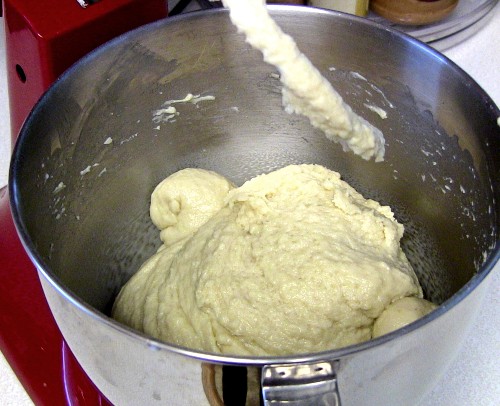
Step 3: Add eggs to the flour and mix in the warm milk, water and lard. Knead for 10 minutes. Let rise once until doubled in size. It helps to proof the dough in a slightly warm oven.
Dough after kneading 10 minutes
Dough before rising
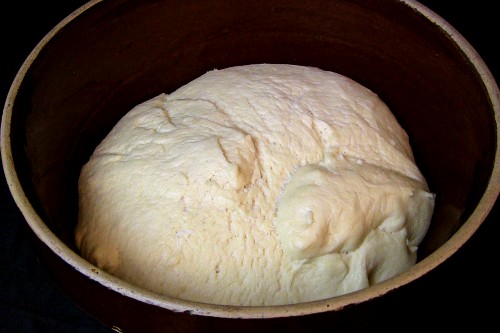
Dough after rising
Step 4: Preheat oven to 375°F. Gently deflate the dough to get rid of some of the excess air without overworking it.
To shape, weigh out 71 gram (2.5 oz.) portions of dough and roll in the hands to form a ball. Place on a baking tray lined with a silicone mat or parchment paper and flatten until about four inches in diameter and 1/4 inch thick.
71 gram Dough Ball
Dough before shaping
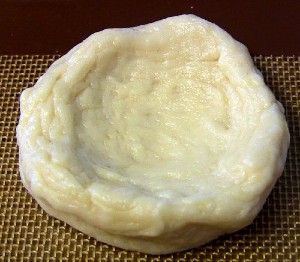
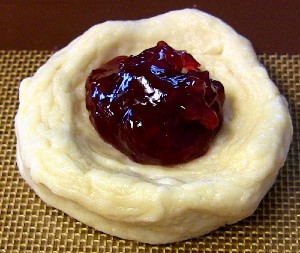
Pinch up the edges to form a ridge around the outside and create a well in the middle.
Dough after crimping
Step 5: Add about 2 tsp. pastry filling of any flavor to the center of the kolaches. It’s best if you can allow the pastries to rest and rise for about 20 minutes after shaping.
Dough with pastry filling
Step 6: Bake at 375°F. for 20 minutes, rotating the tray half-way through to ensure even baking.
(Brushing on a little melted butter right after they come out of the oven is a nice touch, even if Mrs. Cerny’s recipe doesn’t specifically call for it.)
There’s a line in The Hitchhiker’s Guide to the Galaxy that says, “On no account should you allow a Vogon to read poetry at you.” I feel the same way about the poetry of Robert Burns.
However, coming exactly one month after Christmas, I absolutely love a good Burns Night Supper. It’s a wonderful way to extend the holiday season at what is often the coldest and harshest time of winter.
Burns Night Suppers are celebrated on or near the anniversary of the birth of Robert Burns, the national poet of Scotland. He lived from January 25, 1759 – January 21, 1796 and his poem “Ode to the Haggis” is recited at Burns Night Suppers around the world. He was regarded as a poet of the people and wrote in the Scottish dialect of the day.
Actual Scottish People
While I do have a direct connection to the Bell Clan through my grandmother, Florence Bell Kerber, I can only understand about every eighth word of Robert Burns’ poetry. After a while, the charm wears off.
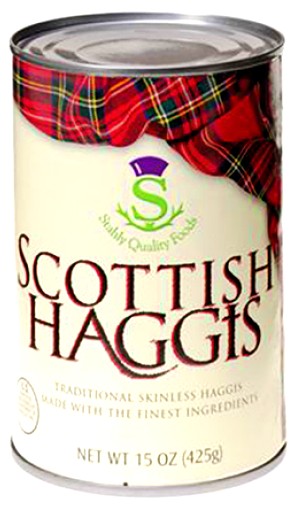
Stahly Scottish Haggis
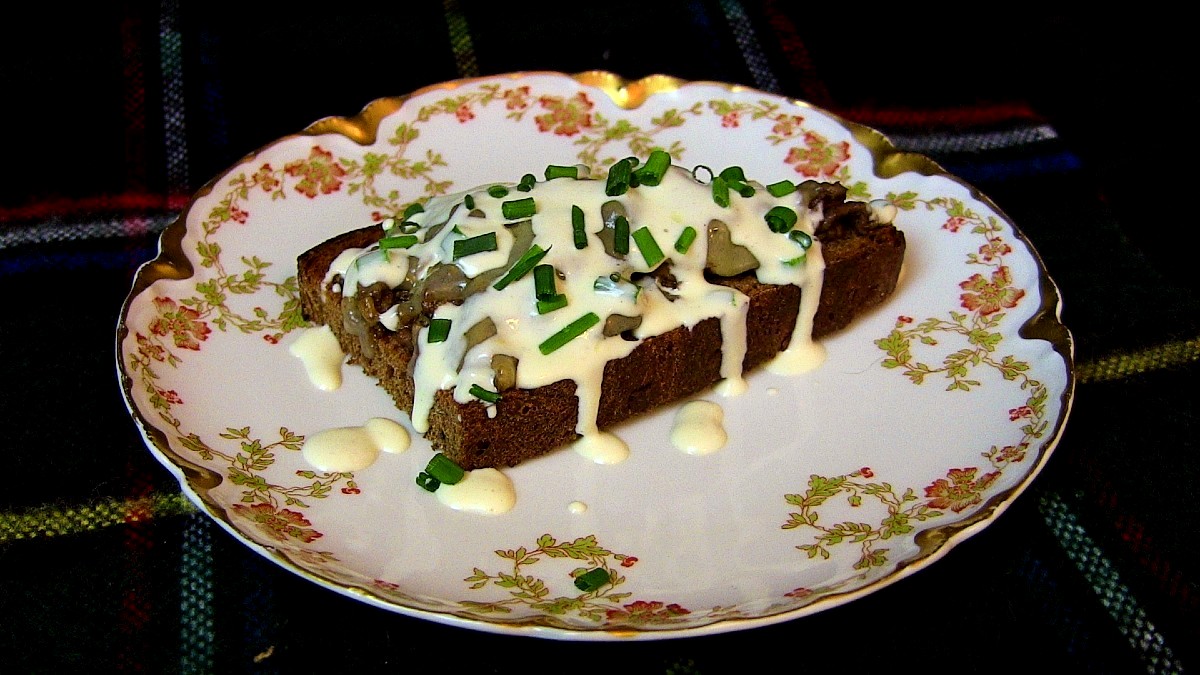
Just in case you – hypothetically speaking – are given a can of Stahly Scottish Haggis for your birthday and it sits on a shelf in your pantry for a year-and-a-half because you have no idea what to do with it, I have a suggestion for how to serve it that is both somewhat authentic and delicious: a layer of haggis on toasted rye bread, popped into the oven long enough to melt thin slices of Emmental cheese, topped with a whiskey and mustard sauce and garnished with chopped fresh chives.
When I was lovingly gifted a can of Stahly Scottish Haggis several years ago, I eventually discovered that haggis on toast with melted cheese is a common method for serving, kind of like a Welsh Rarebit. It seemed to me that a big flavor like haggis needed a bread with a big flavor and I used my version of Rye Bread. I consulted with the monger at The Cheese Shop here in Des Moines and he recommended Emmental.
My wonderful partner, Debra, had the thought of adding a sauce and found a whisky and mustard cream sauce from The Hairy Bikers that we modified slightly.
This combination of ingredients, textures and flavors is crucial. No one should ever want to sit down and eat a steaming pile of haggis by itself.
More Actual Scottish People
This year, we decided we should try making it again for our own Burns Night Supper. However, I discovered on January 12th that if I wanted a can of Stahly Scottish Haggis for January 25th, I would have to wait until March 2nd to get it. That’s when Deb found a recipe for a homemadeSimplified Haggis from the Caroline’s Cooking website.
While the thought of haggis conjures up thoughts of entrails and sheep stomachs in many people, this recipe uses only ground lamb and a few chicken livers for meat. I’ve modified the original recipe by reducing the amount of chicken livers, adding a bit of salt and increasing the aromatic spices.
The result is a dish we would gladly serve anyone as something unique and delicious and not merely as a novelty gross-out joke.
The Haggis and the Rye Bread can be made a day ahead of time.
Haggis Ingredients:
2 tbsp. Butter
1 medium White Onion, chopped
½ tsp. Sea Salt
1 tsp. Ground Black Pepper
¾ tsp. Ground Coriander
¾ tsp. Nutmeg, freshly ground
½ tsp Ground Allspice
½ tsp. Dried Thyme
½ tsp. Ground Cinnamon
1 lb. Ground Lamb
125 grams Chicken Livers, fat trimmed and chopped
1 cup Beef Stock
115 grams (about ⅔ cup) Steel Cut Oats
Directions:
Step 1: Preheat oven to 350°F. Melt two tablespoons of butter in a skillet or Dutch oven and sauté onion until softened. Mix in the spices.
Add chicken livers and ground lamb and brown until cooked through. Add beef stock, cover and simmer for 20 minutes.
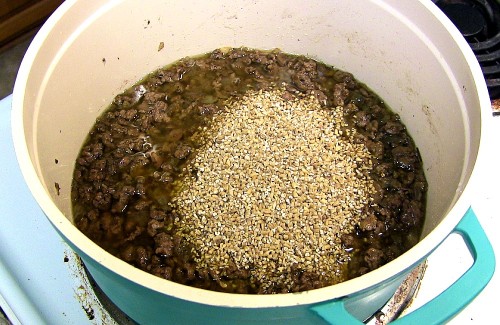
Haggis after simmering and adding steel cut oats
Step 2: Add the steel cut oats and mix. Transfer to an oven-safe dish with a lid, or, if using a Dutch oven, cover and place in the preheated oven for 30 minutes.
After 30 minutes, remove the lid and bake an additional 10 minutes.
Haggis at end of bake
Whiskey Sauce:
1 cup Heavy Cream
2 tsp. Dijon Mustard
2 tsp. Whiskey
2 tsp. Lemon Juice
¼ tsp. Sea Salt
¼ tsp. Ground Black Pepper
½ tsp. Fresh Chives, chopped
Step 1: Heat the double cream in a pan over a medium heat. Add the mustard and whiskey and stir to combine. Increase the heat until the mixture is simmering and continue to cook for 1-2 minutes.
Step 2: Remove from the heat and add salt and pepper. Stir in the chives and whisk in the lemon juice.
Haggis on Rye Toast Ingredients:
Rye Bread (I strongly suggest using my recipe for Rye Bread.)
Haggis
Emmental Cheese
Whiskey and Mustard Sauce
Chopped Fresh Chives for garnish
Directions:
Step 1: Lightly toast slices of hearty rye or pumpernickel bread.
Step 2: Heat the haggis and spoon on the lightly toasted slices of rye bread. Top with thin slices of Emmental cheese and heat until the cheese is melted in an oven or toaster oven.
Step 3: Top with a generous ladle of whiskey and mustard sauce and garnish with fresh chopped chives.
Notes:
A side dish of mashed potatoes and rutabaga called clapshot or neeps & tatties makes a good companion along with fresh green beans or peas. For dessert, we usually have a piece of Christmas Pudding left over that we stashed in the freezer.
Haggis on Toast with Clapshot
The recitation of “Ode to the Haggis” is an integral part of a Burns Night Supper and there is a video that does a good job of explaining the incomprehensible language.
This video is kind of an annotated version that does make me appreciate the cultural significance and humor of Robert Burns’ poem. A host provides a sort of “translation” of the poem with the aid of an actor followed by the actor performing a full recitation.
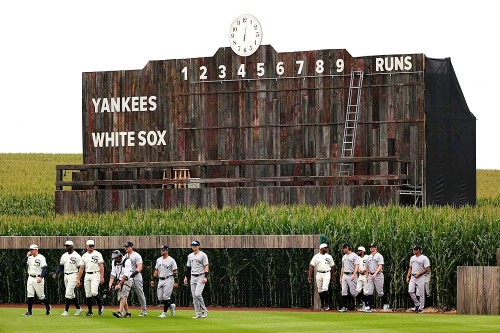
A Major League baseball game was held at the site where the movie “Field of Dreams” was filmed near Dyersville, Iowa on August 12, 2021. The weather that evening was unusually perfect for that time of year and the pregame ceremony where Kevin Costner led the players of the Chicago White Socks and the New York Yankees out of the cornfield onto the field was poetic. It was a great game which the White Sox won 9-8 on a walk-off home run.
MLB at Field of Dreams, August 12, 2021 Getty Images
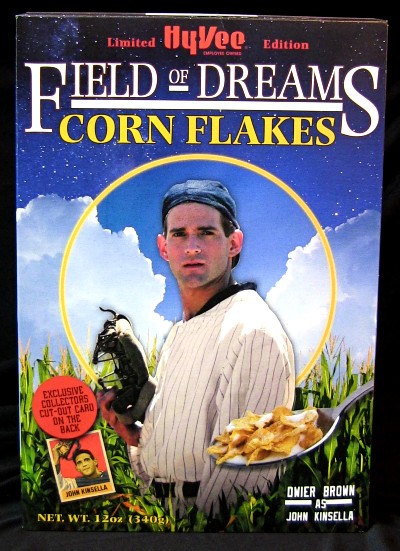
The next day, I was walking through Hy-Vee, the Iowa-based grocery store chain, and saw an end cap display of Field of Dreams Corn Flakes. They were under the Hy-Vee brand and featured the character, John Kinsella, the father of Kevin Costner’s character, Ray Kinsella. Of course, I bought it.
MLB at Field of Dreams Commemorative Cereal Box
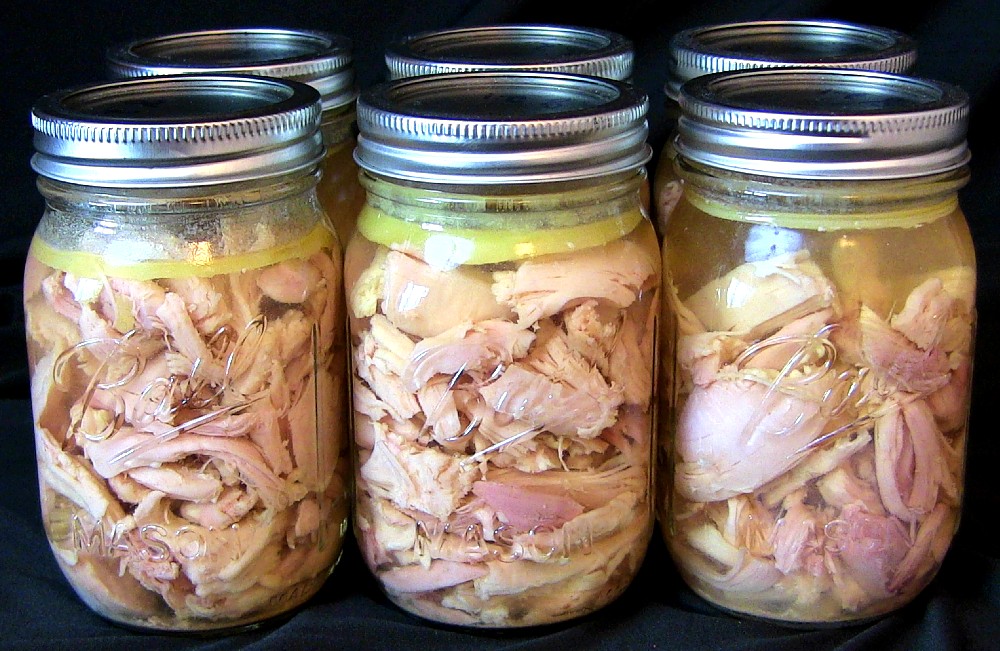
That same month I canned chicken using my new pressure canner. There were all kinds of scary stories about the supply chain crisis and how we might have food shortages. Hy-Vee had a great sale on eight-packs of chicken thighs for $0.97 per pound. I bought four of them and turned them into 19 pints of shelf-stable, old farmer delicacy.
Homemade Canned Chicken
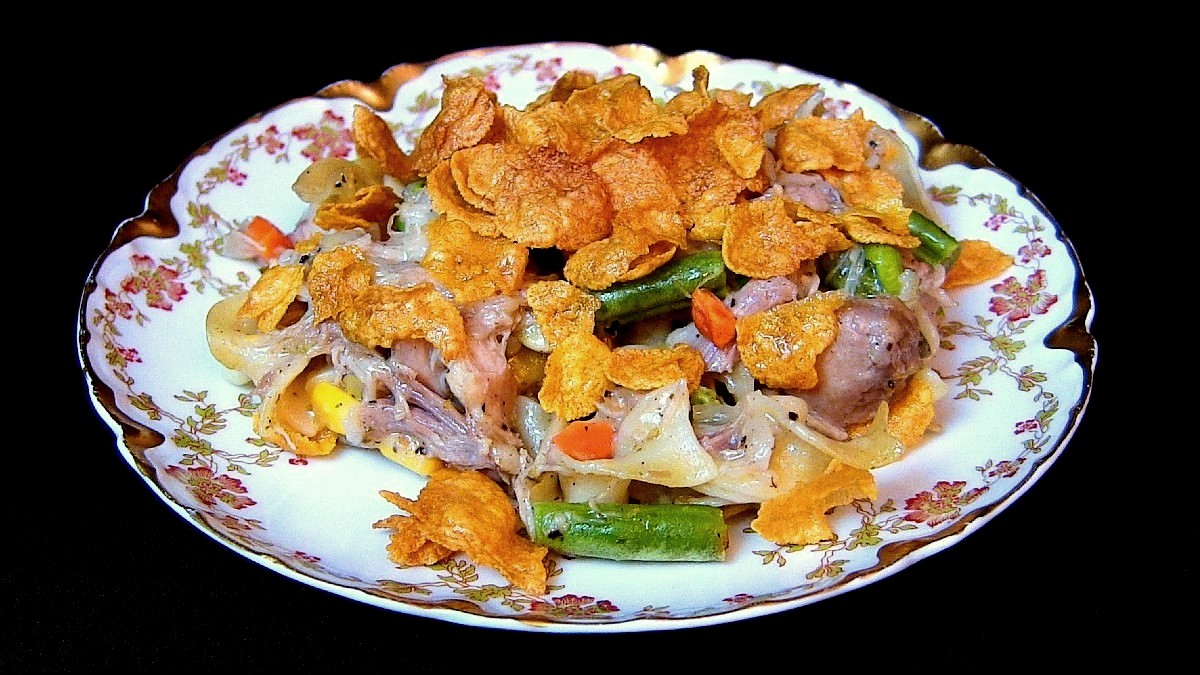
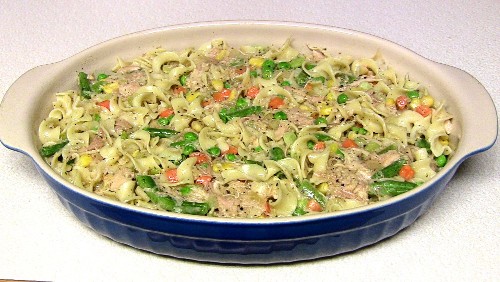
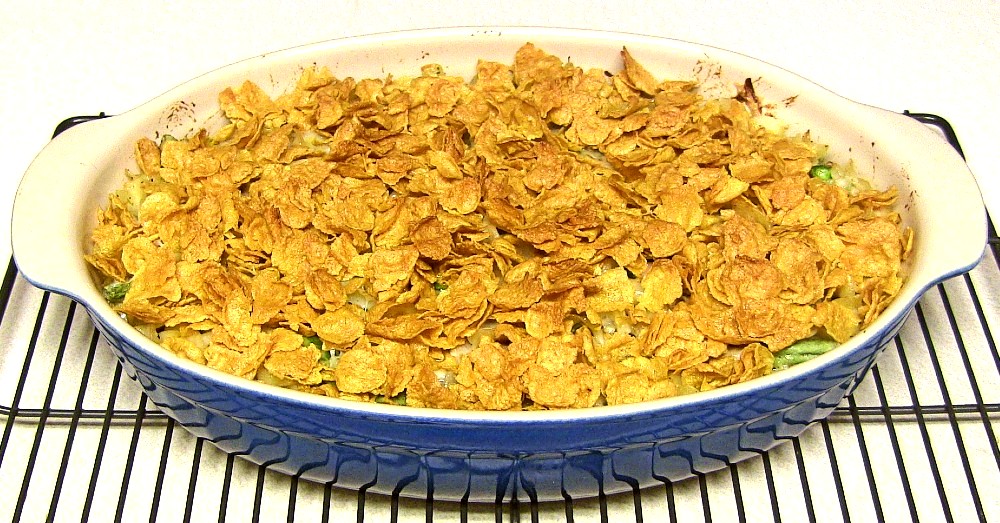
It’s now January and what could be more comforting on a cold winter evening during the Omicron surge than a chicken and noodle casserole with crunchy corn flakes on top?
Homemade canned meats are a bit of a forgotten treasure. I regard them to be like charcuterie in the sense that it is an artisanal form of meat preservation. However, for the sake of making the casserole, two cups of any cooked chicken like leftover rotisserie chicken can be used as a substitute.
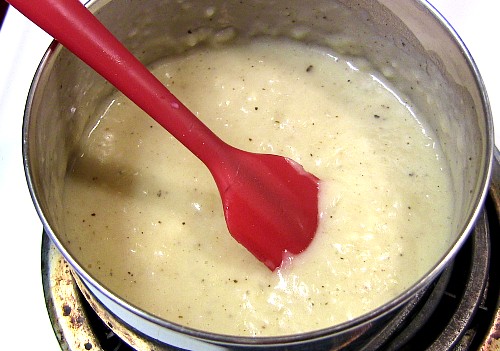
I have stayed away from the condensed soups that are typical of midwestern hot dishes and am using a homemade Béchamel sauce as a replacement. I’m not being snooty; I just don’t need the sodium of commercial canned soups. I do use a package of frozen mixed vegetables. It’s a perfect convenience ingredient, especially in winter.
Ingredients:
Condensed Soup Substitute
Condensed Soup Substitute
2 tbsp. Butter
3 tbsp. All-Purpose Flour
½ cup chicken broth (from the canned chicken, if possible)
½ cup milk
¼ tsp. Sea Salt
¼ tsp. Ground Black Pepper
Melt the butter in a saucepan. Whisk in the flour and stir until smooth. Add ½ cup chicken broth and ½ cup milk. Continue heating and stirring constantly until the mixture comes to a simmer. Stir and simmer at a low boil for several minutes until the mixture thickens. Stir in ¼ tsp. sea salt and ¼ tsp. ground black pepper. Remove from heat.
Casserole Ingredients
4 cups Wide Egg Noodles
2 cups Chicken, cooked and cubed
12 oz. Frozen Mixed Vegetables
4 tbsp. Butter
1 cup White Onion, diced
1 cup Celery, diced
1 tsp. Sea Salt
2 tsp. Ground Black Pepper
2 tsp. Herbs de Provence
1 tbsp. Lemon Juice
1 cup Fontina Cheese, grated
Condensed Soup Substitute
Topping Ingredients
3 cups Corn Flakes
4 tbsp. Butter, melted
Directions:
Step 1: Preheat oven to 350°F. Bring a pot of water to a boil and cook egg noodles. Drain and set aside.
Step 2: Make the condensed soup substitute.
Melt four tablespoons of butter in a skillet and sauté 1 cup diced onion and 1 cup diced celery. Add 1 tsp. sea salt, 2 tsp. black pepper, 1 tsp. Herbs de Provence and 1 tbsp. lemon juice. Mix in 12 oz. package of frozen mixed vegetables. It’s not necessary to thaw the vegetables; they will cook thoroughly in the oven.
Stir in two cups of cooked chicken. Mix in one cup of grated Fontina cheese. Mix in the condensed soup substitute. Stir in egg noodles.
Melt four tablespoons of butter and mix thoroughly with 3 cups corn flakes.
Step 3: Coat an 11″x7″ baking dish with oil or non-stick spray. Spread the chicken and noodle mixture evenly throughout the dish. Top with buttered corn flakes. Bake for 30 minutes.
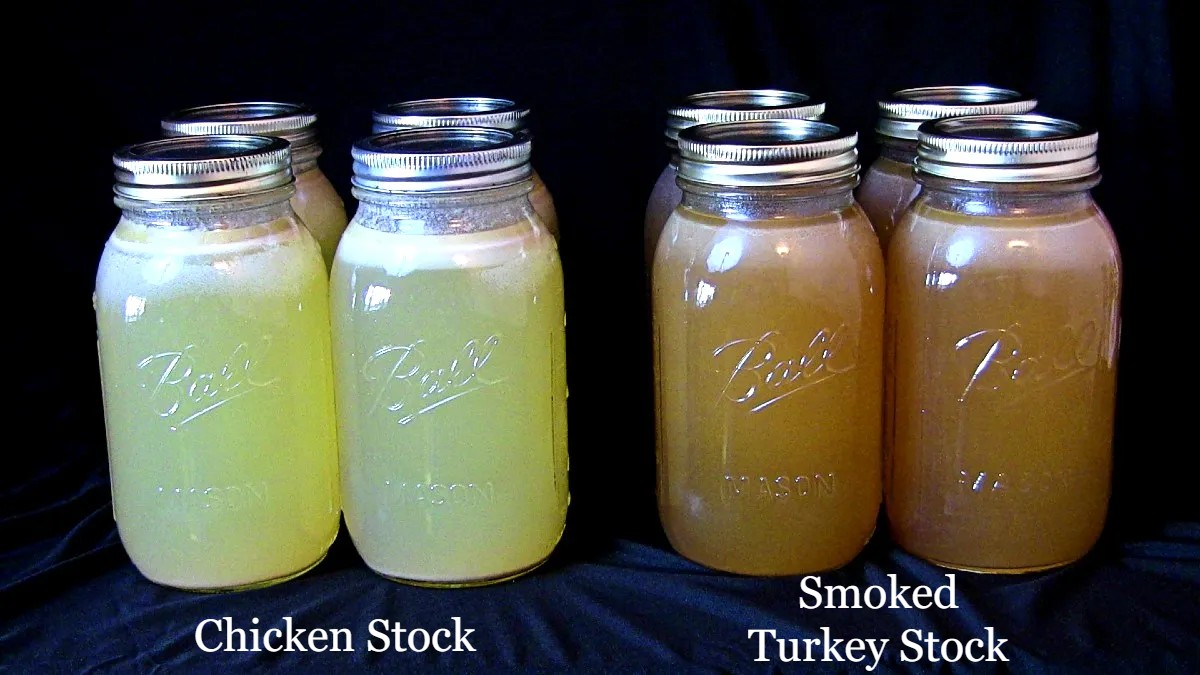
Pressure canners are great for long-term preservation of homemade stock. One can save and freeze chicken or turkey carcasses and the leftover parts of onions, carrots and celery to create shelf-stable, super flavorful soup stock.
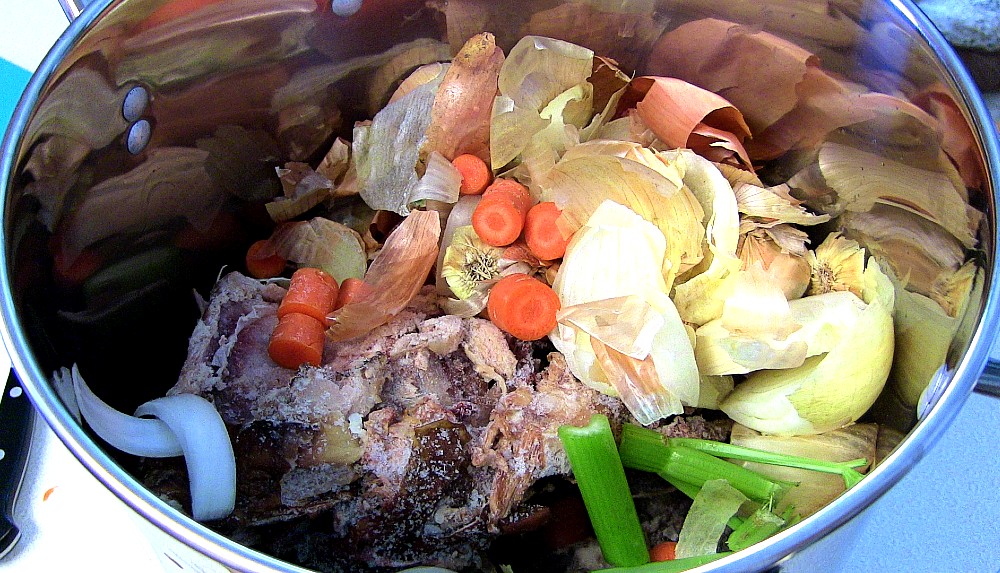
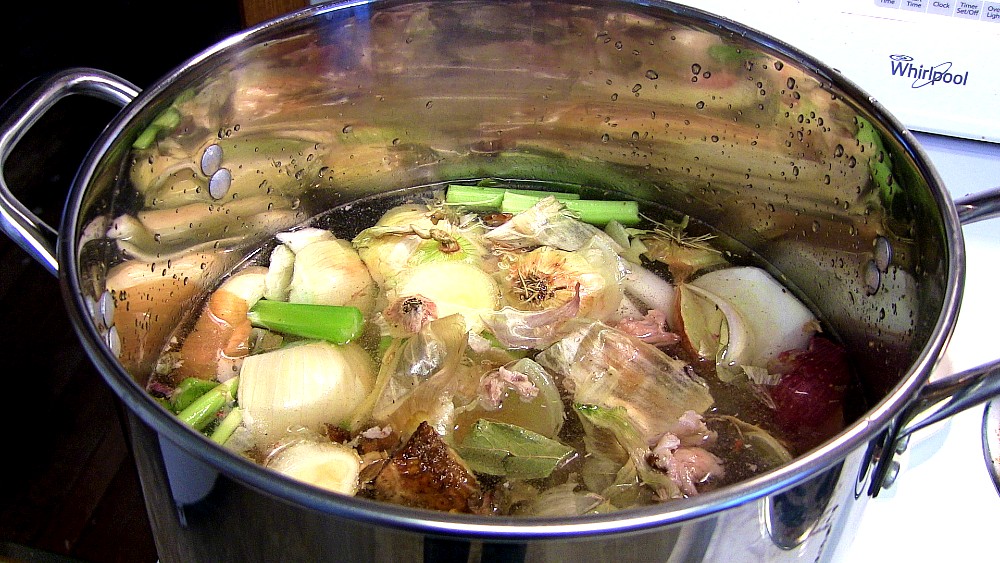
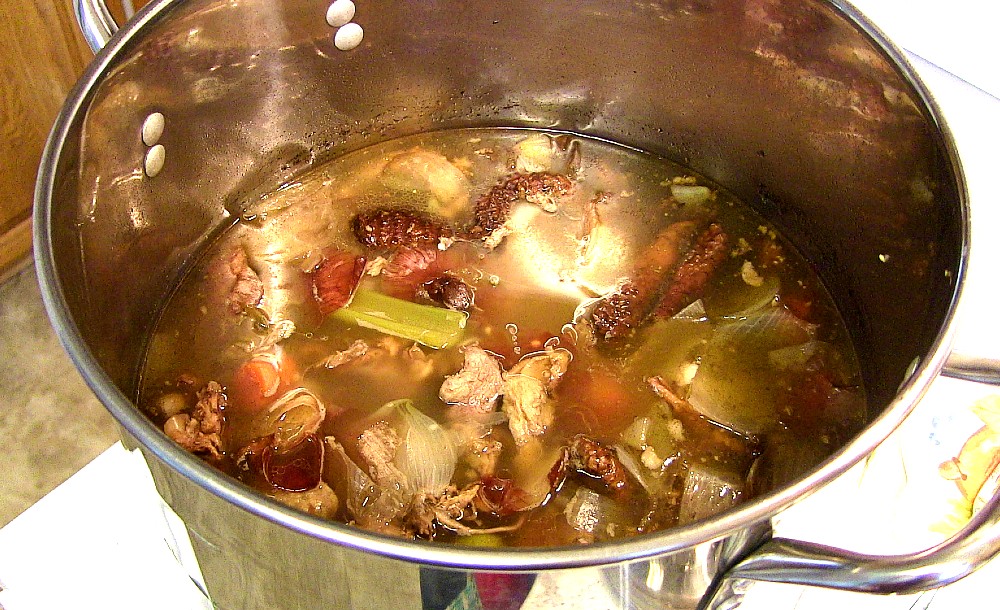
This year for Thanksgiving, I smoked a 14 lb. turkey and froze the carcass. We also saved and froze all the skins and leftover bits of the onions, carrots and celery we used when doing all our Thanksgiving cooking. Everything went in the pot to make stock.
Since I’m using leftovers, this recipe is an approximation of the quantities. Making stock is mostly throwing some carrots, onions and celery in with a bunch of bones, adding just enough water to cover and boiling for an hour. You can add in some salt, pepper and herbs if you want, but it’s not strictly necessary.
Don’t be disappointed if the final product isn’t exploding with flavor. The flavor will come from whatever you are adding when you use it to cook. Good stock is about adding a fullness and richness that comes from the fat and marrow of the bones. The fullness of the body of homemade stock is much greater than the store-bought kind.
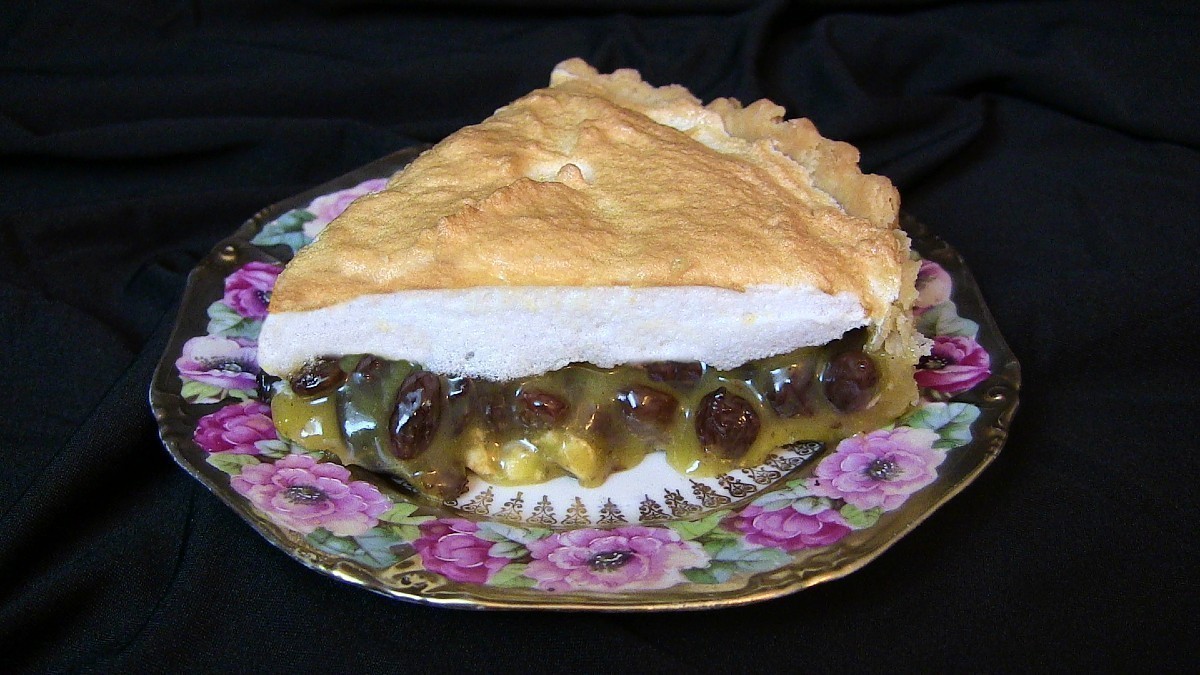
This pie was the favorite of my brother Craig and I growing up and my mom made sure to have it on hand for family gatherings. This year I made it for that same brother and niece for Thanksgiving.
I had a long time tracking this recipe down after my mother passed away and was able to find it at the University of Iowa’s Main Library Special Collections Department in the Freedom Township Women’s Club Cookbook, published in 1934.
It’s maybe a little sweet for my tastebuds these days, but the hit of sensory memory I get when I take that first bite is a time travel worthy of Dr. Who.
Step 1: Preheat the oven to 350°F. Roll out the short-crust pastry dough on a floured surface. Coat a nine-inch pie pan with oil or non-stick spray and line the pan with the dough. Place in a freezer for at least 15 minutes.
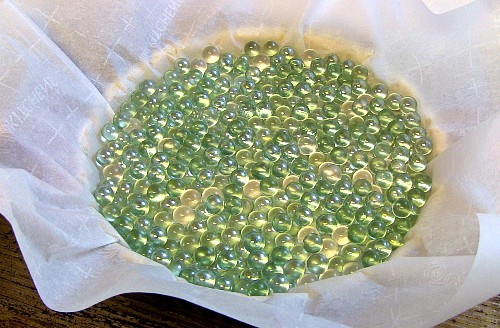
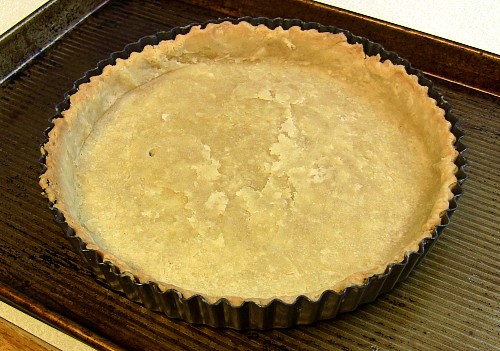
Cover the pie pan with parchment paper and weigh down with pie weights. Place the pie pan on a sheet tray and blind bake for 35-40 minutes.
Before Blind Bake with weights
Post Blind Bake
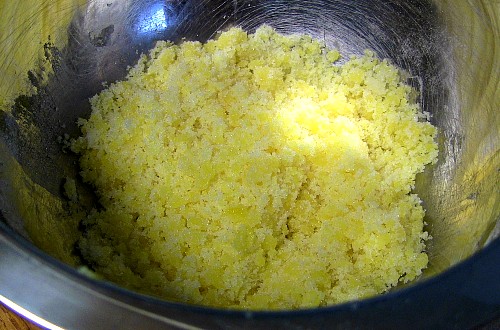
Step 2: Combine sugar, flour and egg yolks and mix well.
Egg yolks, sugar and flour
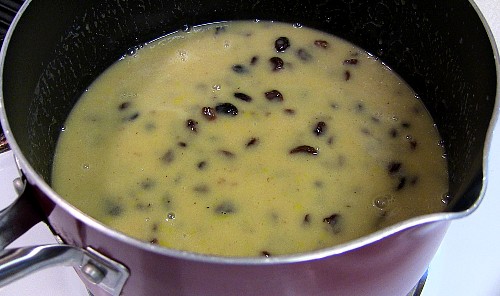
Mix in the heavy cream, raisins and vanilla extract. Heat the mixture slowly so as to avoid scrambling the eggs until the mixture comes to a light simmer while stirring constantly. Simmer lightly for about one minute until the mixture starts to thicken, then remove from the heat.
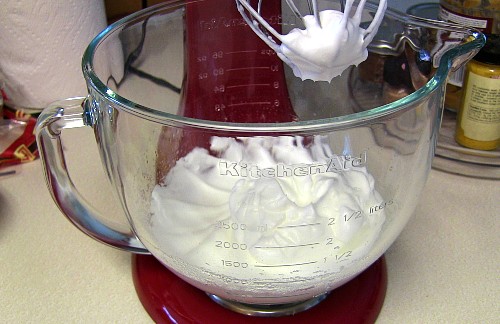
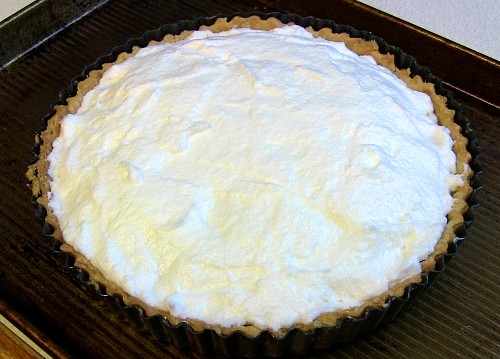
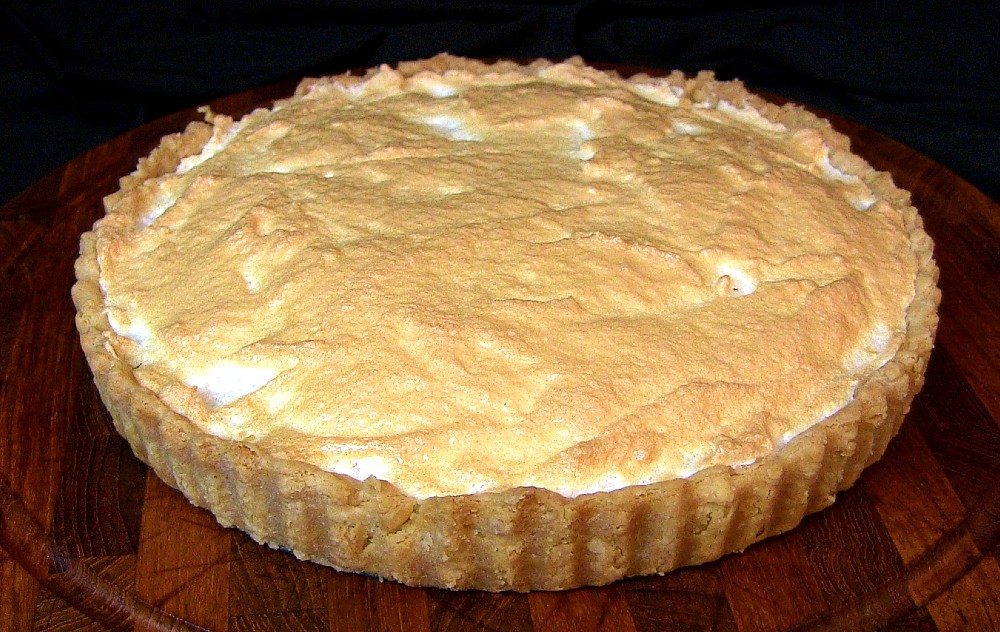
Step 3: Make the meringue by using a mixer to beat the egg whites. When the egg whites start to foam, gradually add two tablespoons of sugar and continue until you have stiff peaks.
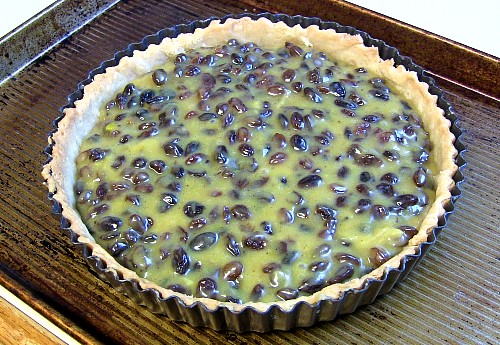
Step 4: Pour the filling into the pie crust and spread on the meringue. Bake for 15 minutes until the top begins to brown. Let cool on a wire rack.
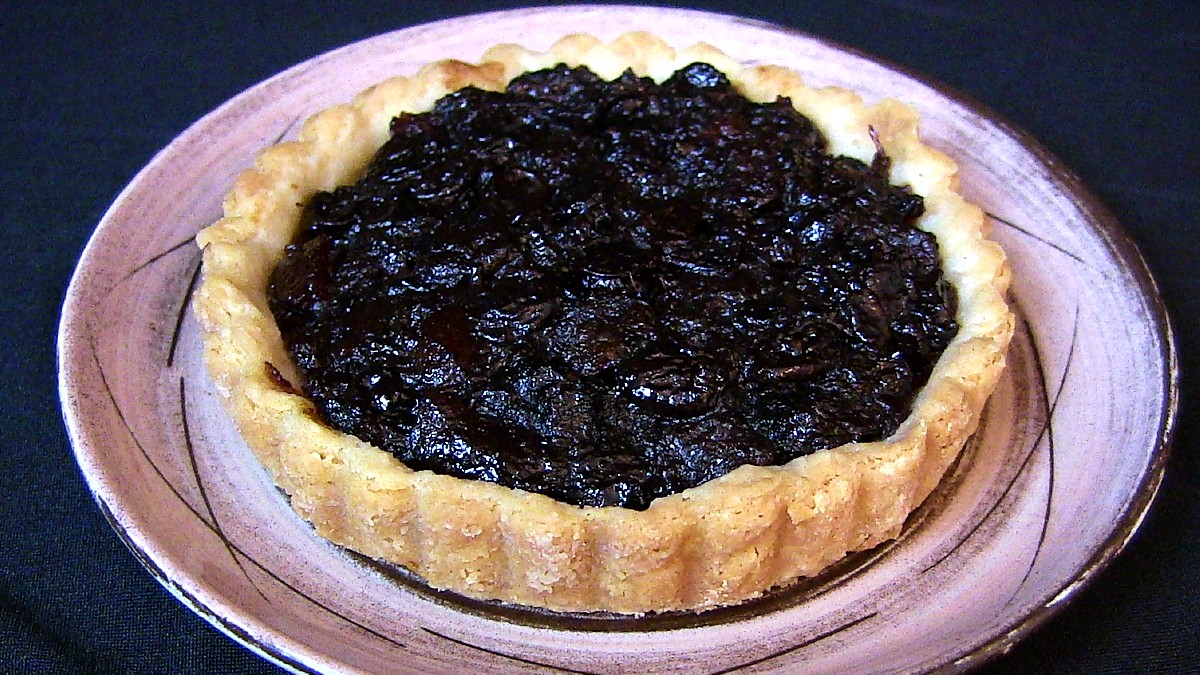
The flavor of our family recipe for a Traditional Homemade Mincemeat, made with beef and suet, is so big that a small tart is just about the right amount to enjoy.
A small amount of Pie Dough can be rolled out and blind baked for a short time and filled with a few dollops of mincemeat before finishing in the oven for 15 minutes.
Just zap for 15 seconds in the microwave before serving.
Directions:
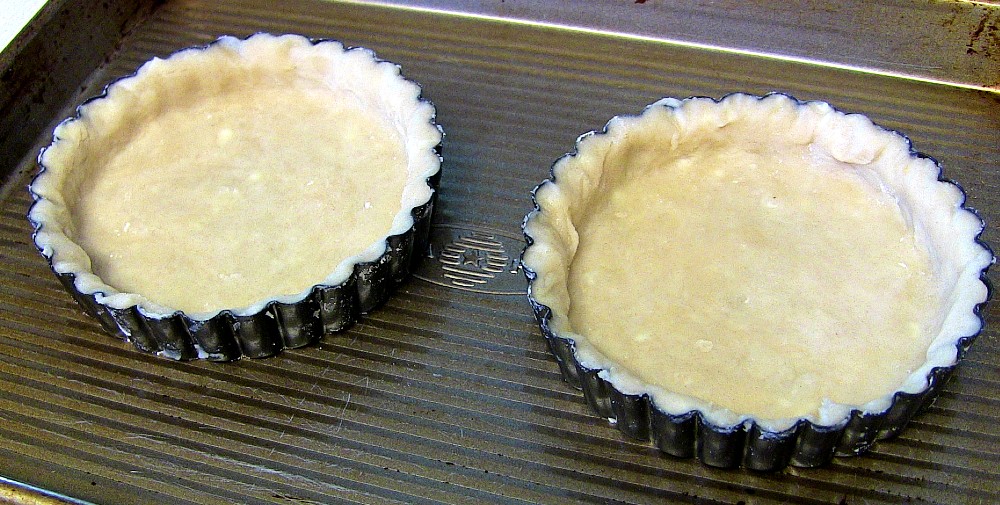
Step 1: Preheat oven to 400°F. Roll out a small amount of Pie Dough. Coat tart pans with oil or non-stick spray and line pans with dough.
Tart dough pre-baked
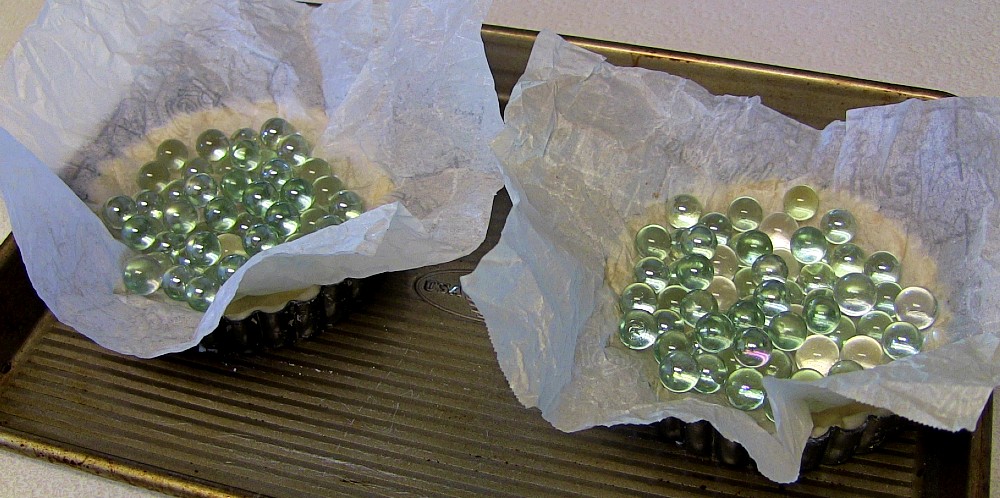
Step 2: Crumple parchment paper and place on the tart dough in the pans. Fill with pie weights. Bake at 400°F. for 15-20 minutes.
Tart dough with weights for blind baking
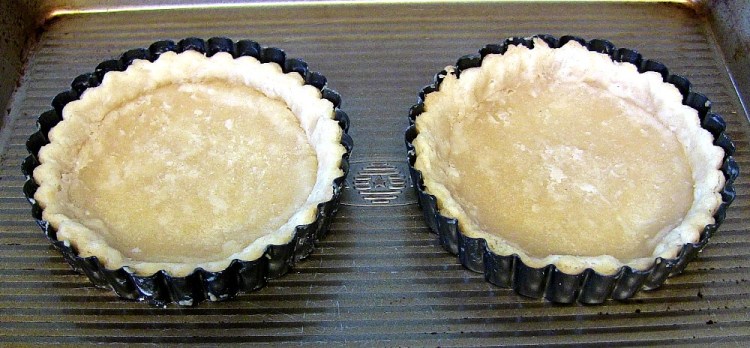
Tart dough after blind baking
Step 3: After blind baking the dough, fill with mincemeat and bake another 15 minutes.
The social isolation of Covid was a long haul. After a long Iowa winter, after our family was safely vaccinated, I got a message from my oldest brother in May of 2021 asking if he could come down for the Memorial Day weekend. He wanted to make mincemeat. In summer.
Typically, the flavors of mincemeat are more akin to winter eating, being strong with clove, cinnamon and nutmeg. In fact, that trio of spices has symbolic significance since they are supposed the represent the Three Gifts of the Magi at Christmastime.
However, he is in possession of a family recipe for a true traditional mincemeat made with beef and suet and I looked at this as an opportunity to share an activity together that would not only preserve a bit of family history, but also explore a bit of forgotten food history. Mincemeat has been around for centuries but gradually the meat disappeared and it became the sweet-tasting dessert we know of today.
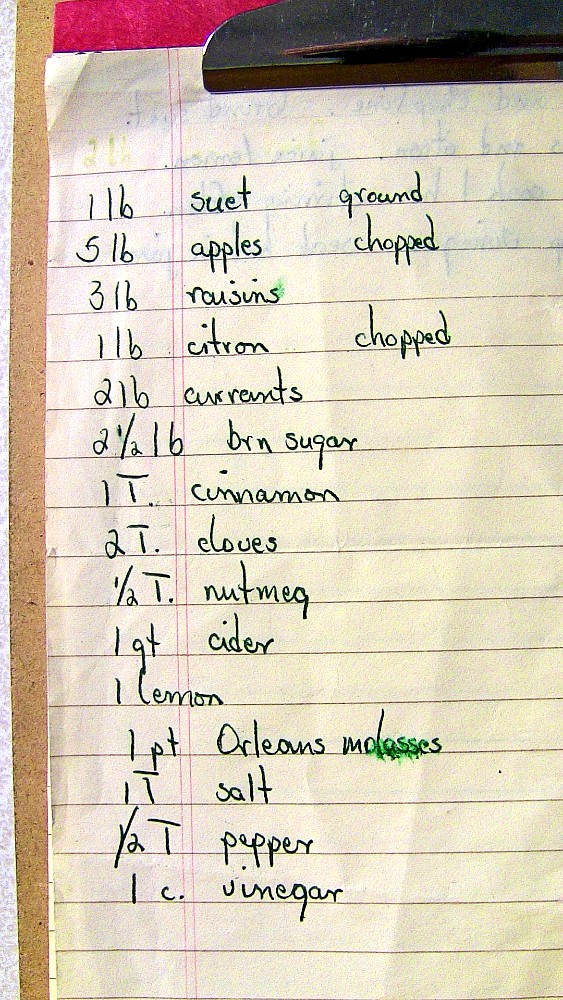
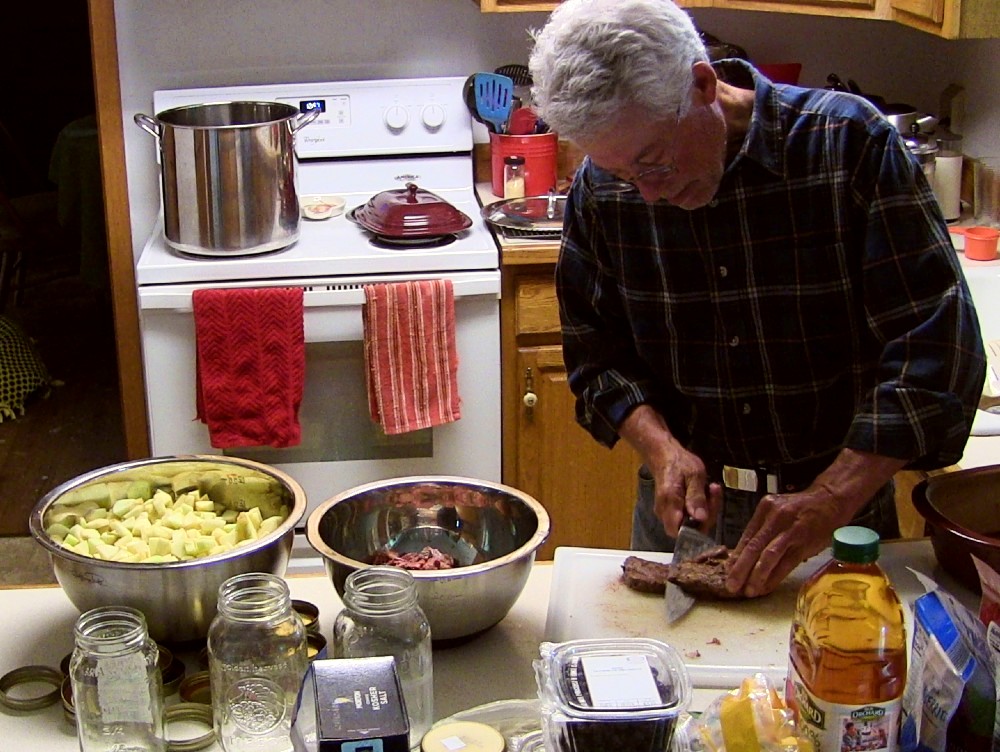
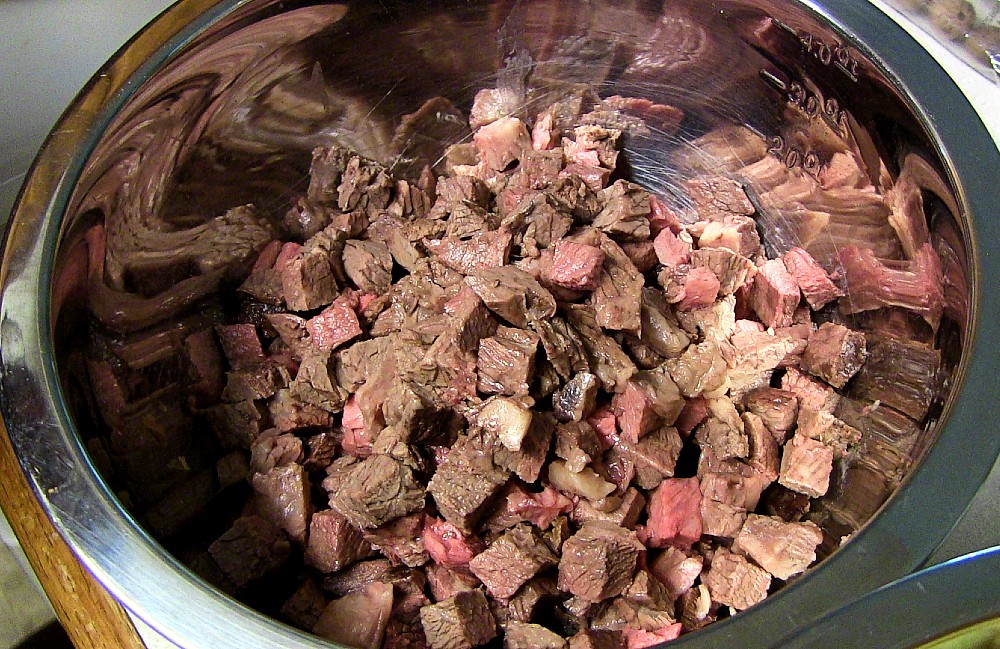
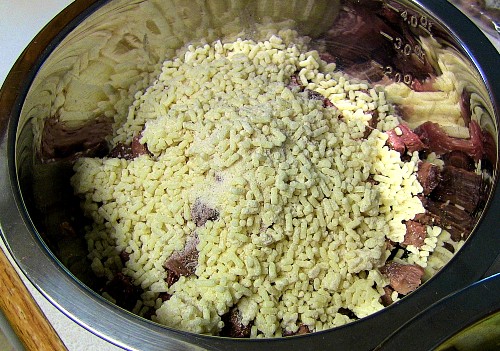
We’re not sure about the provenance of this recipe beyond the fact that it came from my uncle, Virgil. My brother’s innovation is to use a good quality cut of beef instead of junky scrap cuts, which is what people have traditionally done. We used a standard-sized beef chuck roast from the supermarket that we cooked and cut up into bite-size pieces.
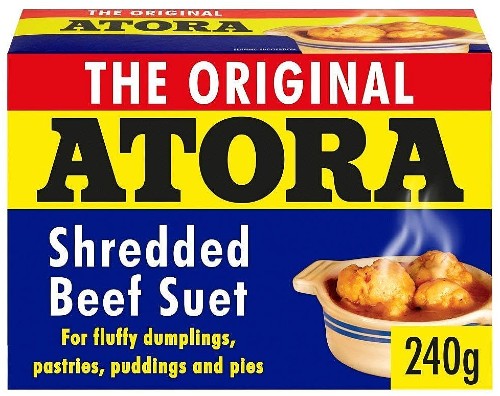
Finding beef suet on short notice was a bit of a trick. Suet is a crumbly fat that surrounds the kidneys and organs of cows and sheep and was prized by bakers, but is not a common item anymore. The Atora brand has been around since the 1800s and I was able to order it online.
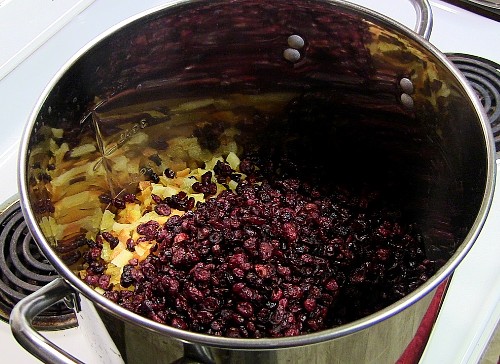
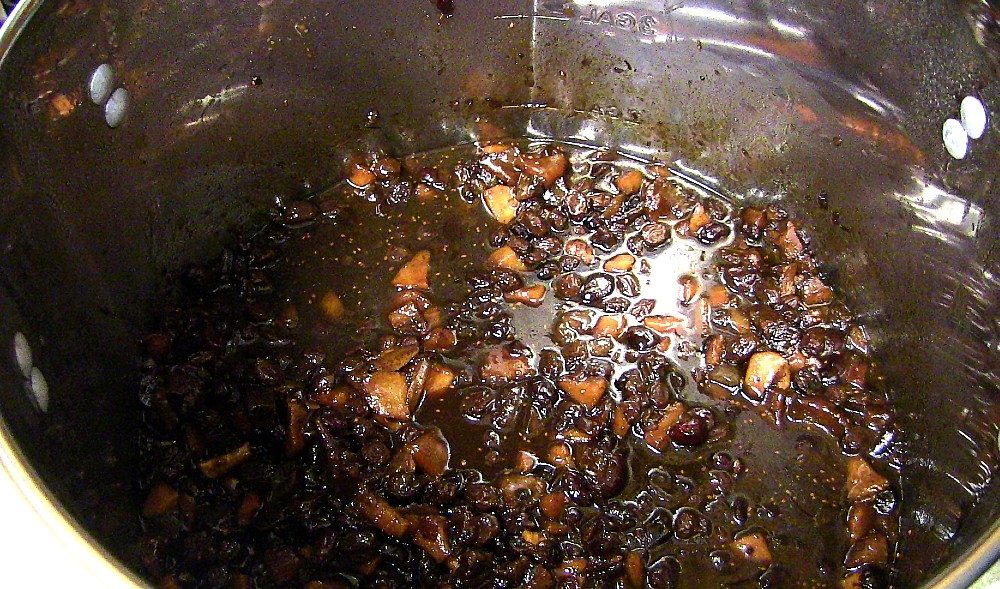
The recipe calls for a HUGE amount of citron. The fresh fruit was completely out of season and grocery stores are not carrying anything like candied fruit except during the winter holidays. We decided to make our own candied citrus peel from scratch and it turned out glorious. Making your own candied mixed peel from scratch is really not that hard and there is no comparison between that and the gooey, DayGlo-colored commercial stuff you can buy in stores.
We decided to substitute dried cranberries for currants. Currants are very pricey and I already had a stockpile of dried cranberries. We also liked the idea of having the tartness of the cranberries to counter the sweetness of the other fruits and brown sugar.
The final result is, hands down, the best tasting mincemeat I’ve ever had. There’s a complexity to the flavor that is not remotely there with modern mincemeat made without beef and suet. Modern mincemeat is dominated by sweetness. The sweetness of a traditional mincemeat is appreciated more because it plays off the depth that is anchored by the beef and suet. It’s like a funk band with a really good bass player.
Chic “Good Times”
This recipe makes eight quarts. It’s a huge amount and we did not try to size it down. It does freeze well.
It was a lovely weekend and I was grateful for the chance to preserve a family tradition and work on this project with my brother together.
Ingredients:
2 -3 lb. Beef Chuck Roast
1 lb. Suet, ground
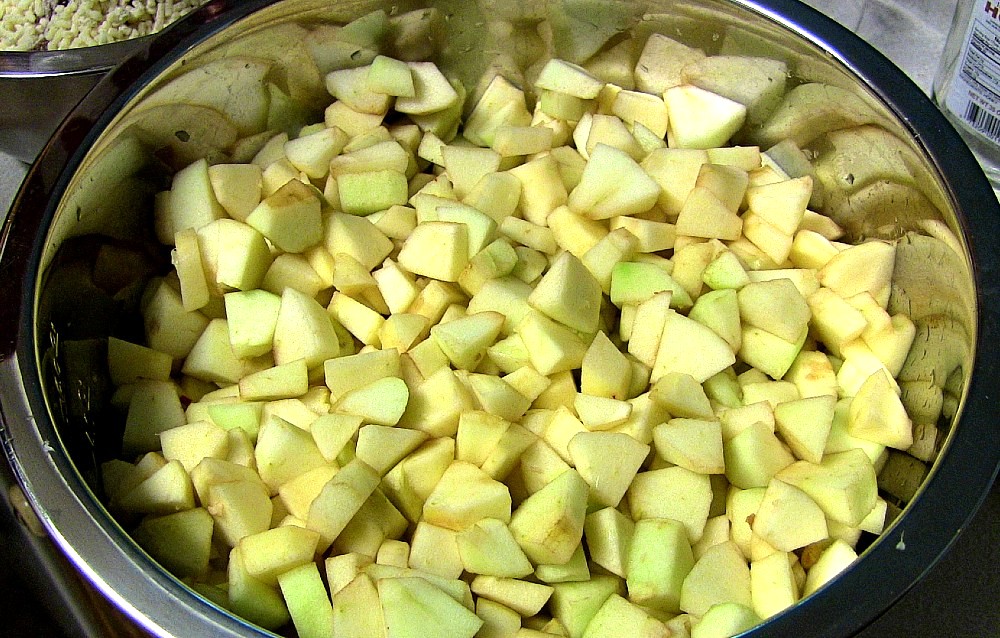
5 lbs. Apples, peeled and diced. Tart varieties like Granny Smith preferred
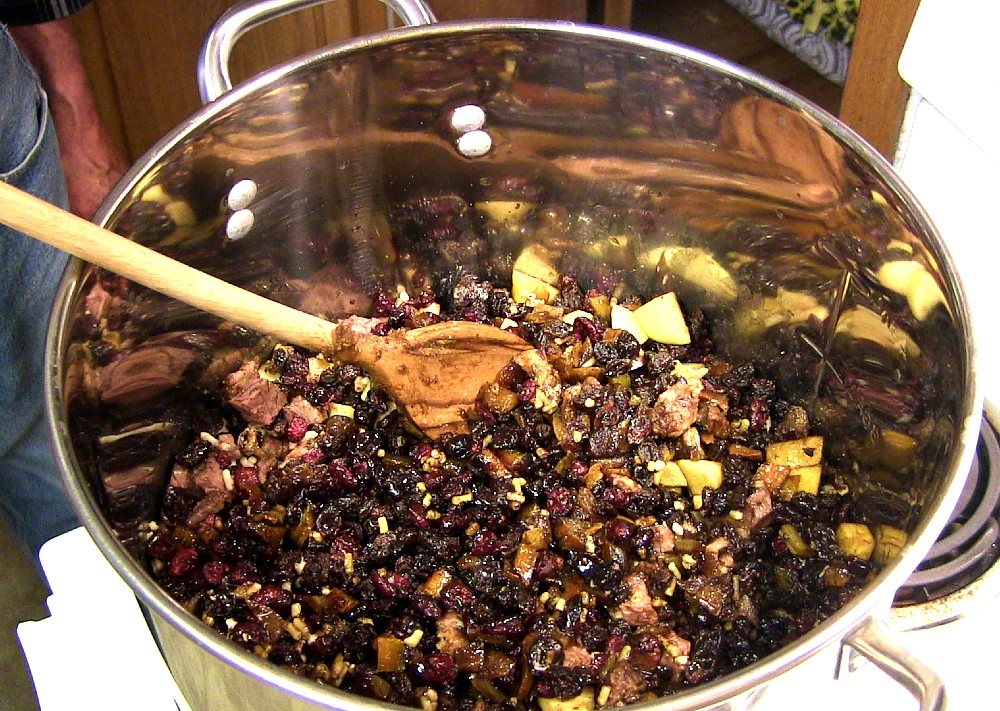
Combine brown sugar, salt, pepper, ground cinnamon, ground cloves, and ground nutmeg. Add to the mincemeat and mix well.
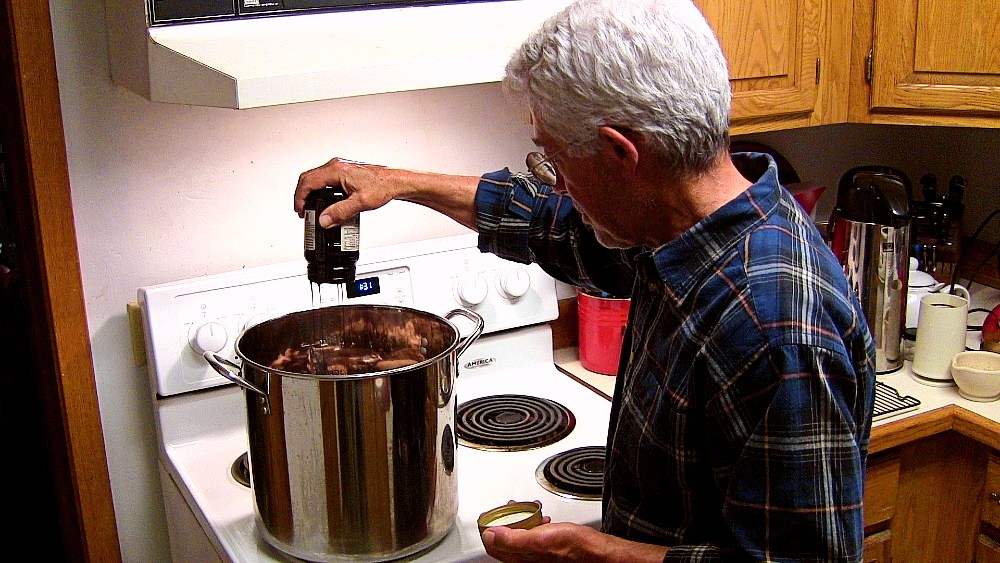
Mix in the apple juice, lemon juice and molasses.
Bring to a simmer and cook for one hour, stirring occasionally. Allow to cool. Refrigerate and freeze excess.
Adding Molasses
Before Cooking
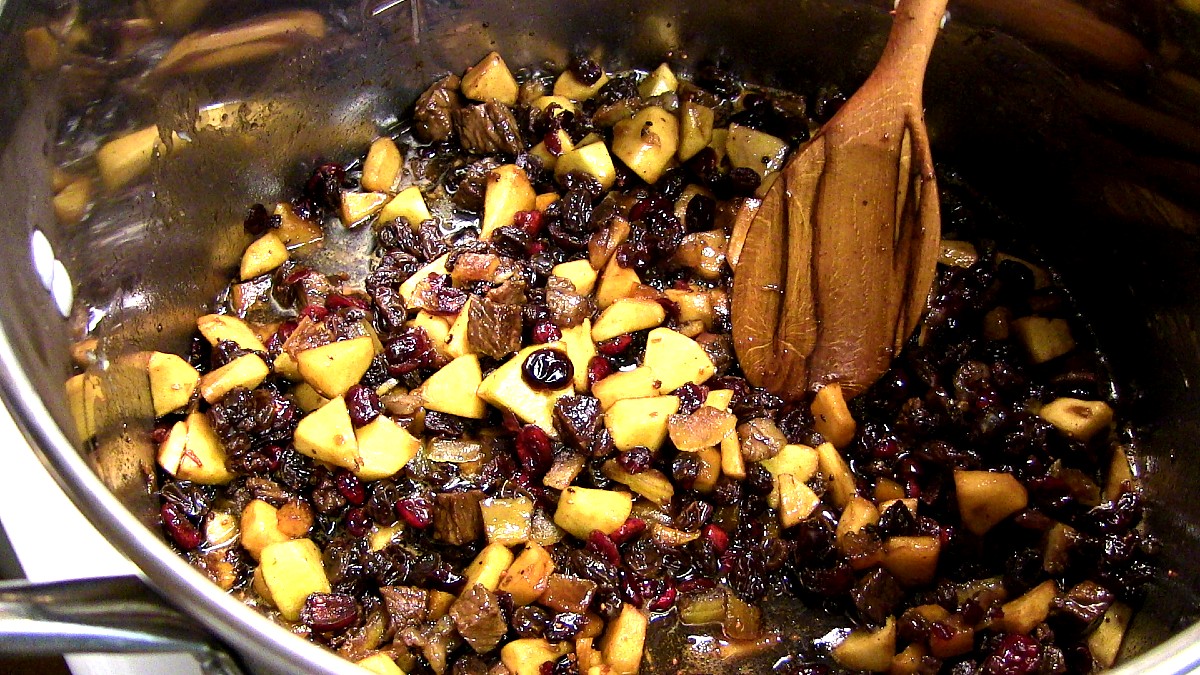
After Cooking
Notes:
Mincemeat has been around for many hundreds of years and came about as a means of preserving meat without salting, curing, smoking or drying it.
Mince pies descended from meat pies made from mutton and spices and came to be associated with Christmas in England after the Crusaders brought back spices from the Middle East. The trio of cinnamon, clove and nutmeg came to be viewed as symbolic of the gifts given by the three wise men on Christmas night. Mince pies were baked in the shape of a crib. Mince pies of the Middle Ages were made of 13 ingredients to symbolize Christ and the 12 apostles.
The mincemeat pie was once banned in England. The Puritans, under Oliver Cromwell, thought celebrations like Christmas and Easter were too decadent and not biblical since they aren’t specifically mentioned in the Bible. According to the website for The Cromwell Museum, Parliament introduced a new ‘Directory of Public Worship’ in 1645, designed as a replacement for the Book of Common Prayer. It said that Christmas, Easter and other such festivals were no longer to be observed with special services or celebrations.
I mentioned the Book of Common Prayer in my post about Christmas Pudding with Brandy Sauce because that is where the tradition of “Stir-up Sunday” comes from as the day to start making Christmas Pudding. On the last Sunday before Advent, which is five weeks before Christmas, the opening words of the Book Of Common Prayer reads: “Stir up, we beseech thee, O Lord, the wills of thy faithful people,” and this date has been used for generations as the day for families to gather and “stir-up” the Christmas Pudding. I imagine there was an element of poetic “stick-it-in-your-eye” when this tradition came about that was aimed at the Puritans.
There’s an old English tradition that says the mincemeat mixture should be stirred in a clockwise direction when cooking in order to bring good luck. It was considered to be unlucky to cut the pie with a knife. They used to be made as hand pies and one pie was eaten for each of the 12 days of Christmas as a way to ensure a year of good fortune.
According to the website for The Mince Pie Club, tradition also says that one should make a wish whilst eating one’s first mince pie of the festive season, and that mince pies should always be eaten in silence. Mince pies should traditionally have a star on top, to represent the Christmas Star which led the shepherds and Magi to the baby Jesus in Bethlehem.






















 Schmecken!