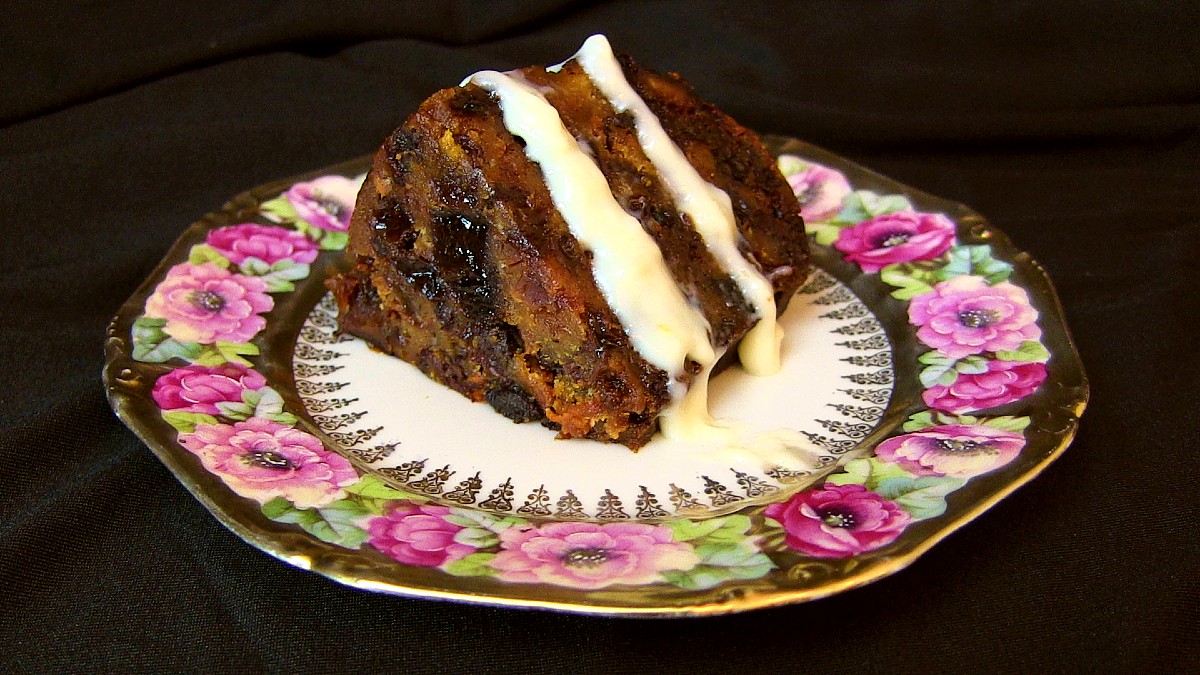
Many people reacted to the pandemic by starting a garden, taking up baking and learning about food preservation. Pressure cookers and home canning supplies were in short supply because of the increased demand.
In many ways, this was right up my alley because I grew up on a farm with parents who grew up in the Great Depression. When I was 14 years old in 1976, I started subscribing to The Mother Earth News. My dad had quit using chemicals on his farm in 1968 because he became concerned about the impact of farm chemicals on the water supply and environment. The Back-to-the-Land movement resonated with me as a young man.
The Waltons also played a factor because it came on the air in 1972 when I was 10 years old. I felt I was able to connect to my parents because they were kids in a rural setting at the time when that show took place.
And then there was The Good Life. When it was shown in the United States on Public Television, the British TV show that originally ran in the 1970s was called Good Neighbors. It’s about a couple living in the London suburb of Surbiton who decide to quit the rat race and become self-sufficient. It was an enormous hit and has been a beloved show for decades.
The book Zen and the Art of Motorcycle Maintenance informed the hippie ethic of the 1960s and ’70s with the pursuit of quality over quantity and the affirmation of homemade food over TV dinners was an expression of that ethic. Home canning, craft beer and sourdough bread all saw a resurgence.
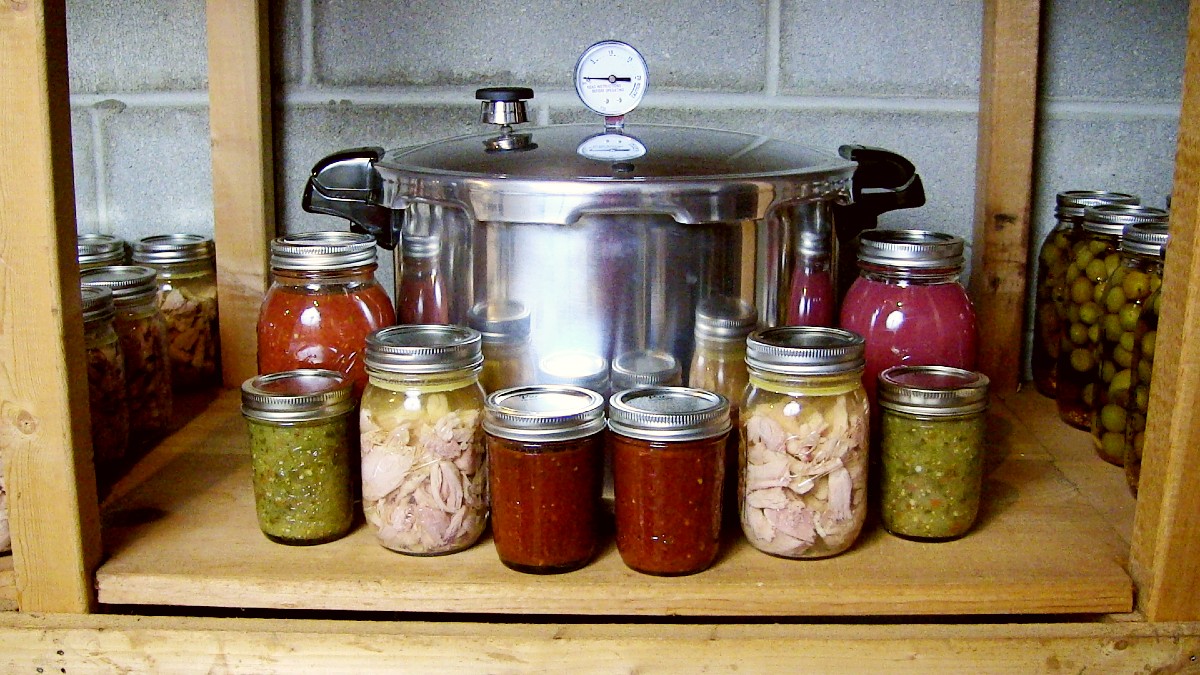
Our basement, 2021
Another response to the pandemic which involved stocking up was informed by the Doomsday Prepper movement. That movement had it’s own enormously popular television show that became a cultural phenomenon.
Unlike the Back-to-the-Land movement, the Doomsday Prepper movement is a dark, paranoid vision of life. Instead of a quest for a better life and a better society, the Doomsday Prepper movement is about throwing in the towel on society and hunkering down to a miserable existence of packaged meals-ready-to-eat and dehydrated foods suitable to eat only if nuclear war has eliminated all other options.
Both The Good Life and Doomsday Preppers are fantasies, although DoomsdayPreppers calls itself “reality” television. That’s the tyranny of people pushing the “American Carnage” narrative; they want to squash everyone else’s reality so that, once society breaks down, they can thrive after making everyone else as miserable as they are.
A lot of individual choices go into making a society. Do you want to be good neighbors and live where people exchange homemade goodies across the fence or do you want to be that asshole who leaves a floodlight on in their backyard all night because you’re convinced The Brown Hordes are coming to take your stuff?
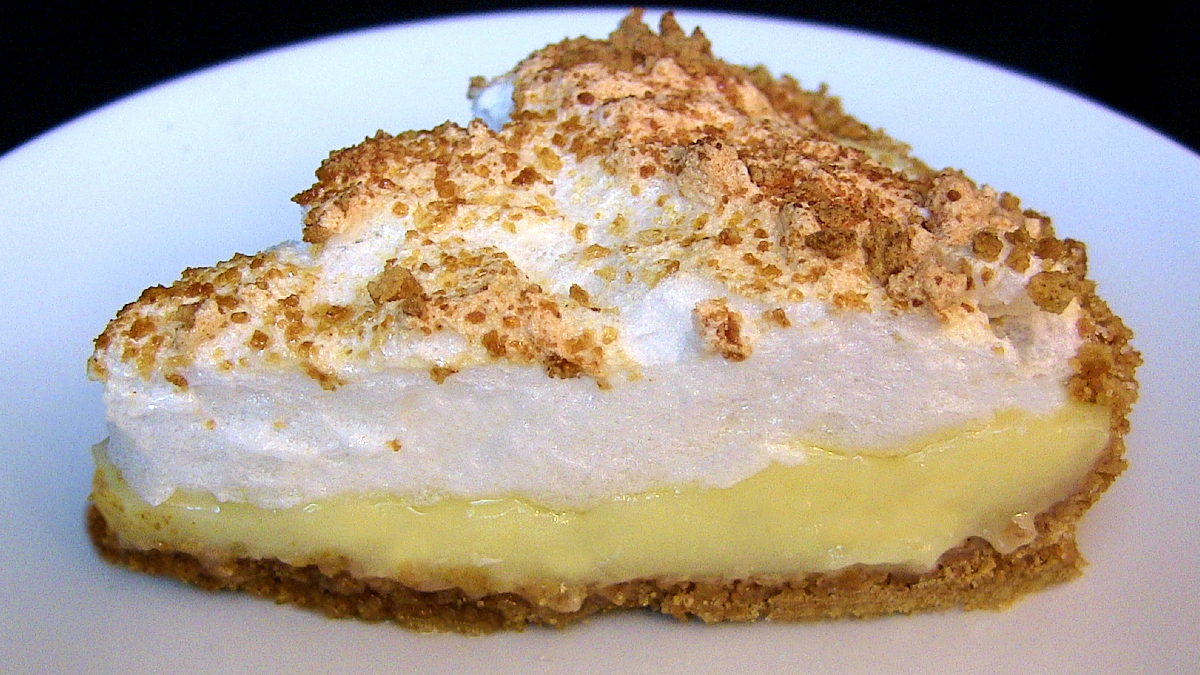
I was researching family history in the Special Collections Department at the University of Iowa’s Main Library when I came across a recipe for something called “Keokuk Pie.” It was in a cookbook published in 1934 by the Freedom Township Women’s Club. Freedom Township is a rural area east of Emmetsburg, Iowa and my grandmother belonged to the club when my grandparents farmed there at that time.
I’d never heard of Keokuk Pie. I looked online at the menus of restaurants located in Keokuk, Iowa and nobody carried anything called Keokuk Pie. A broader internet search turned up nothing. Why would this pie be called Keokuk Pie?
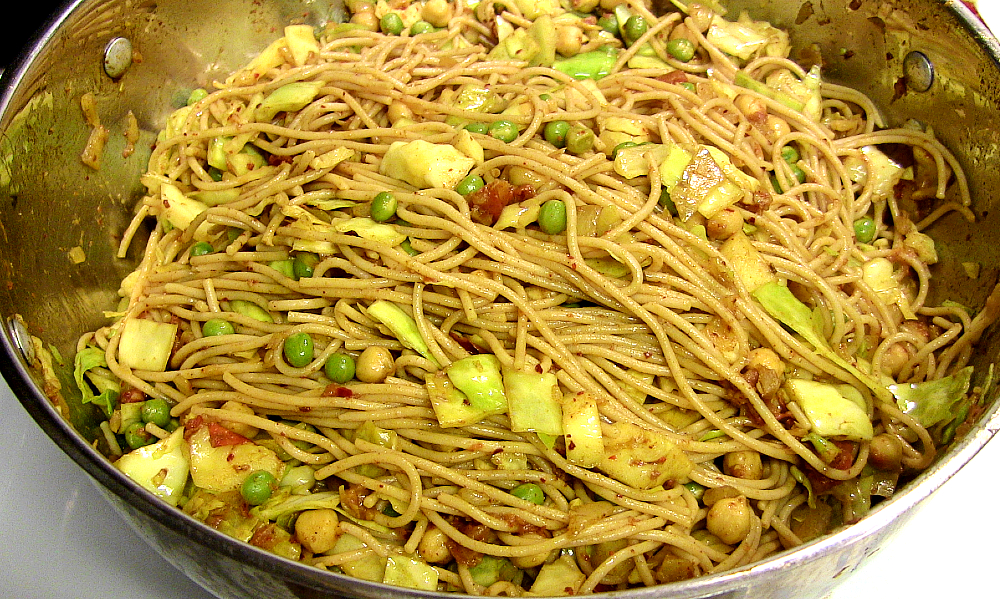
It’s basically a vanilla cream pie. Mark Twain, who lived in Keokuk, Iowa in 1855 and wrote for the local newspaper, is said to have written more words about pie than any other American author. None of them were about vanilla cream pies.
Keokuk, Iowa served as a departure point for 2,500 Mormons setting out for the long journey to Salt Lake City in 1853. According to a magazine article published in 1976 by the Church of Jesus Christ of Latter-day Saints, the favorite dessert of Joseph F. Smith was a custard pie. However, the recipe for the Mormon leader’s favorite pie clearly states that it contains “no vanilla.”
So why Keokuk? Did Mrs C.J. Miller, of Emmetsburg, Iowa, have a particularly good slice of vanilla cream pie while visiting Keokuk, Iowa and forever call all vanilla cream pies “Keokuk” pies thereafter? That’s as good a theory as any I guess.
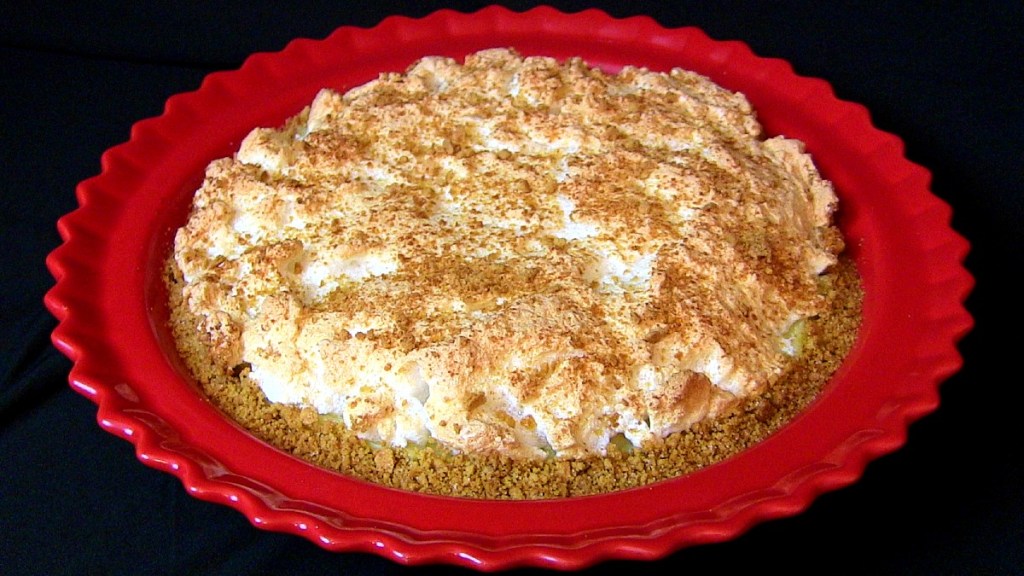
Well, whatever the reason, it’s a pretty dang good pie. It can be made on short notice from items found in a typical kitchen. Someone can score major points by making Keokuk Pie and saying, “Oh, this? Why, it’s just something I threw together. It’s called Keokuk Pie. Oh, you’ve never heard of it?”
I’d probably make up a story about Mark Twain or the Mormons at this point.
Directions:
Pie Crust
12 flats (6.3 oz.) Graham Crackers, crushed into crumbs
2 tbsp. Sugar
4 tbsp. Butter, melted
Preheat oven to 350°F. Mix cracker crumbs, sugar and melted butter and form a crust in a nine-inch pie pan, reserving a tablespoon of crumbs for topping. Use a spatula to tamp down the crumbs firmly in the pan. Bake the empty crust for seven minutes.
Filling
1½ cups Whole Milk
2 Egg Yolks
2 tbsp. Corn Starch
6 tbsp. Sugar
½ tsp. Pure Vanilla Extract
Combine sugar and corn starch, then mix in egg yolks. Add milk and whisk thoroughly. Slowly heat the mixture while stirring constantly in order to avoid scrambling the egg yolks. Heat to bubbling and continue stirring for about two minutes until it thickens to a pudding-like consistency.
Meringue
2 Egg Whites
2 tbsp. Sugar
Beat the egg whites until foamy, then gradually add the sugar and continue until you have stiff peaks.
Pour the filling onto the pie crust and spread on the meringue. Sprinkle the top with reserved graham crumbs. Bake for 15 minutes until the top begins to brown. Let cool on a wire rack.
*** Thank you to The Storm Lake Times for running an article from this post. ***
The 20th anniversary of 9/11 comes at the same time as canning season and the metaphor of taking stock has been playing on my mind.
When I started this blog two years ago it was so I could have a creative project that someone else could not take away from me. Long story, but I’ve had a lot of opportunities that have gotten torpedoed just when they might have had a chance to develop and grow and the consequences have been life-altering. I finally had one too many.
20 years ago was also a time when I was taking stock because things had not been working out for a long time. When I was in my early teen years I was someone who had a creative spark, was reasonably intelligent and could communicate well.
At key moments in my life, when there was a door open to a professional opportunity that looked like I was going to be able to develop my talents, something happened to slam the door shut. And then one day, like many people, I looked back and realized that I was a long way from that kid on the farm who had all that potential.
It was always kind of a long shot anyway because I did not come from a culture that valued individual growth. Growing up in rural Iowa, conforming to the norms of the group was the dominant ideology.
The funny thing is, it has often felt like my efforts to develop a professional life have been blocked by the gatekeepers to another kind of group. A kind of club. It’s a club full of people who were encouraged from a young age to develop their talents and they were telling me that I didn’t belong.
I’ve made a conscious effort to reconnect to that kid who represented the best of my young self. I feel a need to develop my own expression even if it never connects to an audience just so that I can see where it goes. It always got shut down before.
I think a lot of the resentment rural people have towards those who celebrate personal expression and growth comes from the fact that many rural and working class people feel like they never got the chance to develop as individuals so why should anyone else?
And that’s where the appeal of Donald Trump comes in. I know that sounds like a stretch, but bear with me.
My first thought when I tried to understand the appeal of Donald Trump was that he is a fantasy figure. He’s what people think they would be able to act like if they ever won the lottery. All the frustrations they’ve ever had in life would be removed because they could just walk over anybody who got in their way. He’s the repressed Id on steroids.
Trump Golden Idol. Photo: AP News
I think Trump supporters look with anger at people in the arts, people marching for liberation, people in academia and people experimenting with gender identity because they feel resentment toward people who seem to be playing by a different set of rules.
And I get that.
As I’ve tried to re-career throughout my life, I’ve gotten blocked by people who don’t think I belong in the club.
But I’ve kept coming back to the idea of reconnecting to the young teen who grew up on an organic farm. At the age of 39, I moved to a small town in Iowa and bought a natural foods store that I ran for seven years. That’s when I discovered that small town Iowa was not the same place I grew up in and the culture of resentment I experienced predicted the rise of Donald Trump.
I was only in my late 40s when I moved away from there and ran face-first into a wall of ageism that was ready to throw me on the scrap heap of society. It’s been a long decade plus since then.
But when Covid hit I found that a lot of my farm mentality became a positive. I could conceptualize Covid as being like the Great Depression. My parents had grown up during the Great Depression and, funny as it may sound, I felt a connection with them about that through the TV show, The Waltons.
Hey, I was ten years old when it came on.
In a lot of ways, journaling and blogging has been a way to get in touch with my inner John Boy.
The Waltons
Which brings me back to canning.
See, it all ties together!
And to gardening. And to the fact that for a number of years we have been converting our backyard into a perennial wildflower pollinator haven. I truly believe our backyard has more soil microbe, insect and pollinator activity than the average Iowa cornfield.
Our mental health during Covid has been surprisingly good because we have rejected the expectations of society and have taken pleasure in the rhythm of the seasons of our home and yard. Gardening and freezing and canning have given us activities that keeps us productive with a sense of accomplishment.
Cooking gives you a reward that office politics cannot take away. Opening up a jar of something in the wintertime made of something you grew in the summer is a reminder that seasons come and seasons go and that each has its own rewards.
I think a lot of people freaked out so much during Covid because their status as members of a group was threatened. That wasn’t such a big loss for me because I’ve been consistently rejected by the dominant groups of every community I’ve lived in my whole life.
So I don’t really have any great insights into the meaning of 9/11 or the times we live in other than these moments are opportunities for reflection and, hopefully, a chance to see that growth has been happening and that things are getting better. I’m trying to write my own narrative and not let other people write one about me.
I will close with some contemplative music that was some of the most requested to Public Radio stations after 9/11. It’s called Farewell to Stromness and is about a town on an island off the coast of Scotland that almost disappeared. Almost.
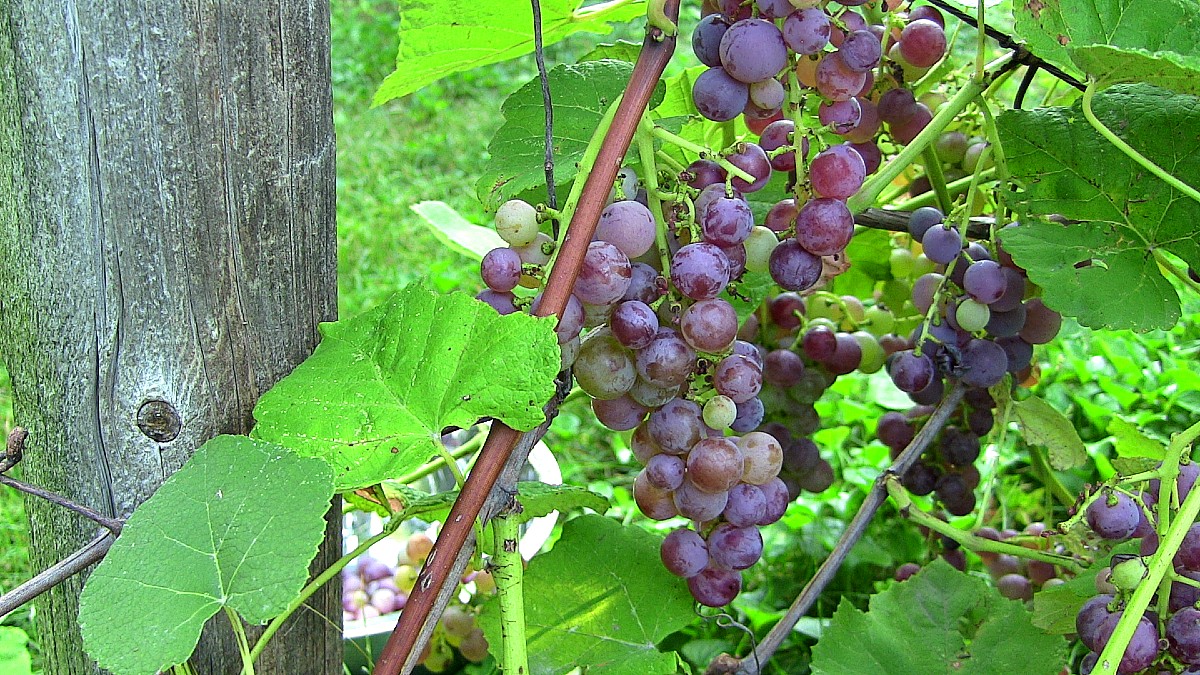
We’ve been converting the lawn in our backyard to a large pollinator garden full of drought resistant perennial flowers and native grasses. It’s a response to climate change and a desire to encourage biodiversity. It’s also building on the legacy left by the original owner of the house who was an avid gardener and winemaker who planted Marechal Foch grapes in the 1970s.
The grape was prominent in the Upper Midwest because it could survive the harsh winters and is disease resistant. I’ve had to learn about pruning and have made some lovely jam from the fruit before, but usually the birds eat most of the grapes before we ever do much with them.
Last year the birds ate every one a good three weeks before they were even close to being ripe. This year we were determined to enjoy some so I started picking them before they were completely ripe and freezing them whole until I could decide what to make from them. After I had five gallon-sized freezer bags full I started to get concerned about how much space they were taking up.
I decided to can the juice and that has wound up being the thing I want to experience most this winter as a way to remind me of summer by mixing it with sparkling mineral water.
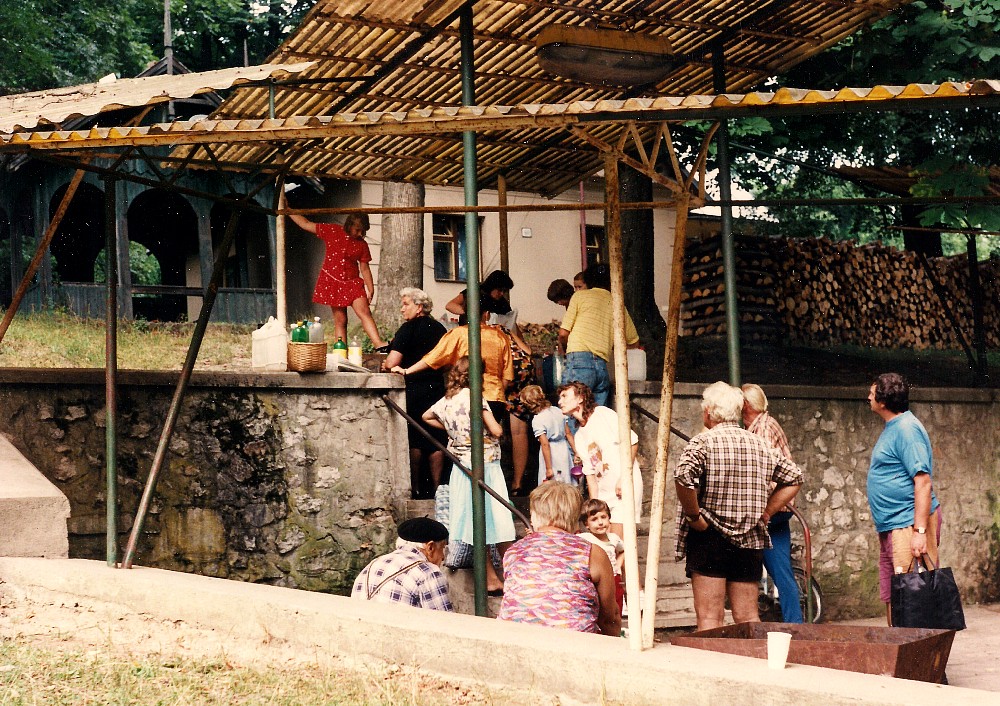
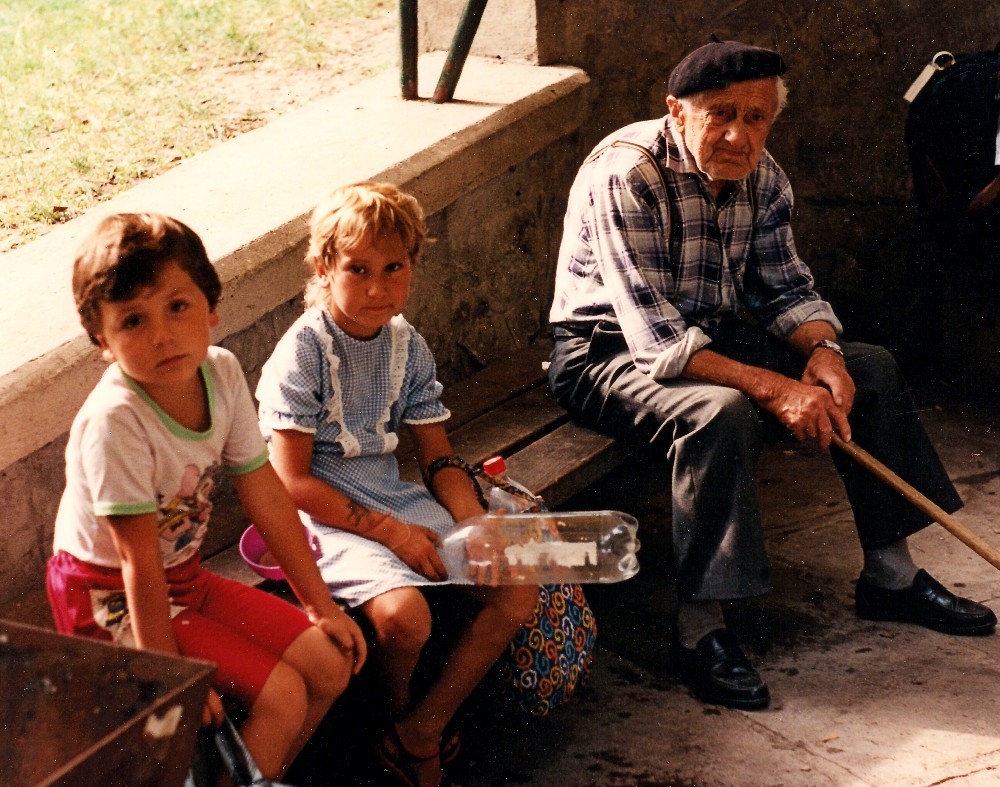
It’s also a way of reminding me of a mission trip I went on with my mother to Tisovec, Slovakia in 1994 after my father had died. A free-flowing spring is located a few hundred yards outside of town and locals hike out with carts and backpacks to fill bottles with the naturally carbonated mineral water.
People there would mix a homemade fruit syrup with the mineral water to make a refreshing naturally-flavored carbonated soda.
Naturally Carbonated Mineral Spring in Tisovec, Slovakia
Communal Mineral Spring in Tisovec, Slovakia
Waiting to fill bottles at the mineral spring in Tisovec, Slovakia
We’ll wind up with about a dozen quarts of a lovely unsweetened grape juice made from our own grapes. It’s quite nice without any additional sugar.
There’s not much to making it, really. Just bring the grapes to a simmer and boil for 10 minutes – just enough to break down the skins while crushing them with a potato masher. Marechal Foch grapes are seedless. Strain through a fine mesh Chinoise or cheesecloth and process according to the USDA Complete Guide to Home Canning instructions. Basically, if you’re doing water bath canning it’s processing at a full boil for ten minutes and if using a pressure canner it’s six lbs. of pressure for ten minutes.
We’ll enjoy it in the wintertime as a way of reminding us of summer. There’s a satisfaction that comes from something you made yourself that can’t be matched by simply being a capitalist consumer.
There’s a timelessness to following the ebbs and flows of the seasons. Growing … producing … stocking up. Then, in the dead of winter, getting a flood of memory from opening up a jar.
“No sooner had the warm liquid, and the crumbs with it, touched my palate, a shudder ran through my whole body, and I stopped, intent upon the extraordinary changes that were taking place.”
― Marcel Proust, In Search of Lost Time
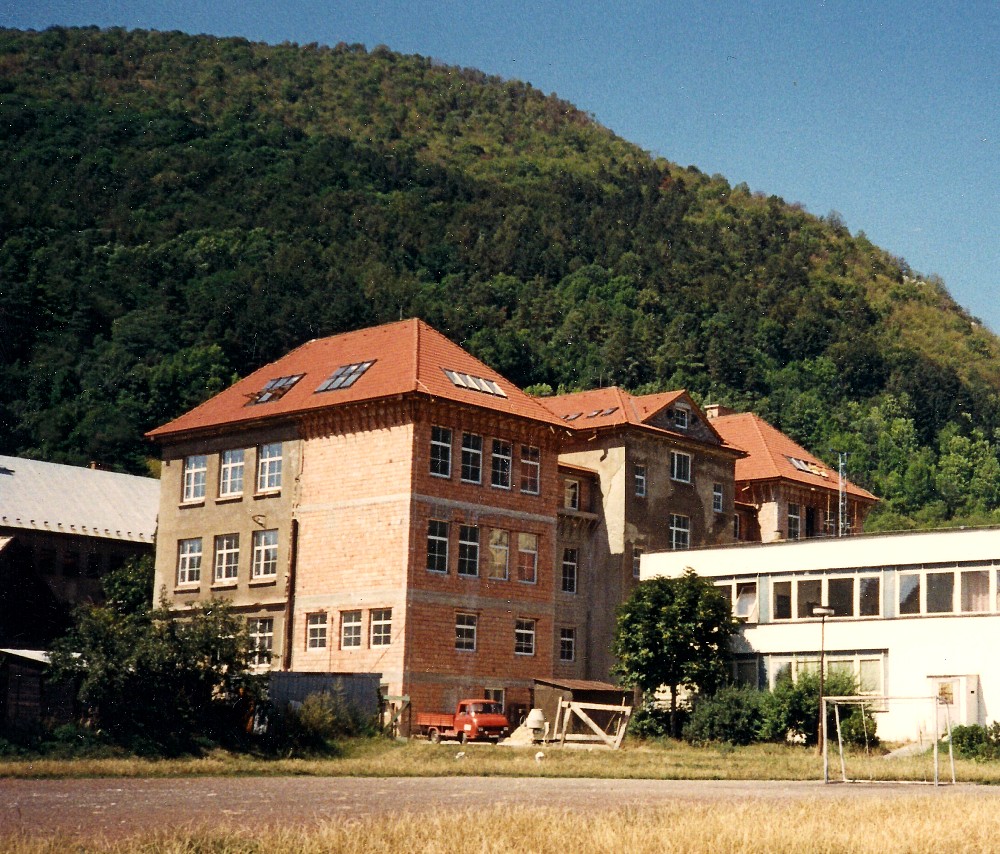
Evanjelické Gymnázium Tisovec, aka The Lutheran High School of Tisovec
The Evanjelické Gymnázium Tisovec, or Lutheran High School of Tisovec, was a very popular mission trip in the early 1990s for members of the Lutheran Church Missouri Synod after the collapse of the Soviet Bloc. The Missouri Synod Lutheran Church was the church I grew up in and one I ultimately rejected as an adult. However, my mother wanted to make this trip after my father passed away and she asked me to go along.
It was an extremely good thing I went for her sake and it did spur me to renew an interest in religion. I investigated religion as an adult and rejected the fundamentalist sect nature of most of what I see in American religious life. I joined the Evangelical Lutheran Church in America because of their inclusiveness. However, serving on church council in a small town in Iowa pretty much did in my desire to belong to a church ever again. I’ve since stopped believing in a personal God as a man with a snowy white beard who knows the number of hairs on my head.
Still, the trip was an important experience and I’m sad that I’ve had so many defeats in life that it remains my only overseas trip. I am grateful that it’s easy to recall the sensory impressions I had at that time and at that place.
“But sometimes illumination comes to our rescue at the very moment when all seems lost; we have knocked at every door and they open on nothing until, at last, we stumble unconsciously against the only one through which we can enter the kingdom we have sought in vain a hundred years – and it opens.”
Our friend Jackie was staying with her mother in the city of her youth in Kolkata, India when the pandemic hit. She’s been a teacher and department chair at a university in Minnesota for many years and was on sabbatical doing research in her home country. There simply was no way to get back.
Our conversations with her every Sunday morning via WhatsApp became another of the rituals we assigned personal meaning to that helped us through the pandemic. Inventing rituals that had personal meaning became so important to us during that time because the established public rituals required by religion and civics were such abject failures. In both India and the United States, religious and political leaders goaded the public to risk killing themselves and others in order to appear “normal.” Our weekly conversations allowed us all to maintain contact with other sane people.
Jackie continued to teach online for the university, conducting her classes in the wee hours of Kolkata time. She was able to provide an extra layer of caring and protection for her elderly mother. As the vaccines became available early in 2021, India exploded with Covid-19 thanks to religious festivals and political campaigns that turned into super-spreader events. Even attempting to get vaccinated was extremely risky because it involved standing in long lines at a hospital with hundreds of people.
I have no doubt that had Trump been reelected the United States would have been just like India. Trump and the prime minister of India, Narendra Modi, are two peas in a pod and Trump would have withheld vaccine from “Democrat states” just like Modi doled it out to his preferred groups and withheld it from others.
A family friend was able to get Jackie’s mother vaccinated in a safe setting but Jackie was not able to since she is now a U.S. citizen and lacked a form she needed. Her safety was on our minds constantly.
As the Delta variant burned hotter across the globe during the summer of 2021, it looked less and less likely that we would see her any time soon. Travel was still restricted from India for non-citizens and who knew how long it would be before it closed altogether?
Then on August 5th, we got a message from her that she had booked a flight and was coming the next week. Not vaccinated.
We held our breath.
Air India Flight Crew. Photo: NDTV
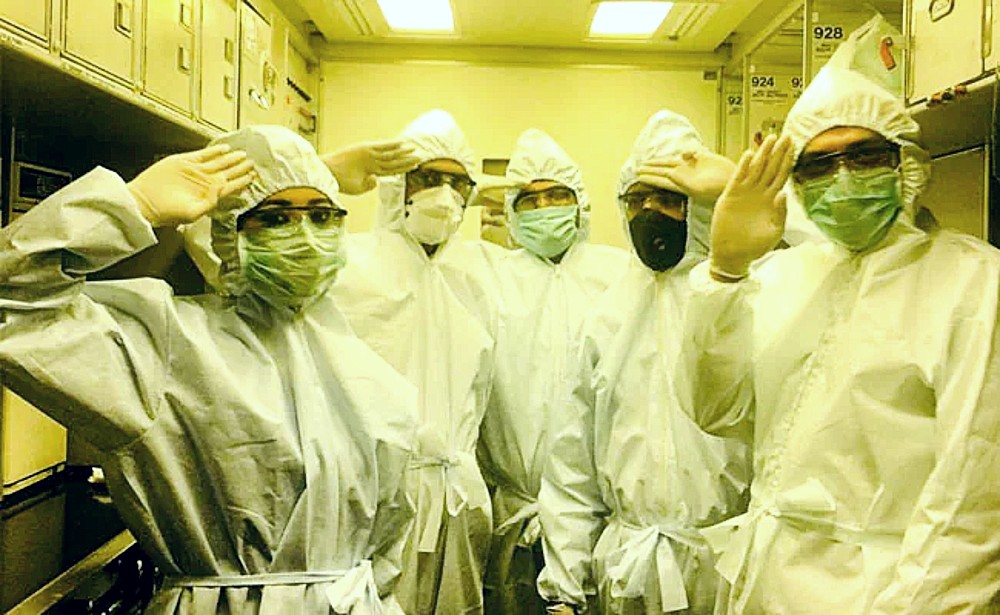
The Air India flight crew from Kolkata to Mumbai inspired confidence and all passengers were required to wear masks and face shields. Jackie brought seven different changes of masks that she would wear throughout the 27 hours of flight time to Minnesota.
We picked her up at the Minneapolis airport at 10:30 a.m. on Saturday, August 14th. We all wore masks on the car ride back to her house where she showered immediately and then got her first round of vaccine in the early afternoon. A tear welled up in me as she walked back to get the jab. It had been a long haul but it ended in success.
The anti-mask, anti-vaccine people are complete idiots. They’ve made a false idol out of Infantile Selfishness and profess that to be their One True God.
Trump Golden Idol. Photo: AP News
Jackie actually knew Mother Teresa in Kolkata in the 1980s. Mother Teresa’s God is very different than Donald Trump’s.
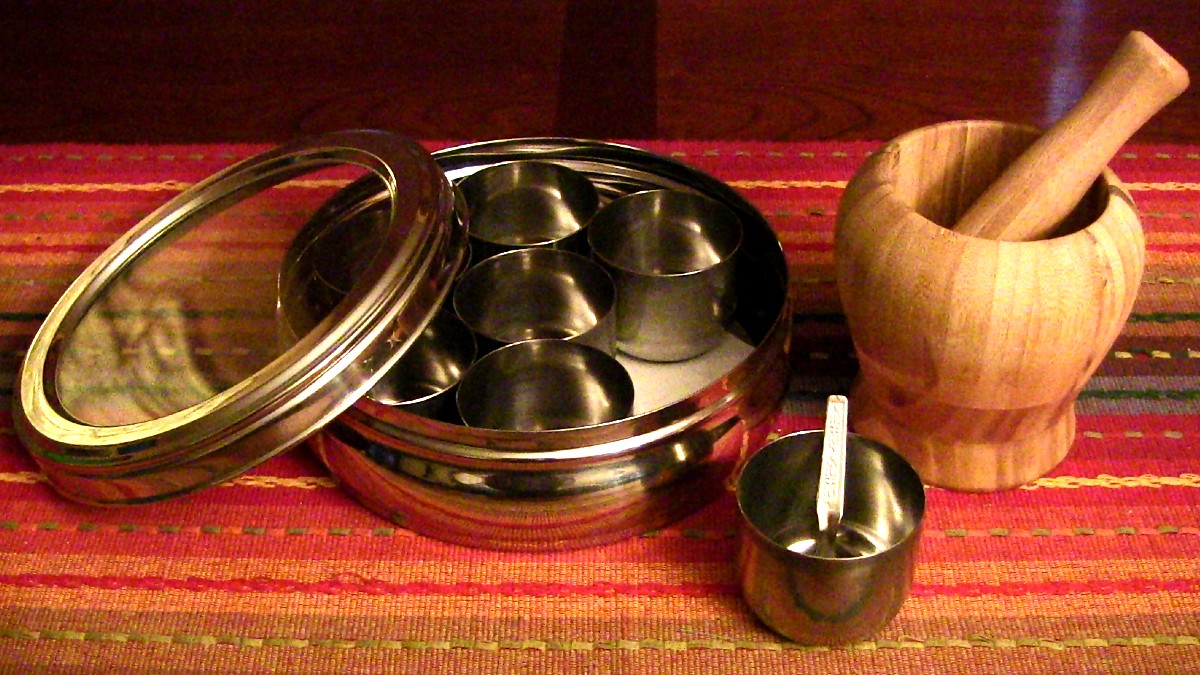
As a gift, Jackie brought us a masala dabba for storing spices and a bamboo mortar and pestle for grinding them. Our greatest gift was knowing that she was going to be safe.
Candied citrus peel is something simple and wonderful. 20th Century food industrialization turned it into an abomination. This is worth pulling back from the abyss.
My first experience with homemade candied peel was when my friend, Jackie, brought back to the States a fruitcake made by her brother at her childhood home in Kolkata at Christmas time. My own brother makes a pretty awesome fruitcake during the winter holidays, but Jackie’s brother made his own homemade candied peel and it was on a whole other level.
Many traditional foods became bastardized in the 20th Century by industrialization in the United States. Beer is a great example. After the 1950s, a cornucopia of beer styles had been reduced to a choice of one. Thanks to marketing, the neo-fascists who consider themselves to be the only “real” Americans now consider pale piss-water to be “real” beer.
I’m not a fancy cook. I live in the realm of peasant food. I want to reclaim traditional recipes, use good ingredients and maybe “healthy” them up a bit by not relying completely on salt and fat for flavor. Reclaiming candied peel is right up my alley.
My oldest brother – the one who makes the awesome fruitcakes – announced after the long winter of Covid, after we had all been safely vaccinated, that he’d like to come down for a visit and make mincemeat. In summer.
His recipe called for a lot of candied peel and we soon discovered that the stuff sold in grocery stores – those tubs containing the nuclear-colored Rosemary’s Baby known as Candied Mixed Peel – was available only at Christmas time.
It just so happens my partner, Debra, made her own candied citrus peel for a Christmas Pudding she made from scratch last year. (It was wonderful and will be the subject of a future blog post. So will the recipe for mincemeat.)
Candied citrus peel is simply splendid. It’s one of life’s simple pleasures and should not be missed. They’re fabulous dipped in chocolate.
Ingredients:
3 – 4 Oranges
3 – 4 Lemons
1 Grapefruit
2 cups Sugar
2 cups Water
Directions:
Step 1: Peel the fruit and slice into ¼ inch strips. Try not to get very much of the white pith.
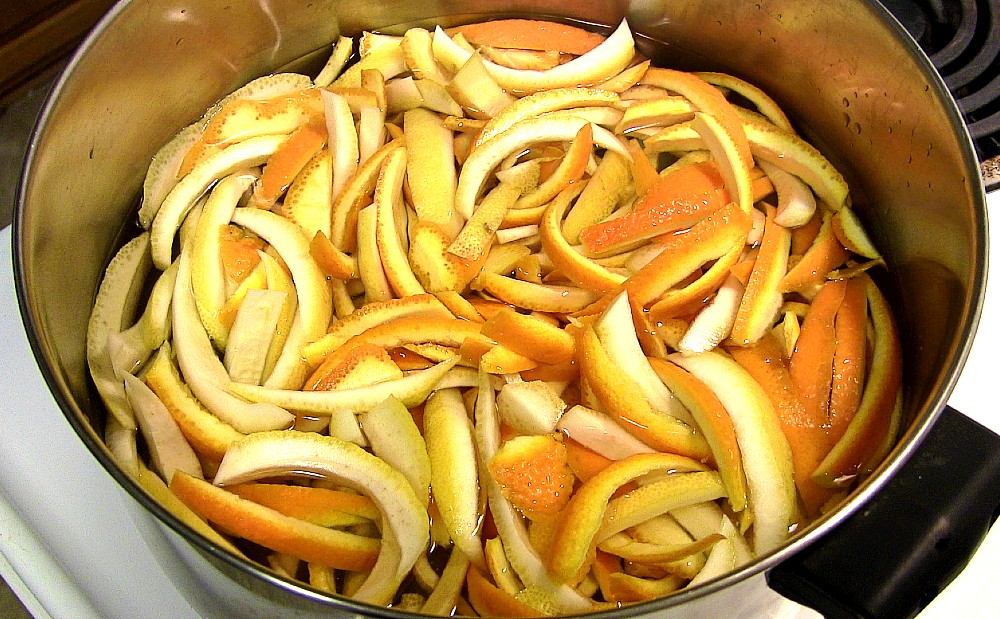
Step 2: Put the peel in a pan and cover with cold water. Bring to boil, reduce heat and simmer for 5 minutes. Drain, return to the pan and cover with fresh water. Bring to a boil and simmer for another 30 minutes.
The purpose for this initial two stages of boiling in water is to reduce bitterness.
Step 3: Drain the peel and bring two cups of water to a boil and stir in two cups of sugar until dissolved. Add the citrus peel and simmer for 30 minutes until the peel is translucent.
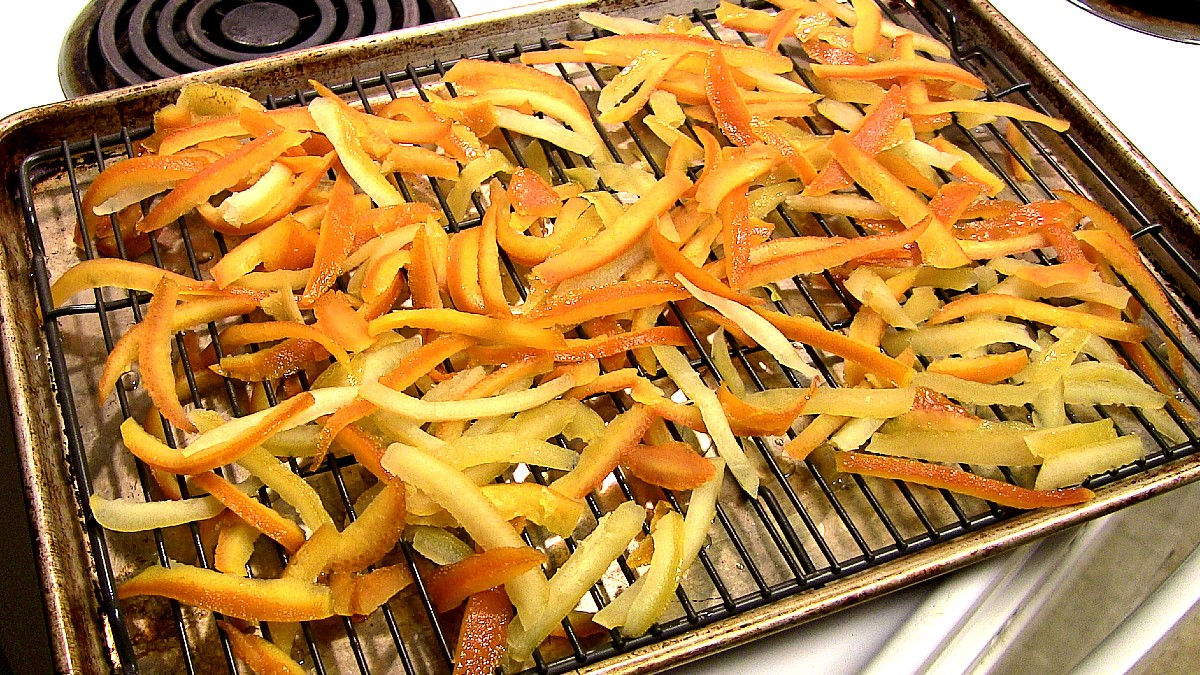
Step 4: Spread the candied peel out on wire racks over baking sheets to cool and dry. If you’re planning on storing them it’s a good idea to toss them in sugar to prevent them from clumping together.
I’ve tried and failed at making pie dough so many times that, now that I have a method that works, I desperately need to preserve it.
Pie dough seems to be the epitome of a-little-of-this-and-a-little-of-that cooking. A lot of recipes for pie dough seem maddening to me and I’ve just kind of wound up with one that works for me through a lot of trial and error.
I’ve arrived at an amount of flour that yields enough to make a double-crust pie. I’ve settled on a 2-to-1 ratio of shortening to butter. Shortening results in a nicely flaky crust and is easy to work with. I have just enough patience to grate one stick of butter but no more than that. I measure out a precise amount of water.
I also work the dough a little bit like a bread dough in order to get everything to hold together. Most recipes try to scare you into thinking you should only mix the ingredients until they just start to hold together. When I tried that, inevitably, my first attempt at rolling it out resulted in a mess that failed to look anything like a pie crust and I wound up scraping it together and kneading it like a bread dough anyway.
Ingredients:
450 grams (3 ¾) cups All-Purpose flour
14 grams (1 tbsp.) Sugar
14 grams (2 tbsp.) Milk Powder
2 tsp. Kosher Salt
8 oz. Cubed Frozen Shortening (16 tbsp. or 2 sticks)
4 oz. Grated Frozen Butter (8 tbsp. or 1 stick)
140 grams (½ cup) Ice Water
1 tsp. White Distilled Vinegar
Directions:
Step 1: Combine dry ingredients. Add one stick of grated frozen butter. Add two sticks of frozen shortening that have been cut into cubes.
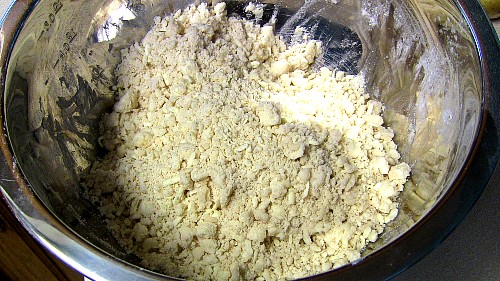
Step 2: Massage the flour, shortening and butter together, breaking up the larger chunks of shortening until the largest pieces are pea-sized.
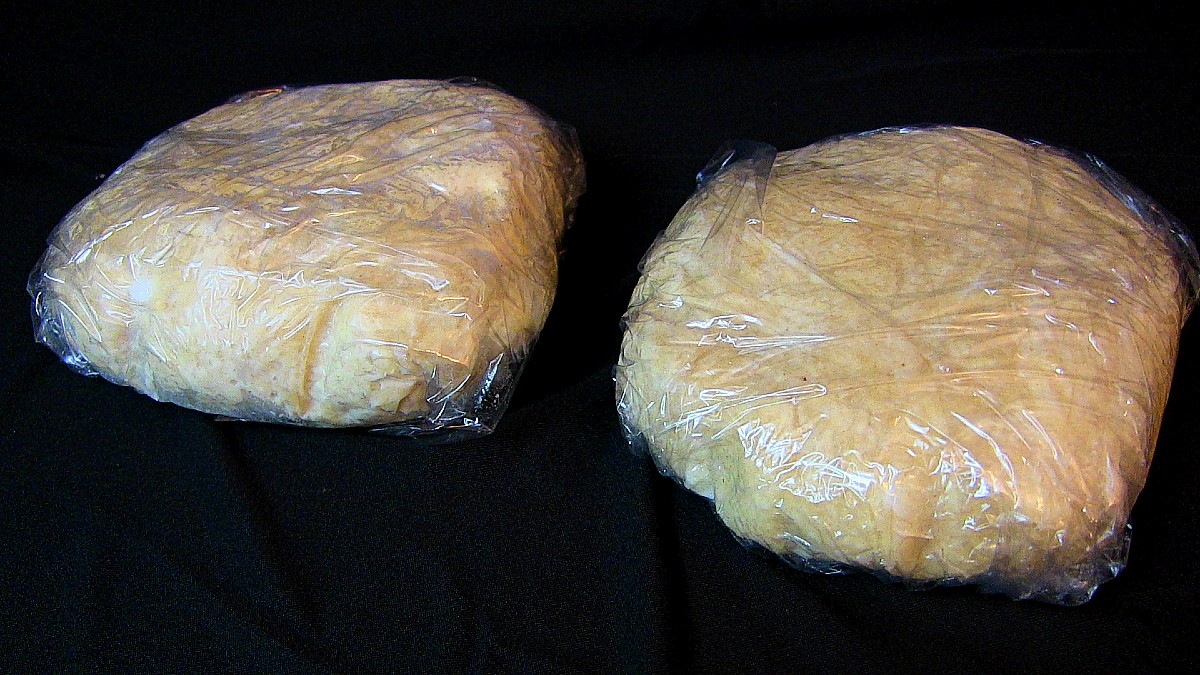
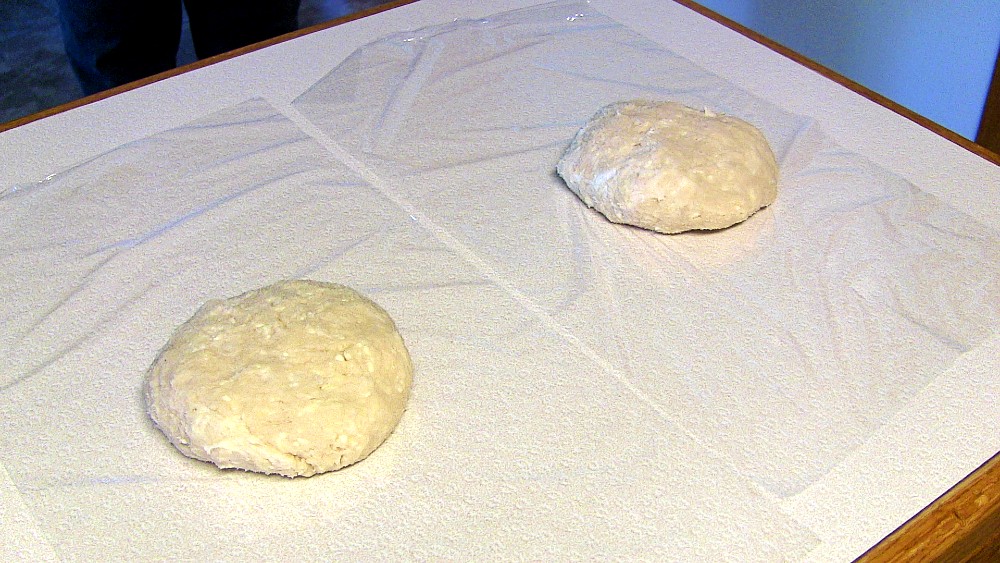
Step 3: Measure out the water and add an ice cube to it. Let that sit for about two minutes to let the water chill down a bit. Add to the flour mixture and mix until you have a cohesive dough. Divide into two disks, wrap in plastic and freeze.
I’ve heard The French make fun of Americans for buying croutons. That’s fair. We should probably also be ridiculed for buying Panko Bread Crumbs.
I decided to look into homemade panko after running short for a recipe I was making. I have a hard time judging how much panko I’ve got near the end of a box and I seem to run short often enough to get annoyed with myself. There isn’t much in those little boxes to begin with. I finally thought, “How hard can it be to make this?”
I had mistakenly assumed panko bread crumbs were made with rice flour since they are a Japanese creation. It turns out they are made from yeasted wheat bread that is cooked with an electric current and yields a bread without crusts. Legend has it that Japanese soldiers in World War II baked a crustless bread with the electric current from 12 volt batteries. That bread that was eventually repurposed into panko.
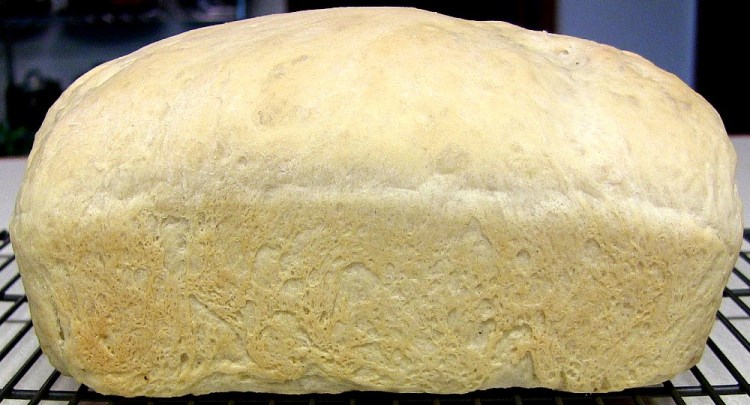
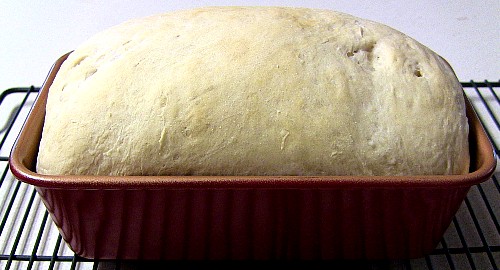
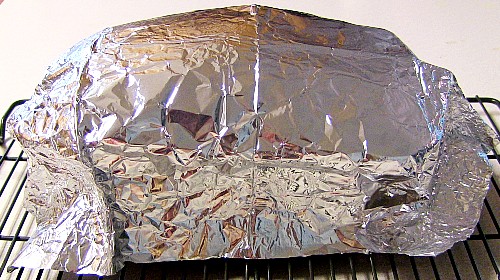
The key to baking a loaf of bread suitable for panko in a conventional oven is to make the plainest, whitest bread imaginable. No sugar, no eggs – just white flour, yeast, salt and water; tenting the loaf with aluminum foil half-way through the baking time will minimize browning.
It’s important to force moisture out of the bread crumbs in an oven in order to get the kind of crisp, dry breadcrumbs associated with panko. Just letting the bread dry at room temperature will give you a kind of stale bread texture since moisture will remain trapped inside the structure of the bread.
Ingredients:
540 grams (4 ½ cups) All Purpose White Wheat Flour
2 tsp. Yeast
2 tsp. Kosher Salt
297 grams (1 ⅓ cups) Water
Directions:
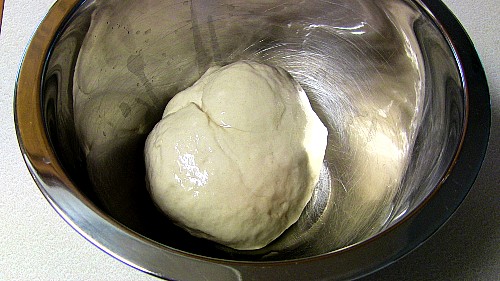
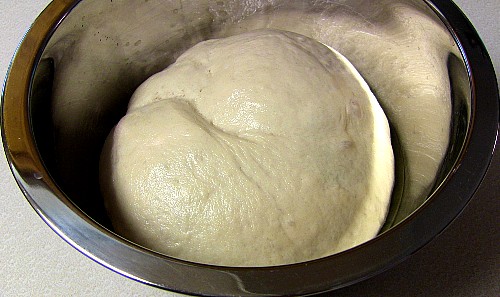
Step 1: Combine the dry ingredients. Mix in warm water and knead for 10 minutes. Set aside in an oiled bowl, cover and let rise until doubled in size – about an hour.
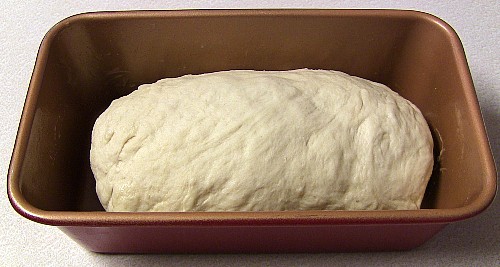
Step 2: Knead the dough for a good two minutes. Use oil or non-stick spray to coat a standard 8 ½ x 4 ½ x 2 ½ inch loaf pan. Place the dough in the pan and mold into an oblong shape to fill the pan. Set aside to rise until the dough gets about an inch above the rim of the pan.
Step 3: Bake at 350° for 20 minutes, tent with foil and bake another 20 minutes. It’s also a good idea to rotate the loaf at the half-way point to ensure even baking. Let cool.
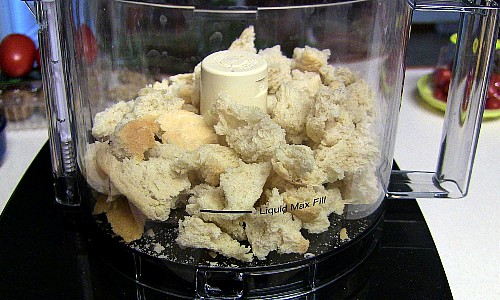
Step 4: Tear the loaf into small pieces and spread out over two large sheet trays. Dry the bread out by baking in an oven at 275°F. for 45 minutes, stirring occasionally.
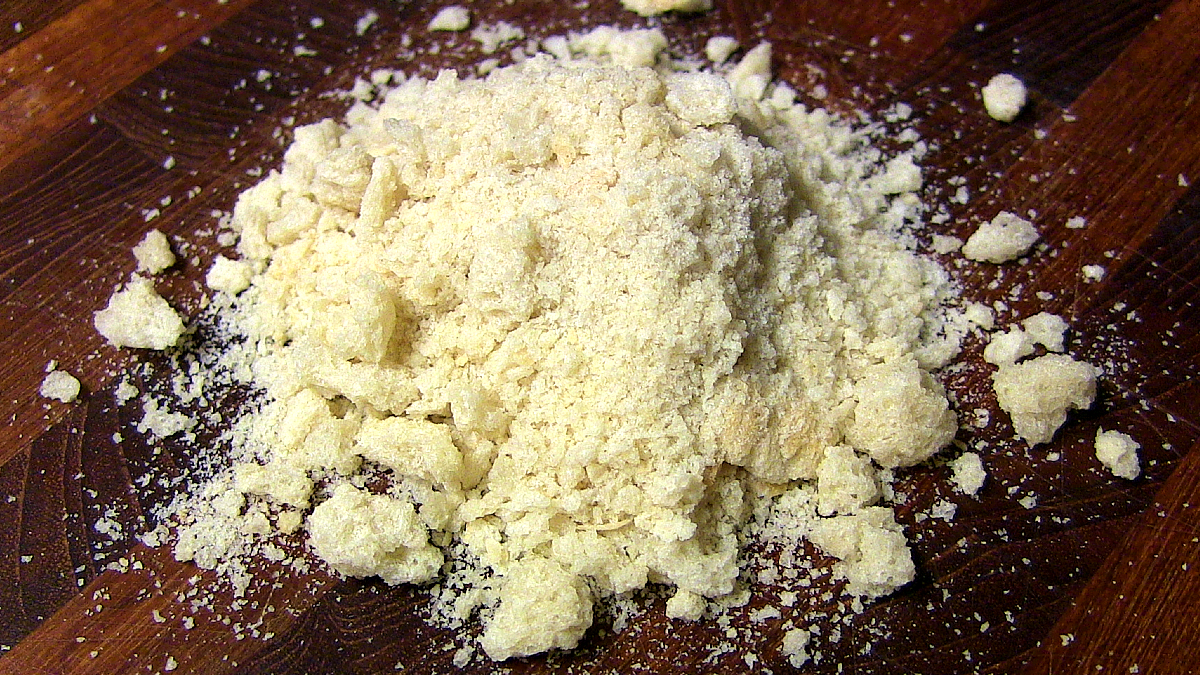
Step 5: Use a food processor to break down the dried pieces into a smaller texture.
Notes:
Making this bread really points out how important sugar is to browning. People have a tendency to think sugar is a foreign ingredient that has no legitimate place in bread baking. Not true. It’s not only important for browning, but it is also important for keeping bread fresh because it is hygroscopic and helps keep bread from drying out.
This bread also refutes the notion that bread yeast needs sugar to activate. The strains of saccharomyces cerevisiae used in modern commercial yeasts are particularly good at gobbling up the carbohydrates in wheat flour.
I once shadowed former Nepali refugees while they cooked and recorded recipes for a book. It’s a shame, but evidently that project will not see the light of day.
I was faithful to every detail as the cooks prepared the dishes. Over time, however, as I made the dishes for myself at home, I wound up condensing a lot of steps and using time-saving convenience items like pre-ground spices when I was in a hurry.
The pandemic really forced changes when fresh ingredients weren’t always easily at hand. I’ve deviated from the original recipe for this dish by substituting dried chili flakes for fresh Thai chilis. I use ground cumin instead of grinding cumin seeds with a mortar and pestle like the Nepali cooks do. They also use the mortar and pestle to grind fresh ginger into a mash. I happily use ginger puree out of a tube.
This is a vegan dish that will please anyone and I do think the flavor stays true to the original.
The combination of whole wheat pasta and beans and peas provides all the essential amino acids for a complete protein. The Nepali cooks keep a bowl of dried peas and garbanzo beans soaking in water at all times since they are such a useful staple. The flavor of reconstituted dried peas is a revelation and they provide a delightful fresh pea flavor with a little bit of crunch. Canned peas are no substitute.
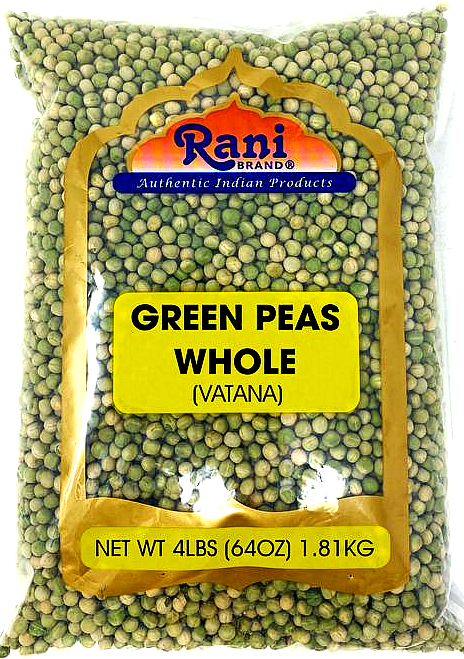
Dried whole peas called Vatana can be found at Indian grocery stores, but if that is not an option, feel free to substitute a 16 oz. can of garbanzo beans instead.
Ingredients:
¼ cup dried Whole Garbanzo Beans
¼ cup dried Whole Peas
170 grams (6 oz.) Whole Wheat Spaghetti, broken in half
4 cups Green Cabbage, chopped
1 – 1 ½ cups Onion, chopped
2 Roma Tomatoes, diced
1 tsp. Ground Cinnamon
1 tsp. Ground Cumin
1 tsp. Ground Turmeric
½ tbsp. Sea Salt
1 tsp. MSG (optional, but highly recommended. Read more about MSG here.)
1 tsp. Crushed Red Chili Flakes (Aleppo Pepper works great.)
2 tbsp. Fresh Ginger purée
1 – 2 tbsp. Lime Juice
Directions:
Step 1: Soak the peas and beans overnight in a bowl of water with ¼ tsp. baking soda. The baking soda will help tenderize.
Step 2: Bring a large pot of water to boil, break the pasta in half and cook until tender. Drain and rinse with cold water to stop cooking. Coat with about 2 tbsp. vegetable oil. Don’t forget to break the pasta in half. It’s much easier to eat that way.
Step 3: Heat 3-4 tbsp. vegetable oil in a wok or large skillet. Reduce temperature to medium and add onion, sautéing until tender. Add diced tomatoes and spices and continue to sauté for 2 to 3 minutes. Add the cabbage, peas and beans and mix well. Add ¼ cup water, cover and cook until the cabbage is cooked through – about 15 minutes.
Mix in the whole wheat pasta and 1 or 2 tbsp. lime juice and serve.
Notes:
Many of the dishes of the cooks from Nepal and Burundi that I shadowed are vegetarian and make use of the complementary proteins found in whole grains and legumes. Most plant foods lack some of the essential amino acids needed to form a complete protein. However, the amino acids found in grains complement those missing in beans and when combined can provide the protein needed for a balanced diet. Around the world, combinations of beans and rice, corn and beans, lentils and millet, and peas and wheat make use of protein combining.
Traditional farming practices made use of inter-planting grains and legumes and modern agronomy is confirming that crops utilizing this technique grow faster and need less weeding than single-crop fields. In “Diet for a Small Planet,” Francis Moore Lappe points out that an acre of grains can produce five times more protein than an acre devoted to raising cattle or other meat. An acre devoted to the production of leafy greens can produce 15 times more protein than an acre of meat production.
This recipe is adapted from the book, Artisan Bread in Five Minutes a Day, by Jeff Hertzberg. When I say adapted, I mean that I’ve tried a quite a few variations over quite a long period of time and, now that I feel I’ve really nailed my method, I went back to check the original recipe and discovered it’s almost exactly like what’s in the book. Go figure.
Still, experimenting helps a person learn by testing the parameters. In the end, I guess I wound up being a little like Dorothy in The Wizard of Oz. I found out that “there’s no place like home.”
Ingredients:
454 grams (1 lb.) All-Purpose or Bread Flour
¼ tsp. Active Dry Yeast
2 tsp. Kosher Salt
50 grams (½ cup) Parmesan Cheese, fresh grated
75 grams (½ cup) Sun Dried Tomatoes, oil-packed, julienne cut
340 grams (1 ⅔ cups) Water
Dough mixture after 24 hours of fermenting. The aroma is extraordinary.
Directions:
Step 1: Combine dry ingredients. Add grated cheese and sun-dried tomatoes and mix until coated with flour. Add water and mix by hand just until the mix holds together without working the dough. You do not want to develop the gluten.
Step 2: Set aside in a food-grade container, cover with plastic wrap or a lid and ferment at room temperature for 24-36 hours.
Dough mixture before fermenting.
Dough mixture after fermenting.
Step 3: Dust your surface with flour and shape the dough into a ball. Transfer to a baking sheet covered with parchment paper or a silicone mat.
Dough ball before rising.
Dough ball after one hour of rising time.
Step 4: Preheat the oven to 450°F. Bake for 35 minutes. Use a spray bottle to give 15 spritzes of water in the oven every five minutes. This helps develop a chewy crust. Turn the bread around half-way through the bake in order to insure even baking. Let cool on a wire rack.