This recipe is adapted from the book, Artisan Bread in Five Minutes a Day, by Jeff Hertzberg. When I say adapted, I mean that I’ve tried a quite a few variations over quite a long period of time and, now that I feel I’ve really nailed my method, I went back to check the original recipe and discovered it’s almost exactly like what’s in the book. Go figure.
Still, experimenting helps a person learn by testing the parameters. In the end, I guess I wound up being a little like Dorothy in The Wizard of Oz. I found out that “there’s no place like home.”
Ingredients:
454 grams (1 lb.) All-Purpose or Bread Flour
¼ tsp. Active Dry Yeast
2 tsp. Sea Salt
50 grams (½ cup) Parmesan Cheese, fresh grated
75 grams (½ cup) Sun Dried Tomatoes, oil-packed, julienne cut
340 grams (1 ⅔ cups) Water
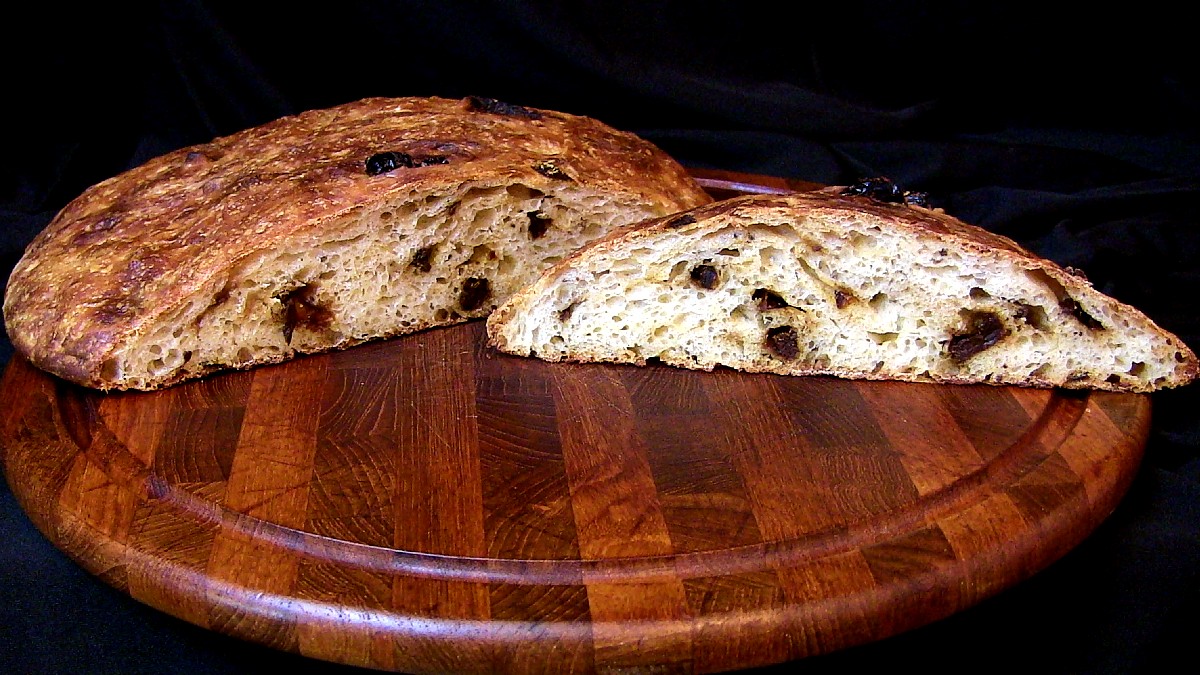
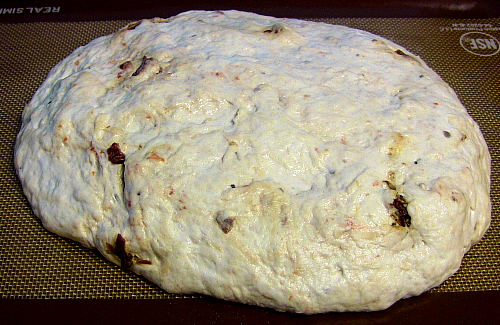
Dough mixture after 24 hours of fermenting. The aroma is extraordinary.
Directions:
Step 1: Combine dry ingredients. Add grated cheese and sun-dried tomatoes and mix until coated with flour. Add water and mix by hand just until the mix holds together without working the dough. You do not want to develop the gluten.
Step 2: Set aside in a food-grade container, cover with plastic wrap or a lid and ferment at room temperature for 24-36 hours.
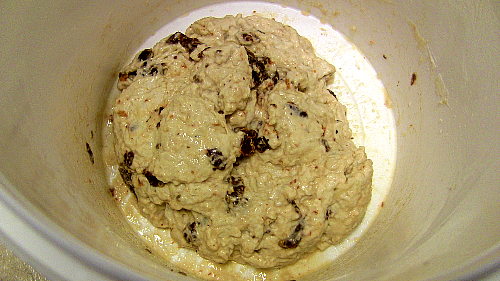
Dough mixture before fermenting.
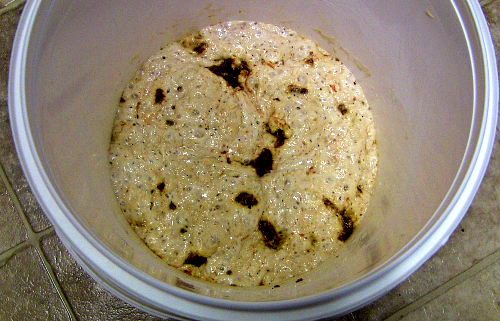
Dough mixture after fermenting.
Step 3: Dust your surface with flour and shape the dough into a ball. Transfer to a baking sheet covered with parchment paper or a silicone mat.
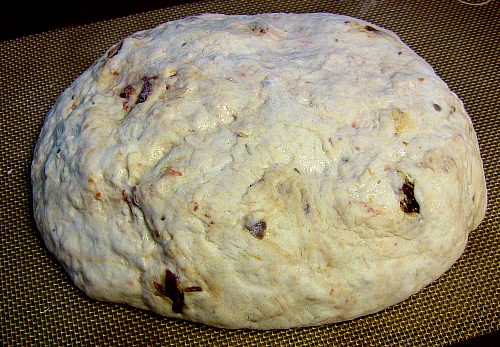
Dough ball before rising.
Dough ball after one hour of rising time.
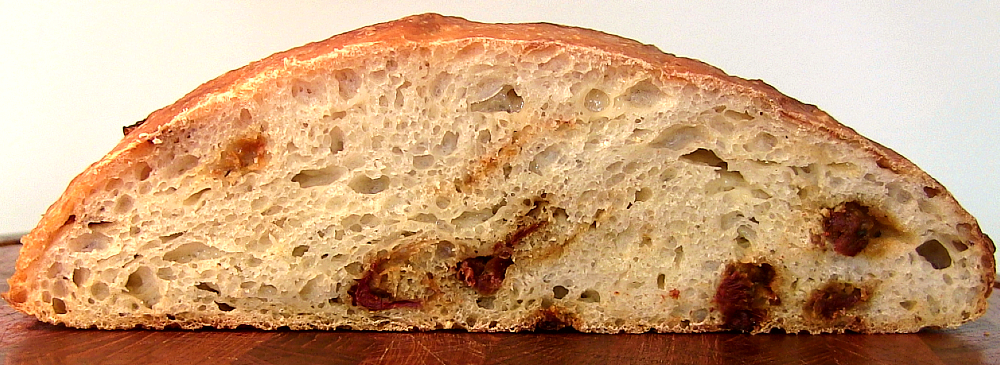
Step 4: Preheat the oven to 450°F. Bake for 35 minutes. Use a spray bottle to give 15 spritzes of water in the oven every five minutes. This helps develop a chewy crust. Turn the bread around half-way through the bake in order to ensure even baking. Let cool on a wire rack.
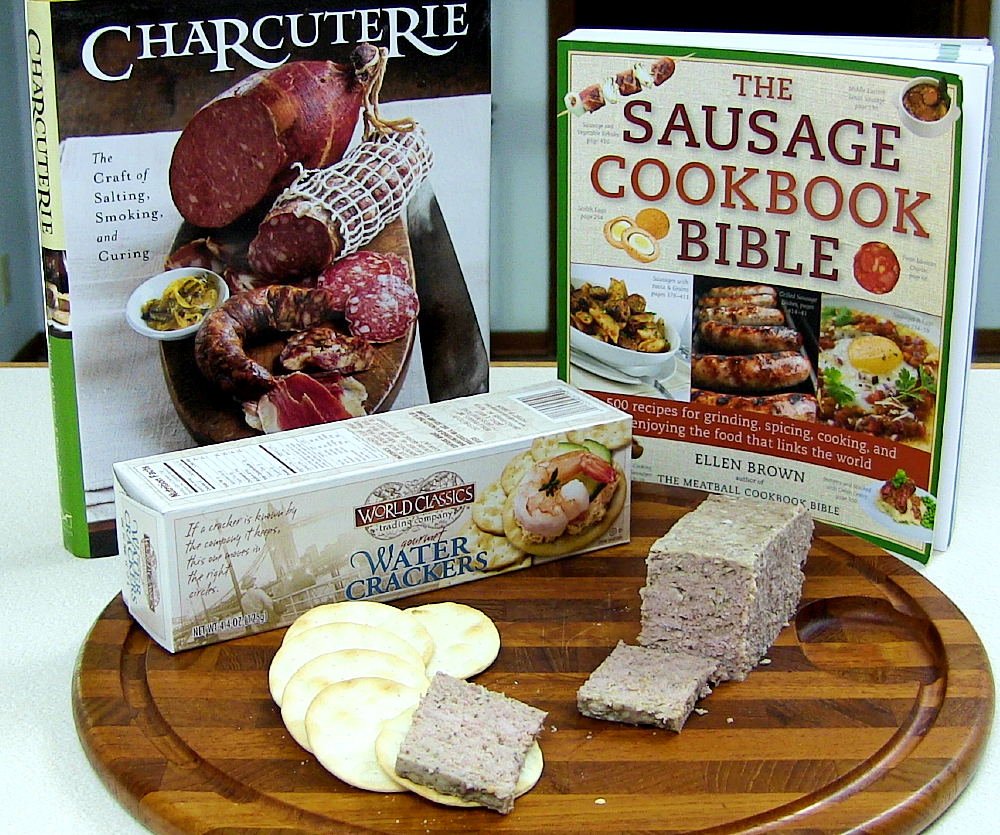
This recipe came about by combining the recipe for Mettwurst Sausage from Ellen Brown’s, The Sausage Cookbook Bible, with the pâté cooking method described in Charcuterie, by Michael Ruhlman and Brian Polcyn.
A country-style pâté, or pâté de campagne, such as this is really nothing more than a meatloaf that has been compressed and chilled. It’s packed with flavor and is best served as an appetizer with Saltines or water crackers.
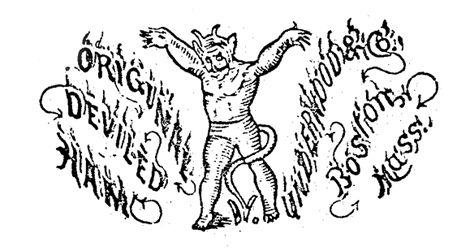
The first time I made this I thought, “My dad would have loved this.” It has such an old world quality to it. For anyone who grew up knowing Braunschweiger or Underwood Deviled Ham, the taste and texture will tickle the hippocampus with pleasant memory.
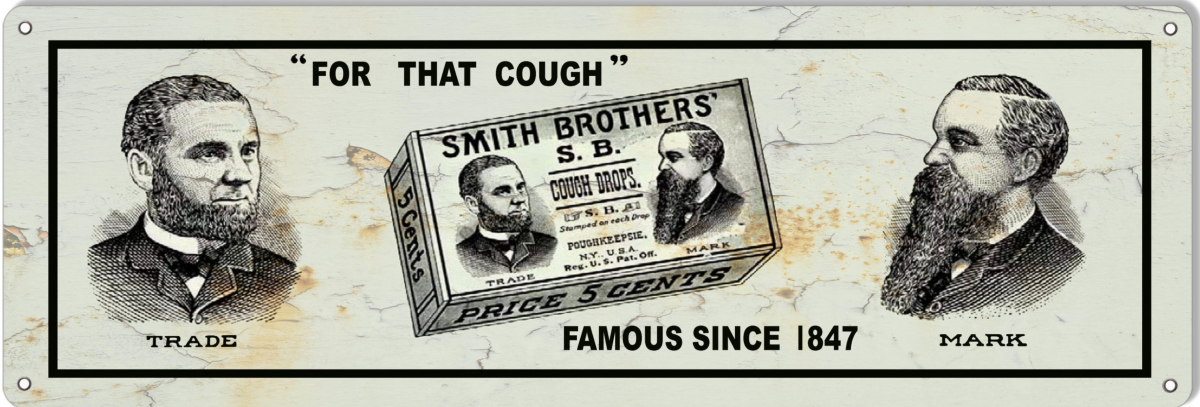
According to an article in Smithsonian Magazine, Underwood’s Deviled Ham is the oldest trademarked logo still in use.
Oldest trademark since 1870.
I’m more familiar with the one from my childhood.
If I ever go commercial I think this will be my logo.
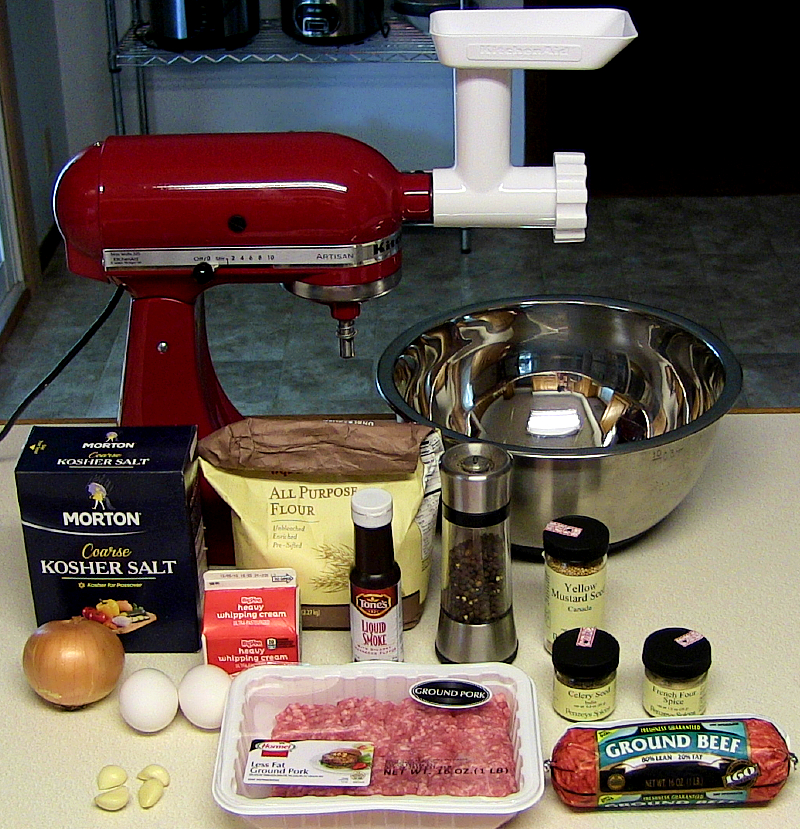
Ingredients:
1 lb. Ground Beef
1 lb. Ground Pork
⅔ cup Onion, finely diced
3 cloves Garlic, finely diced
2 tsp. Yellow Mustard Seed
1 tsp. Celery Seed
2 tsp. Kosher Salt
1 tsp. Black Pepper
¼ tsp. White Pepper
¼ tsp. Nutmeg, ground
¼ tsp. Ginger, ground
¼ tsp. Cloves, ground
½ tsp. Liquid Smoke
2 tbsp. All-Purpose Flour
2 large Eggs
½ cup Heavy Cream
Directions:
Step 1: Whisk together the flour, eggs and heavy cream.
Step 2: Process the ground beef and ground pork through the fine grind plate of a meat grinder. Add the spices and mixture of flour, eggs and heavy cream. Mix well and continue working the mixture in order to develop a smooth emulsion.
Step 3: Preheat oven to 300°F. Lightly coat a standard 8 ½ x 4 ½ x 2 ½ inch loaf pan with oil or non-stick spray and pour the meat mixture into the pan. Cover the pan with aluminum foil and bake in a bain marie for 1 hour and 45 minutes until the internal temperature is 165°F.
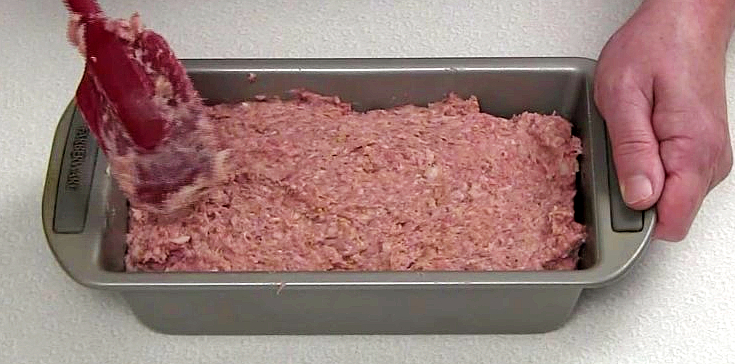
Spread emulsion in pan.
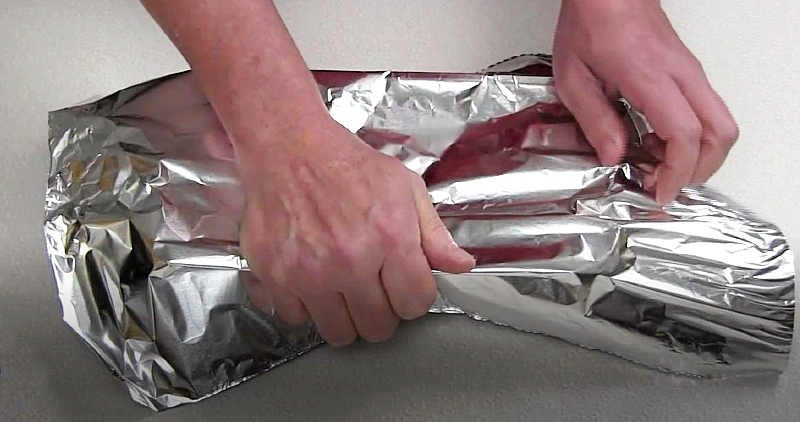
Wrap pan in foil.
Add hot water until half-way up the side of the pan.
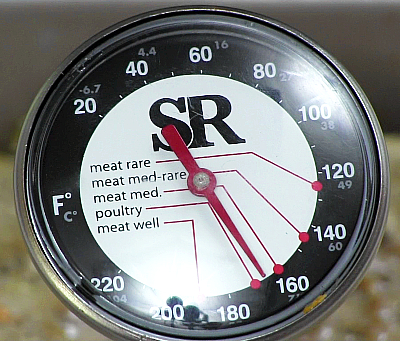
Internal temperature should be 165°F
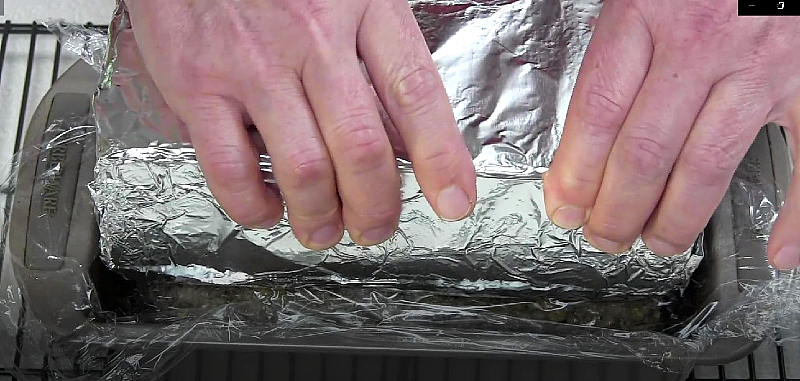
Step 4: Drain the excess liquid and cover with plastic. Place a brick wrapped in foil on the meat and chill thoroughly in the refrigerator – at least 12 hours. This will compress the loaf to a dense texture.
Compress the pâté with a brick wrapped in foil
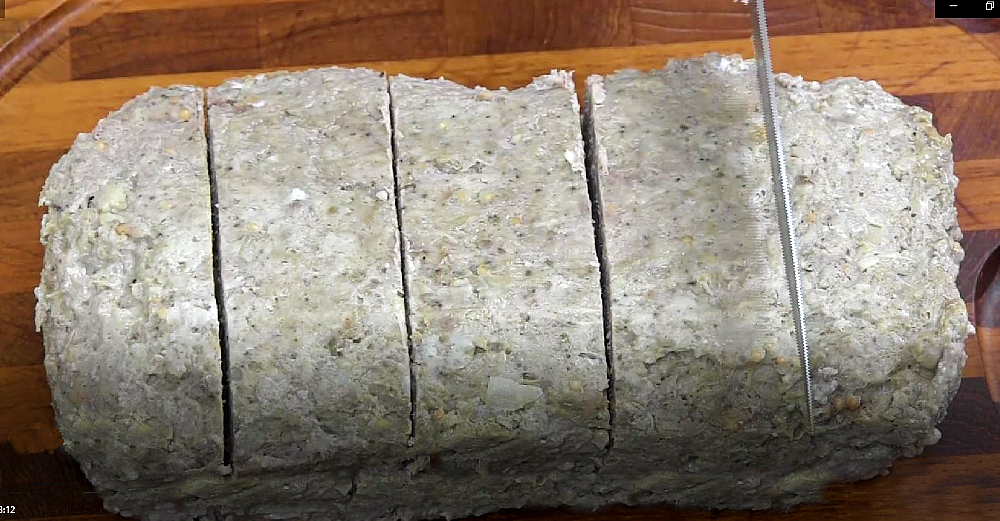
Step 5: Cut crosswise into five equal portions. Wrap the portions in plastic and aluminum foil. They freeze extremely well.
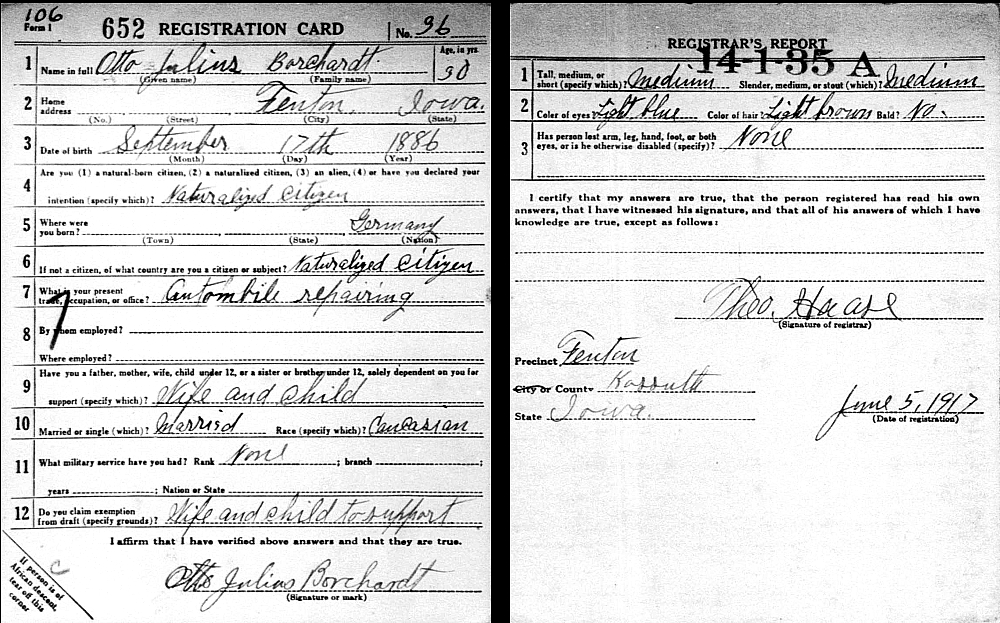
On Wednesday, March 11, 2020, The World Health Organization declared COVID-19 to be a pandemic. On the way home from work that night I stopped by a pharmacy to buy Smith Brothers Cough Drops. It was a way of paying homage to my grandfather, Otto Borchardt, who worked in an auto repair shop as a young man during the 1918 Flu Pandemic. None of the men who worked in the shop ever came down with the deadly flu and they gave credit to the fact that they all sucked on Smith Brothers Cough Drops every day.
Unfortunately, as I came to find out, Smith Brothers Cough Drops had been discontinued.
“Good Lord,” I thought, “we’re all doomed.”
Of course, Smith Brothers Cough Drops were NOT responsible for preventing the 1918 Flu, but it seemed like a nice way to tip my cap to a grandfather I never had the chance to meet.
He came to the United States as a young boy from Germany in the 1890’s. His mother passed away when he was 14 and he had to drop out of school and go to work on a relative’s farm. Despite this, he maintained a broad interest in the world and later in life became president of the local school board. His oldest daughter became a teacher.
Somewhere along the way in his young life he attended a school that taught auto mechanics.
Otto Borchardt Graduation Photo
By the time the United States got involved in World War I he had a wife and family and was able to get a deferment.
Otto Borchardt WWI Registration Card
The remarkable thing about the story of Smith Brothers Cough Drops and the auto mechanics during the 1918 Pandemic is that this particular strain of flu attacked young healthy people so severely. The guys working in the shop were prime targets.
I will get my second COVID-19 vaccine shot on April 20, 2021 and even though I could no longer get Smith Brothers Cough Drops, I did settle on Ricola Cough Drops as a reasonable substitute. I honestly don’t think I went so much as a day without having at least one.
Superstitious? Not really.
I think that the decision to find meaning in something as innocuous as the daily ritual of having a cough drop, and jokingly thinking of it as a protective amulet, and making a mystical connection to a relative I never knew was an act of existential defiance against the chaos of mankind.
A little heavy? Ya, maybe. But the failure of efforts to slow the spread of Coronavirus was a failure of people. The mitigation strategies like wearing masks and social distancing actually did work. The magnitude of this crisis was a failure of selfish and reckless people.
My partner and I made the conscious decision that other people’s chaos ended at our house. Recognizing that ritual and tradition play a role in mental health, we invented all kinds of little traditions and rituals that had a personal meaning for us. We enjoyed them and looked forward to them with a sense of gratitude.
We had to make meaning for ourselves because so many of the leaders of our political and religious institutions failed. We didn’t fall for their Big Lies.
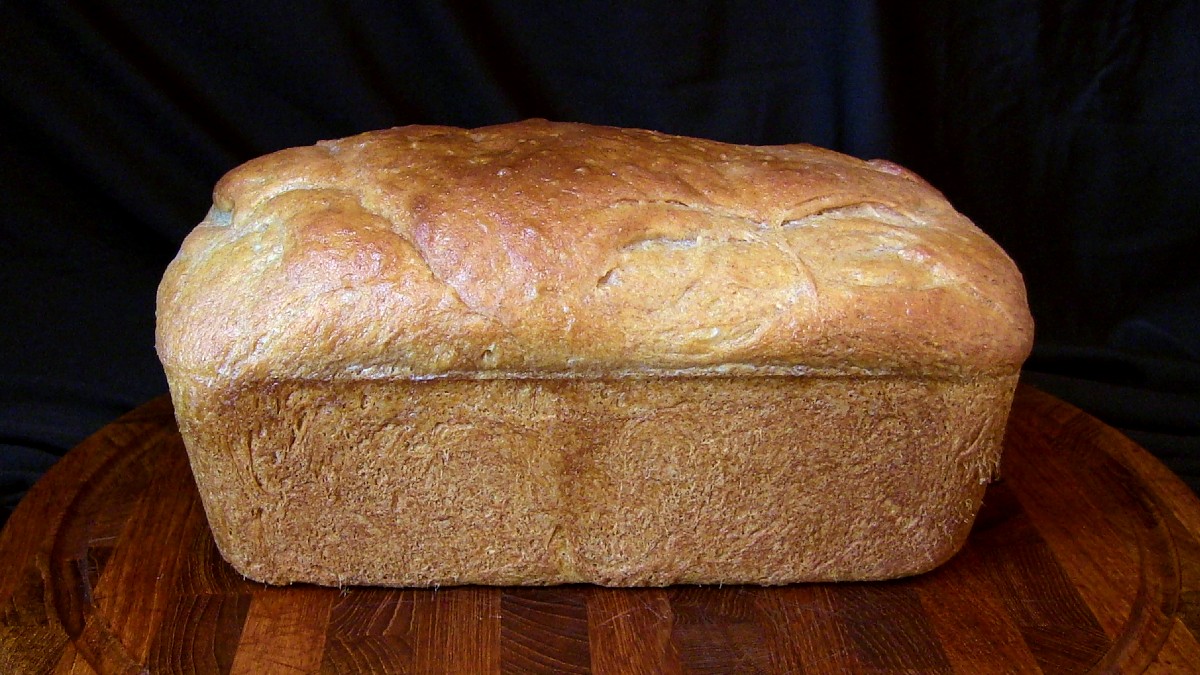
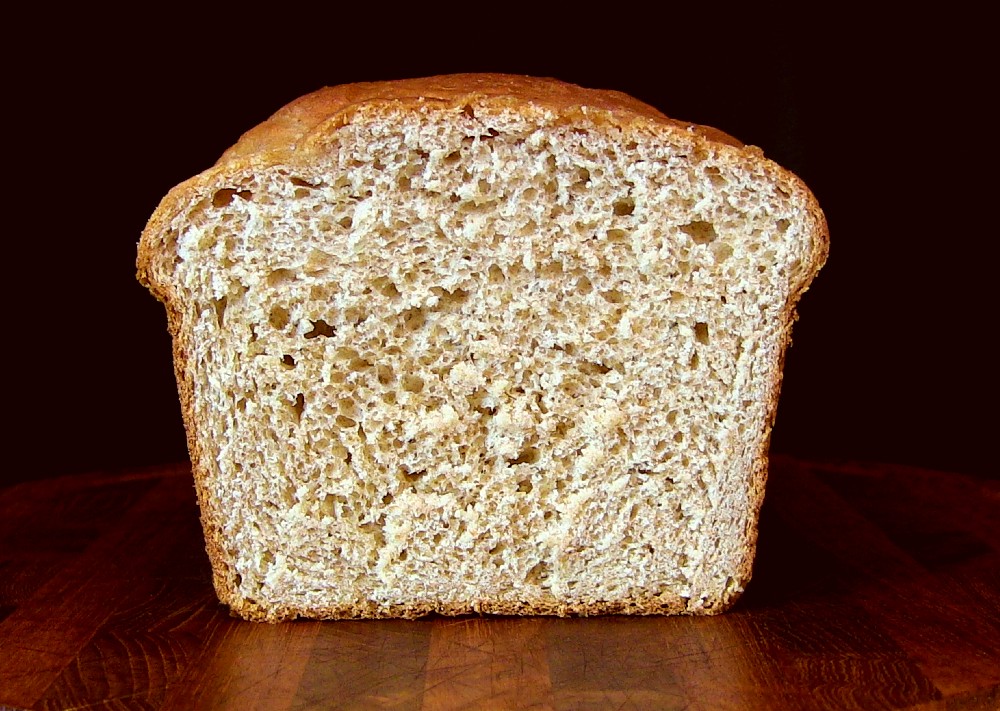
Home-style bread has an image problem. It’s not perceived as being outré amongst the entre nous crowd. This is a shame because it might be the most versatile of breads and makes superior sandwiches.
Chewy-crusted artisanal breads are great but they have a tendency to fall apart before you’re done with your sandwich because they simply lack enough gluten to hold up. And home-style bread is the perfect vehicle for jam.
Sometimes in life you just need a nice loaf of soft bread.
This loaf features a ⅔ to ⅓ ratio of high-gluten bread flour to white whole wheat flour. There is no nutritional difference between white whole wheat and red whole wheat; I just like the golden color.
The inclusion of an egg helps with giving the loaf a good rise and the addition of sugar, oil and powdered milk help with richness and prevent the loaf from drying out too quickly. A loaf can stay reasonably moist for close to a week.
Ingredients:
320 grams (3 cups) High Gluten Bread Flour
220 grams (2 cups) White Whole Wheat Flour
50 grams (¼ cup) Sugar
28 grams (4 tbsp.) Dry Milk Powder
2 tsp. or 1 packet Active Dry Yeast
2 tsp. Sea Salt
1 Egg
50 grams (¼ cup) Vegetable Oil
270 grams (scant 1 ¼ cups) Warm Water
1 tbsp. Melted Butter
Directions:
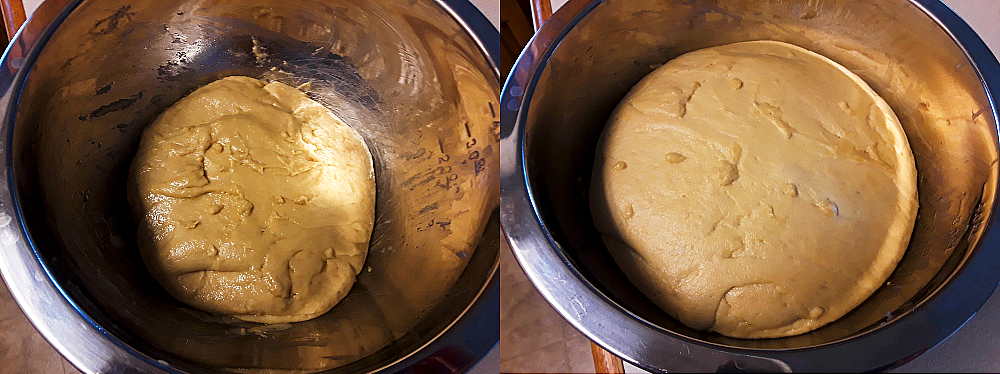
Step 1: Combine the dry ingredients. Mix in egg, oil and warm water and knead for 10 minutes. Set aside in an oiled bowl, cover and let rise until doubled in size – about an hour.
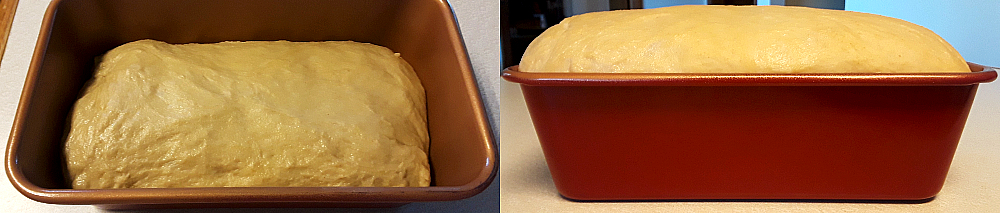
Step 2: Knead the dough for a good two minutes. Use oil or non-stick spray to coat a standard 8 ½ x 4 ½ x 2 ½ inch loaf pan. Place the dough in the pan and mold into an oblong shape to fill the pan. Set aside to rise until the dough gets about an inch above the rim of the pan.
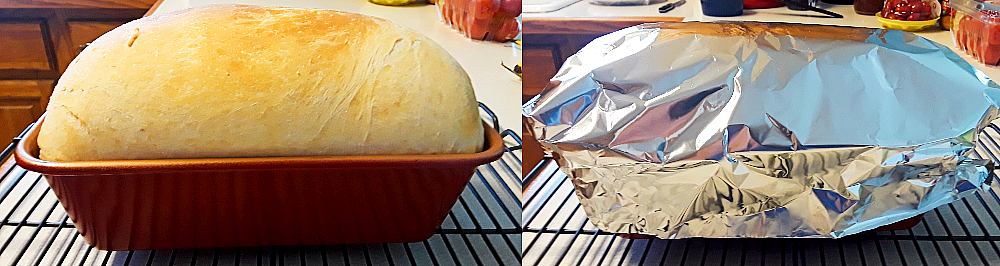
Step 3: Preheat the oven to 350°F. Brush the dough with half of the melted butter and bake for a total of 40 minutes, tenting the loaf with aluminum foil half-way through in order to prevent the loaf from browning too much. It’s also a good idea to rotate the loaf at the half-way point to ensure even baking.
Remove from the pan and brush with the remaining melted butter.
Partially baking and freezing bread is a great way to have fresh baked bread on hand without any going to waste. Buns can be thawed quickly and popped in a toaster oven for about 10 minutes to give a nicely golden crust.
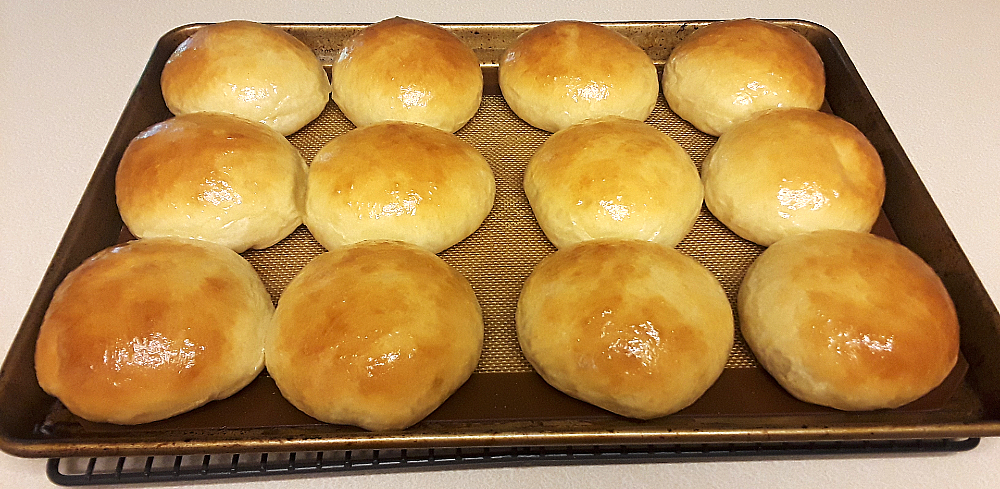
Buns after finishing touch baking
Ingredients:
560 grams (4 ⅔ cups) Bread Flour
50 grams (¼ cup) Sugar
28 grams (4 tbsp.) Dry Milk Powder
2 tsp. Active Dry Yeast
2 tsp. Salt
50 grams (¼ cup) Vegetable Oil
1 Large Egg
270 grams (1 ¼ cups) Warm Water
Directions:
Step 1: Combine the dry ingredients. Add egg, oil and warm water, mix and knead for about 8-10 minutes. Set aside in an oiled bowl, cover and let rise until doubled in size – about an hour.
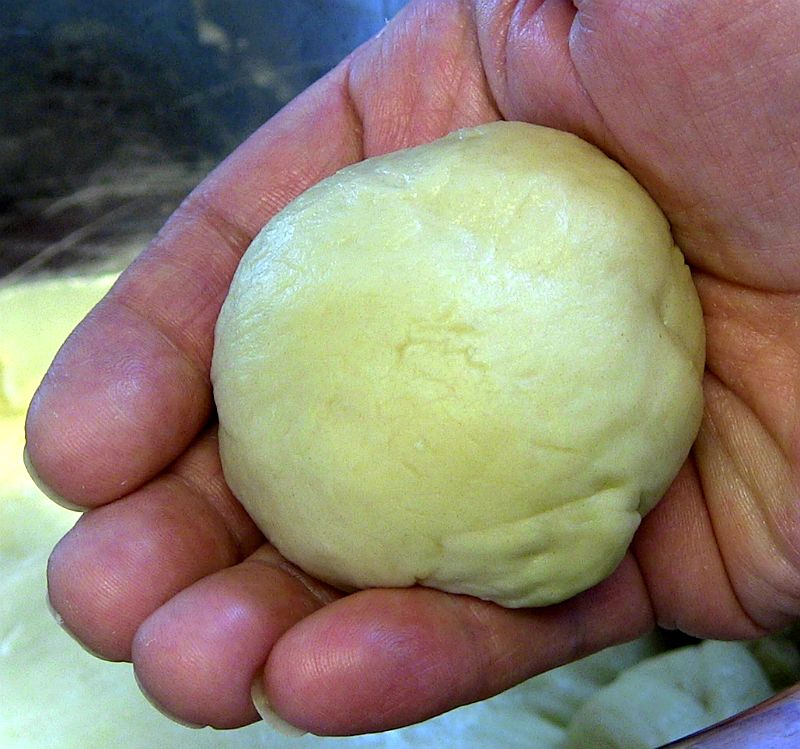
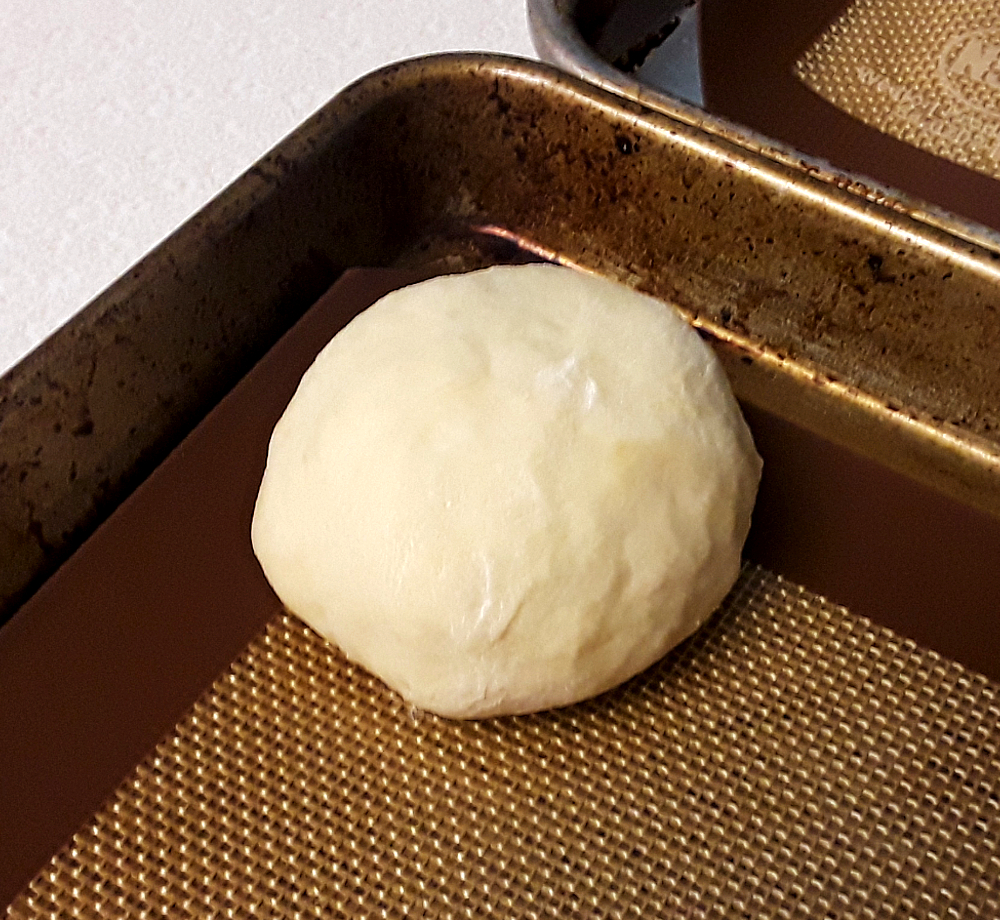
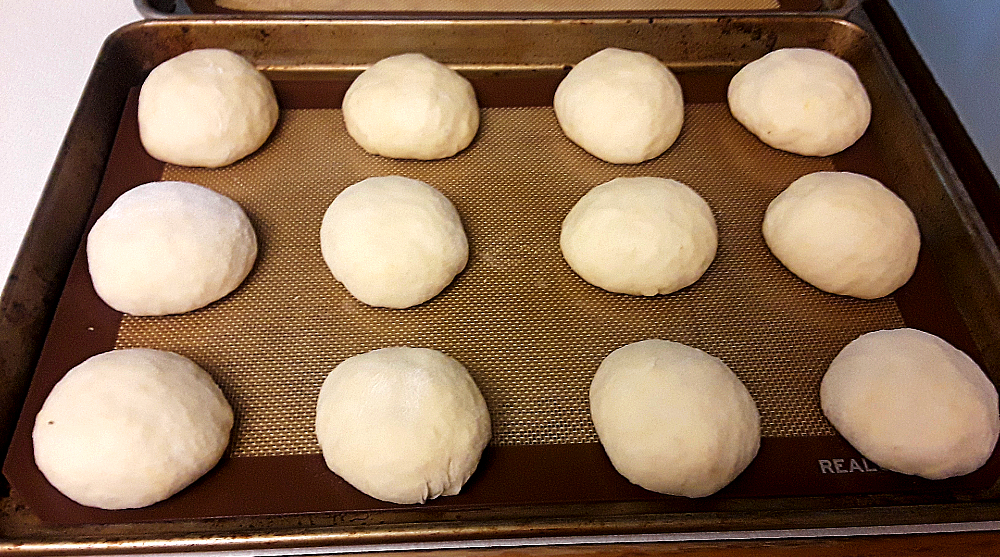
Step 2: After the dough has doubled in size, knead it for a second time. Weigh out three ounce portions and work with the hands to form a cohesive ball. Cup the bun in the palms of the hands and shape into a smooth ball. Place on a sheet tray covered with parchment paper or silicone mat. After all the buns are formed, allow to rise for about an hour.
*** If you want fully baked buns right away, let the buns rise for an hour and bake in an oven that has been preheated to 375°F. for 18-20 minutes. Brush with a tablespoon of melted butter.
Par-baking Instructions: Preheat the oven to 275°F. After the buns have risen for about an hour, bake for 25 minutes.
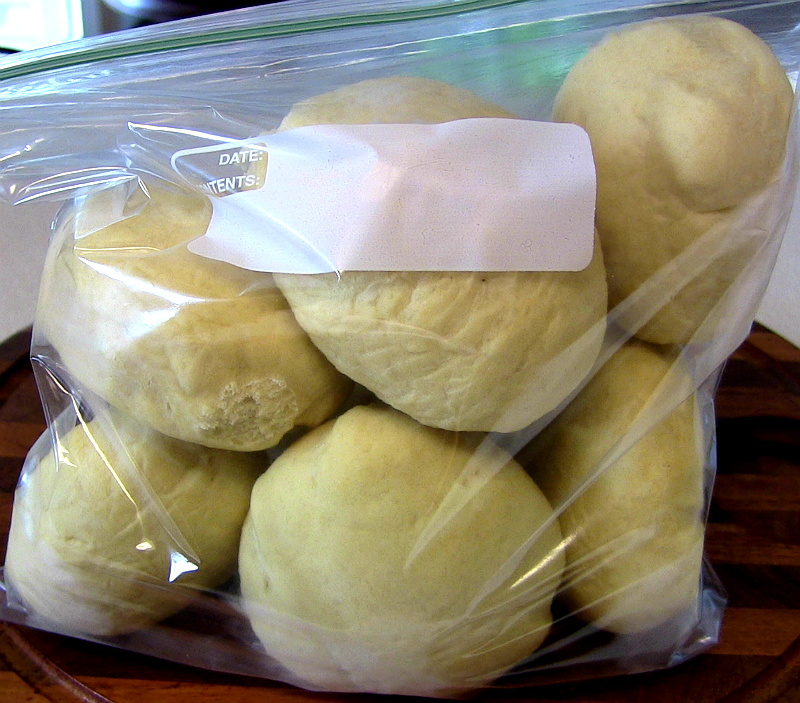
Allow the buns to cool and then freeze while the buns remain separated. If you don’t they’ll freeze together in a big lump. Once they are frozen completely they can be bagged together in a freezer bag.
Thaw buns for 30 minutes and finish baking at 375°F. for about 10 minutes.
Par-baked Buns ready for freezing
Notes:
Par-baking is used in commercial baking where they have special equipment for flash freezing. It’s a very handy technique for the home baker because not every household can use up a loaf of freshly baked bread before it starts to go off.
Par-baking kills the yeast and preserves the structure of bread. A final ten minutes of baking yields a bread that is virtually indistinguishable from completely freshly baked.
It’s also a great way to prepare for holiday baking or when catering to a large crowd. It’s a perfect way to prepare for a pulled pork barbecue.
Bierocks are a kind of portable sandwich with a pocket of filling inside a yeasted dough bun. The filling is usually made with pork and onions. The origin is thought to be Eastern European and they are regional hits in the United States. In Nebraska, a pork-filled gut bomb called a Runza is quite popular.
I wanted to make a lighter version so I came up with a very flavorful combo made out of ingredients that are usually found in the average kitchen. Bierocks freeze extremely well and are great to make ahead for lunches or for a potluck.
To serve, simply thaw and microwave for 35 seconds. The champagne mustard is a perfect accompaniment.
Bun Ingredients:
540 grams (4 ½ cups) Bread Flour
50 grams (¼ cup) Sugar
28 grams (4 tbsp.) Dry Milk Powder
2 tsp. Active Dry Yeast
2 tsp. Salt
50 grams (¼ cup) Vegetable Oil
1 Large Egg
270 grams (1 ¼ cups) Warm Water
1 tbsp. Melted Butter for brushing
Filling Ingredients:
2 Large Carrots (150 grams) peeled and diced
2 Medium Stalks Celery (100 grams) diced
1 tsp. Salt
½ tsp. Black Pepper
1 tsp. Herbs de Provence
2 tbsp. Butter
Directions:
Step 1: Combine the dry ingredients for the buns. Add egg, oil and warm water, mix and knead for about 8-10 minutes. Set aside in an oiled bowl, cover and let rise until doubled in size – about an hour.
Step 2: Peel carrots and dice. Dice celery. Steam until cooked through – about five minutes. Add butter, salt, pepper and Herbs de Provence and stir until the butter is melted. Set aside to cool.
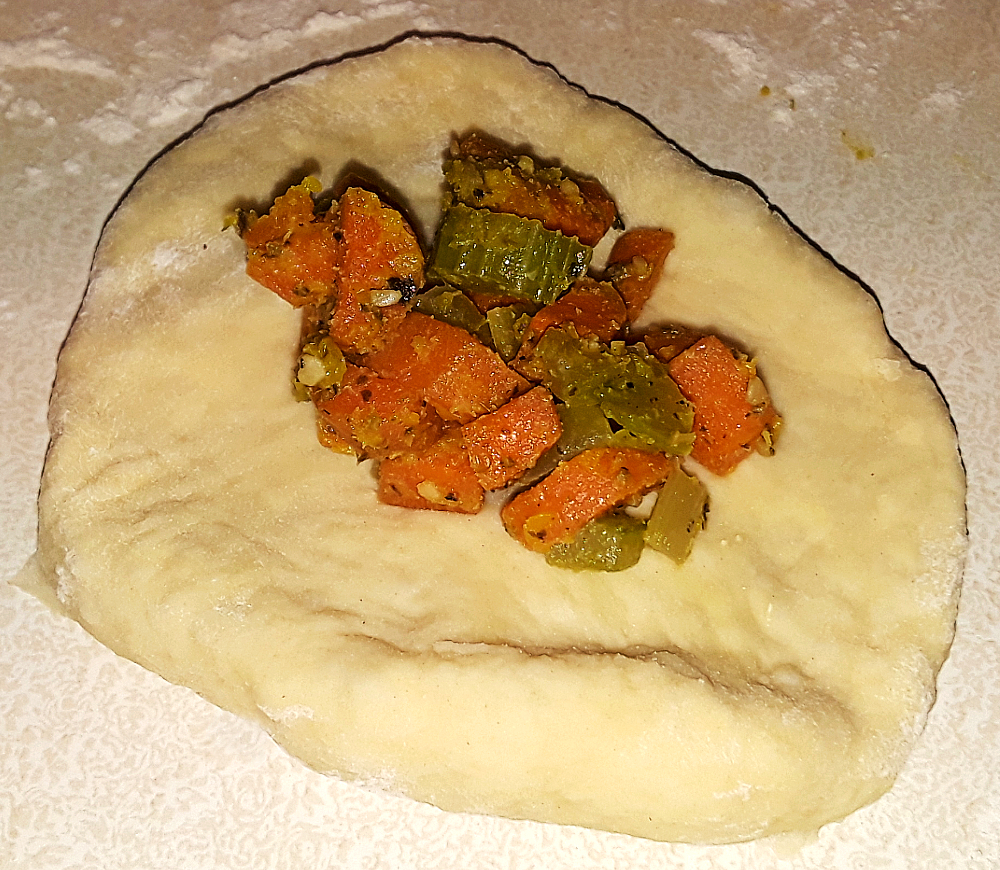
Step 3: After the dough has doubled in size, knead it for a second time. Weigh out three ounce portions and work with the hands to form a cohesive ball. Flatten out enough to be able to place a dollop of filling in the middle. It’s probably 1 ½ to 2 tablespoons worth.
Bring together the edges of the dough around the filling and pinch to seal. Cup the bun in the palms of the hands and shape into a smooth ball. Place on a sheet tray covered with parchment paper or silicone mat. After all the buns are formed, allow to rise for about an hour.
Step 4: Preheat the oven to 375°F. Bake for 18-20 minutes. Brush with one tablespoon of melted butter when finished baking.
Champagne Mustard
⅔ cup Coleman Dry Mustard Powder (2 oz. tin)
1 cup Sugar
3 Large Eggs
⅔ cup Champagne Vinegar
Mix mustard powder and sugar. Add eggs one at a time, beating well. Gradually add vinegar while continuing to mix well.
Microwave for two minutes, stir and microwave for another two minutes. Refrigerate. Good for up to six months.
Notes:
In her book History of Food, Maguelonne Toussaint-Samat tells a story about the origins of the French expression “he thinks himself the Pope’s mustard maker” which is applied to persons who are vain and self-important.
Pope Clement VII, a member of the Medici family, was passionately fond of mustard, and ate it at every meal. Naturally the Roman court made no haste to imitate the Pontiff, and mustard appeared at every banquet. People went to great pains to prepare mustard, add refinements of their own, and present the results to the Pope in person. The Pope would taste it, meditate gravely, and if he liked it would never refuse a favour asked by the happy man who had tickled his palate and stimulated his appetite. Thereafter the jealous would call one of these successful intriguers “the Pope’s mustard maker”, particularly if the person concerned seemed very vain of his new honours.
Another story goes that Pope John XXII had a nephew who was no good at anything, not even bright enough to qualify for a cardinal’s hat – which in those days meant you were very dim indeed. Casting around for some suitable office for the young man, therefore, the Pope anointed him mustard-maker. However, this anecdote seems rather contrived.
I found four softballs, a baseball and a whiffle ball on the same day Hank Aaron died. Coincidence? I think not.
It was not a coincidence because I was walking the dog around the outfield fences of a ball diamond on January 22, 2021 in the middle of winter in Iowa in order to avoid people not wearing masks during a pandemic.
My partner had tuberculosis, she has asthma, and the last time she had a chest cold she didn’t really get over it for about seven months. Covid-19 was not a joke to us. It wasn’t some kind of cultural marker to signify who’s tribe we belonged in. It was real and we weren’t messing around.
Right from the start, we took the attitude that ultimately this would be a temporary situation and that we were going to get through it. I kept thinking of the experiences of my parents growing up in the Great Depression. I thought of the people of London during the Blitz and kept the motto of “Keep Calm and Carry On” in the forefront of my mind the whole time.
I had once owned a retail natural foods store in a small town for seven years and knew a thing or two about inventory management. We stocked up. We planned ahead.
Flattening the curve and getting things back to as normal as they could be was always a possibility and for about three weeks everybody did a good job. Then Fox News cranked up their propaganda machine and they turned the pandemic into another culture war wedge issue.
I think the kinds of people who are used to getting their way by throwing their weight around thought they would be able to make everybody live in their chaos, just like they always do. Well, not in our house.
We were determined to ride this out and come through it successful.
Winter Landscape with Skaters and Bird Trap, Pieter Bruegel the Elder, 1565
During the winter, while the virus skyrocketed, and society fell apart, and the doomsday preppers lost their minds, and the movers-and-shakers couldn’t make the earth move like they thought they could, we stayed cozy and happy.
I found a complex of ball diamonds elevated on a rise that overlooked a park with a pond near a schoolyard. The dog and I usually had the place to ourselves. At home, we were inventing all kinds of little traditions that we looked forward to each week. All through December we made traditional Christmas goodies that were right out of Charles Dickens. I would bound through the snow with the dog each day with the sounds of The Wexford Carol going through my head. Despite the rest of the world, it was one of the happiest times of my life.
It occurred to me that my little scene was reminiscent of the painting, The Bird Trap, by Pieter Breugel and that the cautionary symbolism contained within it is as relevant now as when it was painted in 1565, when plagues were all too common in Europe.
Paintings of this period were often allegories, and in this painting the deeper meaning is that people are pilgrims making their way through life across a landscape dotted with dangers.
The thorny branches in the foreground reveal a bird trap with several unsuspecting birds milling about, oblivious to the danger they are walking into. Bird traps were used in literature of this time to symbolize the devil’s temptations destined for lost souls. Birds were traditional symbols of the soul.
Skating scenes in art often portray the uncertain (slippery) nature of existence. Birds and skaters are brought together here to represent both obliviousness to danger and vulnerability.
Since the Middle Ages, our mastery of technology has advanced to the point that vaccines for Coronavirus were developed in record time; the advancement of human nature, however, has not fared so well.
The Great Men of History were usually only great at exploiting people and getting them killed. They thrived because they made everyone else live in the chaos they created.
It’s only been in the last 200 years or so that we’ve attempted to have, imperfect as it is, a representative democracy governed by the rule of law.
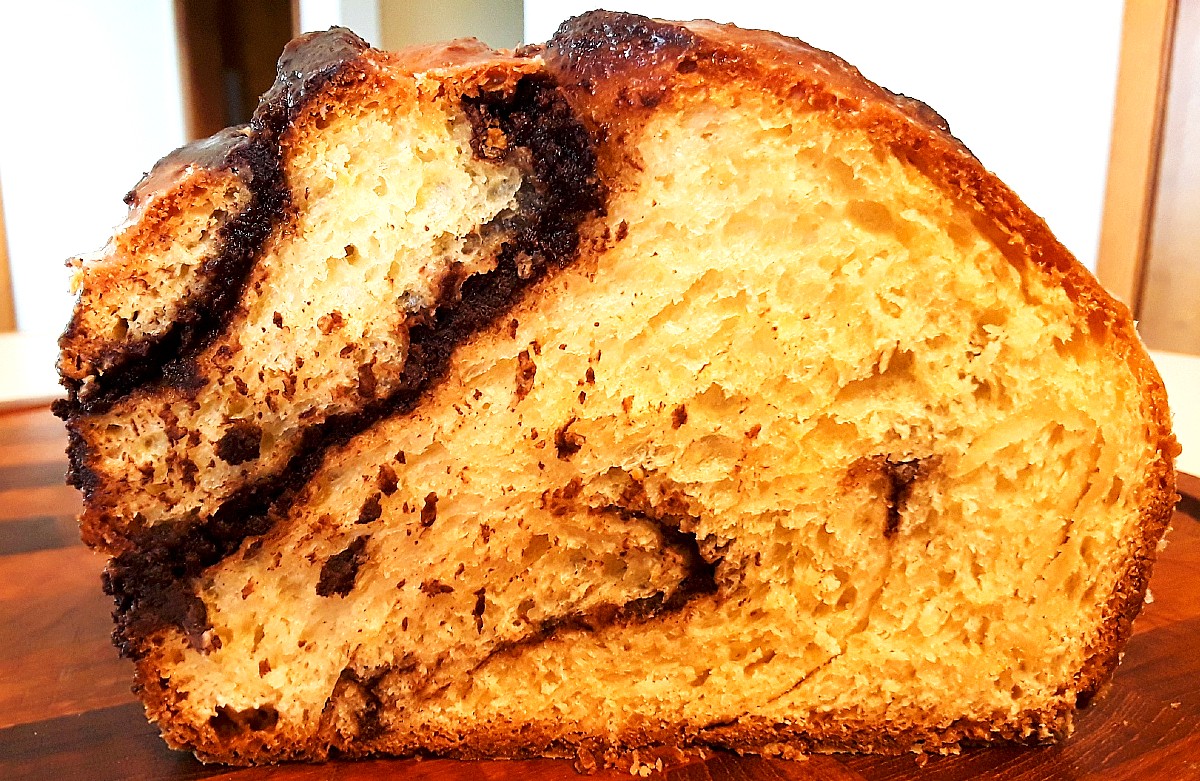
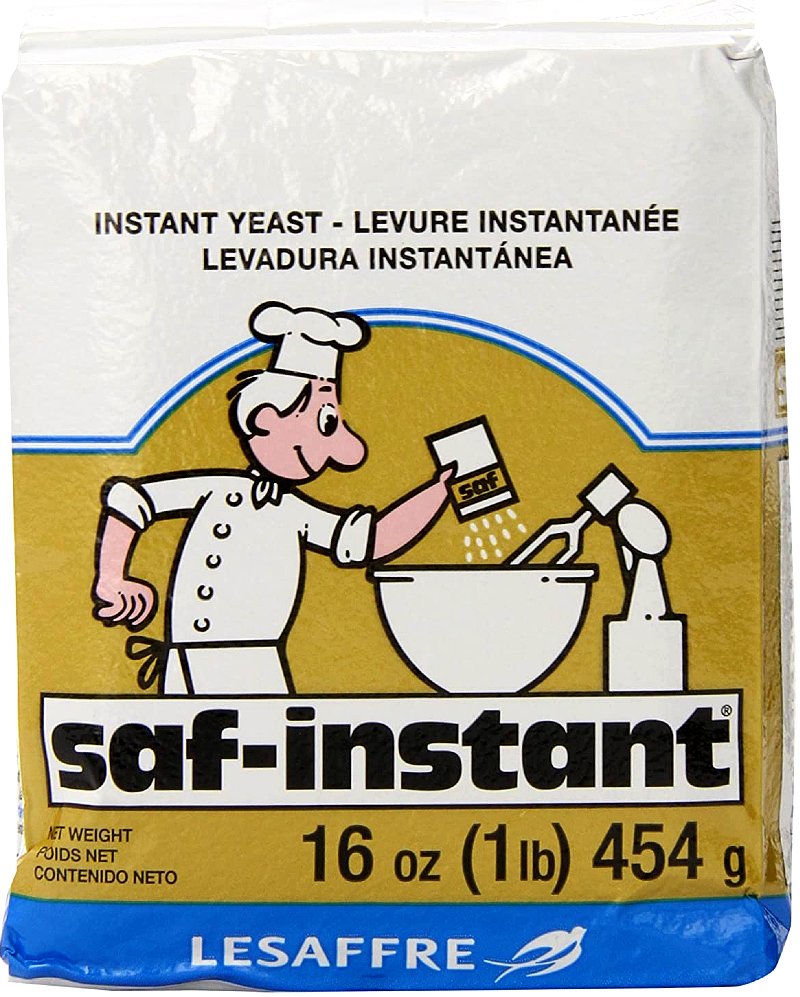
Many thanks to our friend, Eileen, who did the heavy lifting by discovering what did NOT work when it comes to making babka. She was also generous enough to go halfsies on the truly magical SAF Gold Instant Yeast. It does wonders on doughs dense with sugar and butter.
Saf-Instant® Gold Yeast
Dough Ingredients:
270 grams (2 ¼ cups) Bread Flour
50 grams (¼ cup) Sugar
2 tsp. SAF Gold Instant Yeast ***
½ tsp. Salt
Grated zest of half-an-orange
1 tsp. Vanilla
2 Large Eggs
1 Egg Yolk (reserve the egg white for the filling)
4 oz. Milk (or 2 tbsp. Milk Powder and 4 oz. Water)
8 tbsp. (1 stick) Butter, softened
*** Or use 4 tsp. (2 packets) Active Dry Yeast
Filling Ingredients:
2 oz. Bittersweet Chocolate
4 tbsp. Unsalted Butter
3 tbsp. Unsweetened Cocoa Powder
¼ cup Powdered Sugar
½ tsp. Cinnamon
1 large Egg White
1 Large Egg plus a little Milk for Egg Wash
Glaze Ingredients:
3 tbsp. Sugar
1 ½ tbsp. Water
Directions:
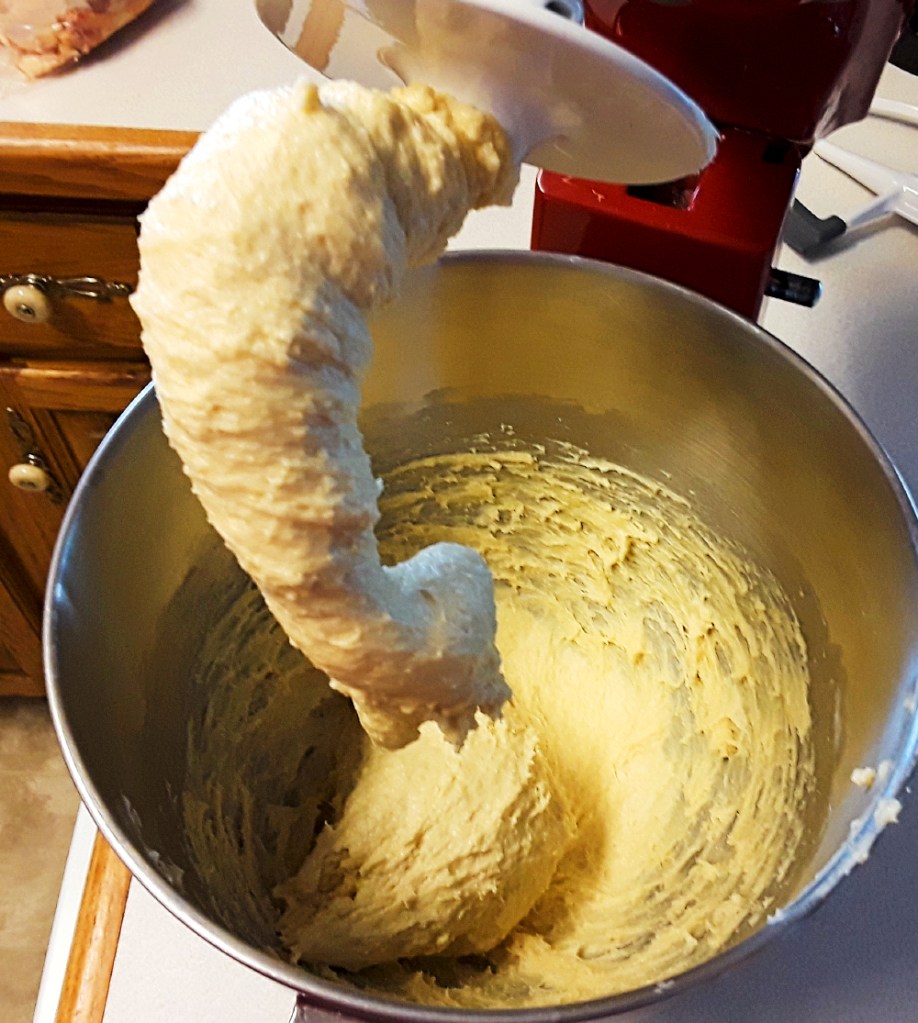
Step 1: For the dough, combine the flour, sugar, yeast, salt and zest. Add vanilla extract, two eggs, the extra egg yolk, the milk and mix. Add tablespoons of softened butter one-at-a-time while mixing to form a dough. Knead for 10 minutes.
Set aside to rise in a lightly oiled bowl until doubled in size. It will be a soft dough, but not sticky because of all the butter.
It’s a good idea to let the dough prove in an oven that has been slightly heated in order to help the yeast along. I like to turn the oven on for 90 seconds and then turn it off. It’s just enough warmth to help the yeast do its job in such a dense dough.
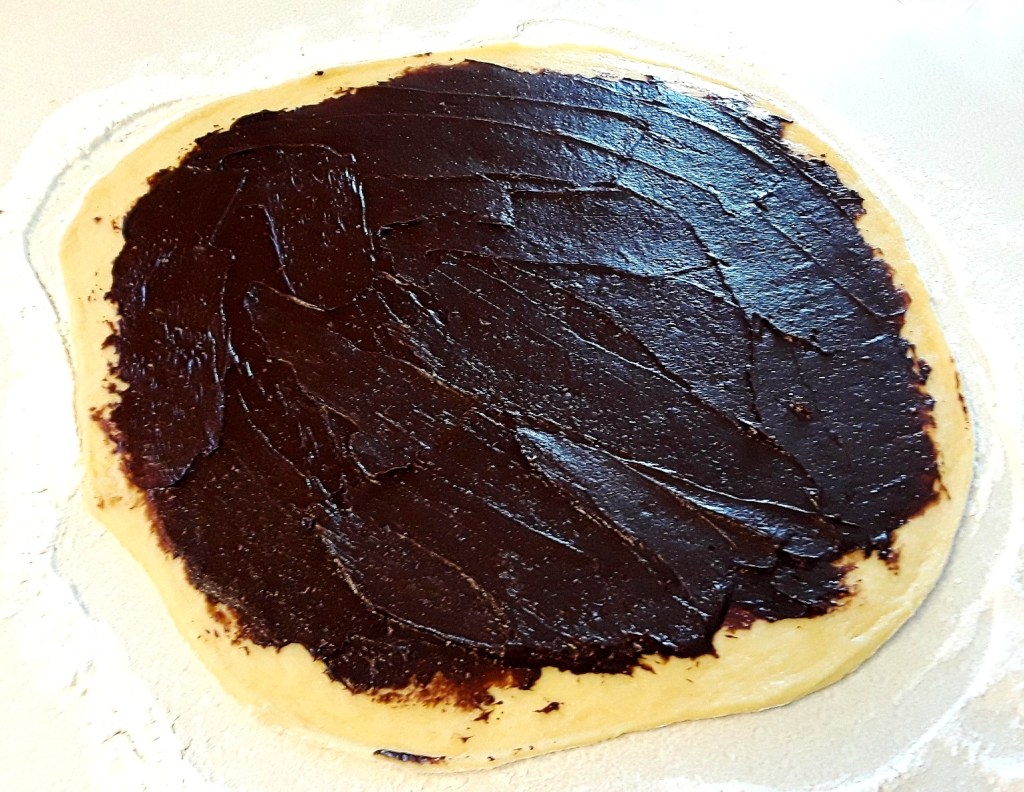
Step 2: For the filling, melt 4 tbsp. butter and 2 oz. chocolate together until smooth, either in a microwave or double boiler. Stir in ¼ cup powdered sugar, 3 tbsp. cocoa powder and ½ tsp. cinnamon. Stir to form a spreadable paste and set aside to cool.
Once the filling has cooled, whisk in the egg white.
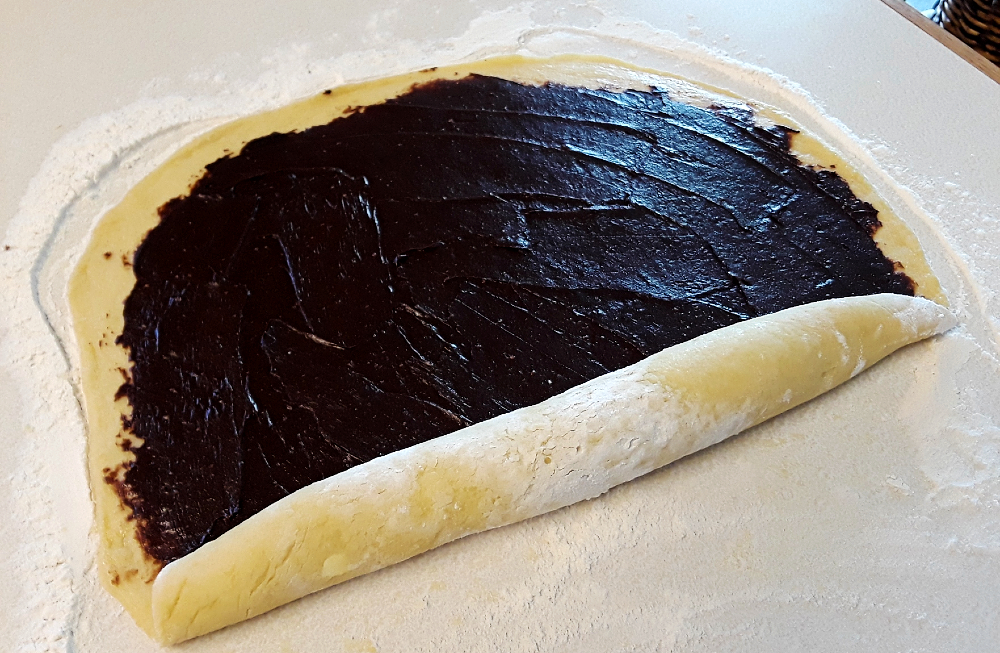
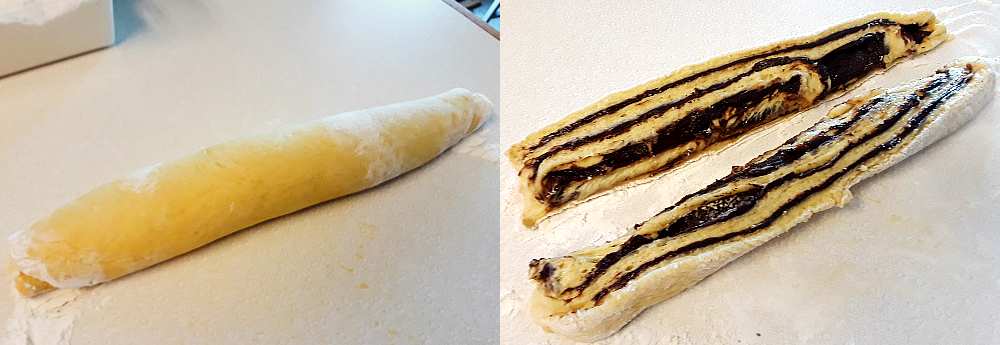
Step 3: Knead the risen dough enough for it to come together to form a ball. Generously dust a countertop and the dough with flour and use a rolling pin to roll the dough out to an approximately 12 inch area. Spread the filling mixture working from the outside edge to the center. Roll lengthwise from one end to the other.
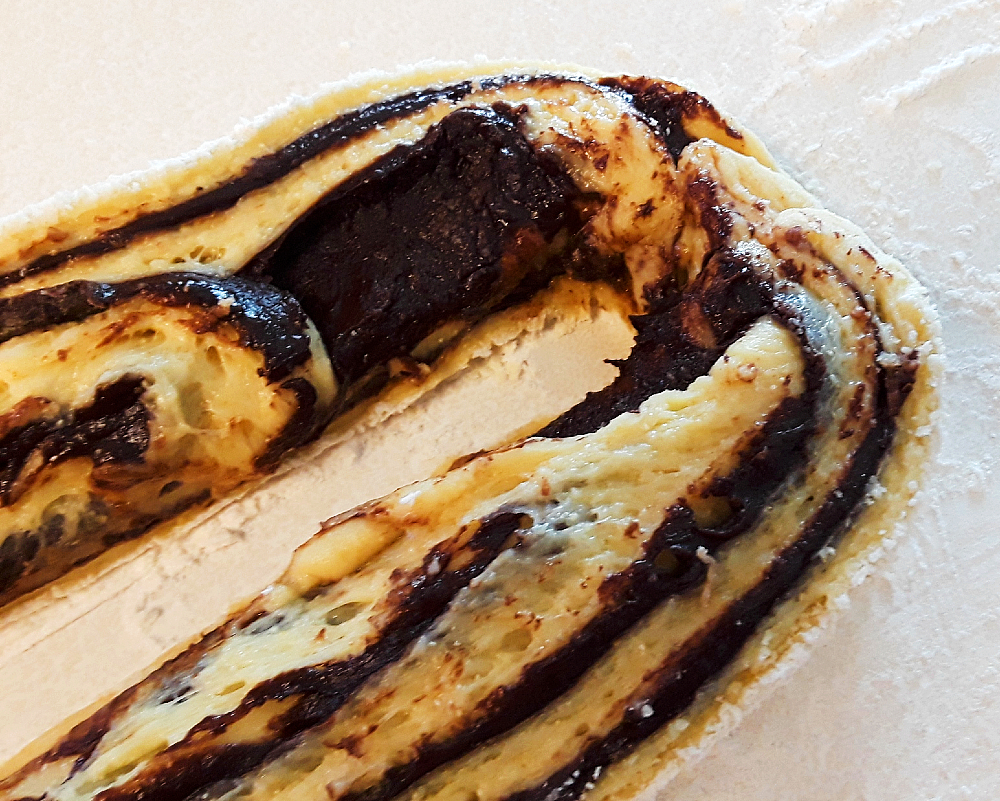
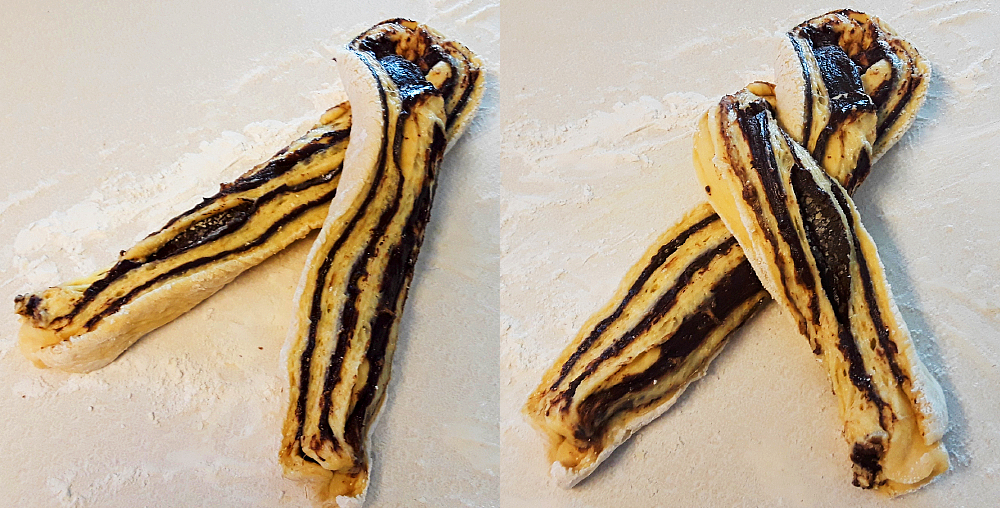
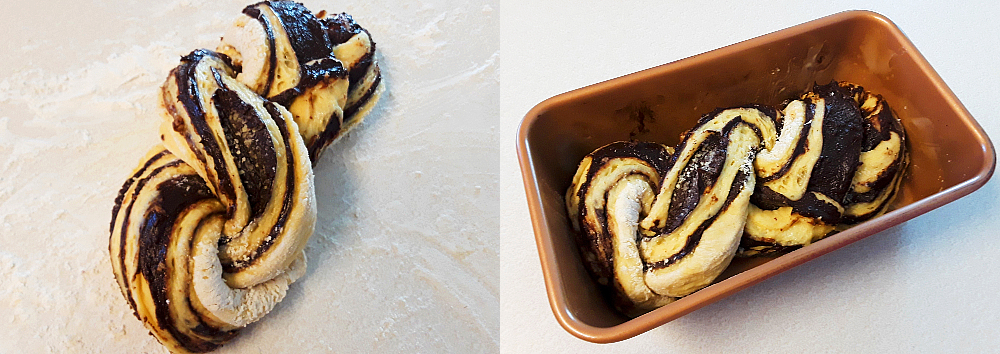
Step 4: Slice the roll lengthwise down the center to form two strands. Join one pair of the ends and create a braid by overlapping one strand over the other. Join the remaining ends of the two strands and tuck both ends of the braid under the loaf. Lightly oil or spray a loaf pan and place the braided loaf in the pan. Allow to rise for about an hour.
Step 5: Preheat oven to 350°F. Brush the loaf with an egg wash made by whisking together an egg and a little milk. Bake for 45 minutes.
Step 6: Dissolve 3 tbsp. sugar in 1 ½ tbsp. water. Brush the syrup on the loaf when finished baking, but leave the loaf in the pan until it has cooled about half-way. It will allow the loaf to set and hold together.
Notes:
The Saf-Instant® Gold yeast performs well in doughs that have sugar levels of 10-30%. It makes a huge difference in the amount of rising time. You may need to purchase a pound of it online, but it freezes well and is well worth it.
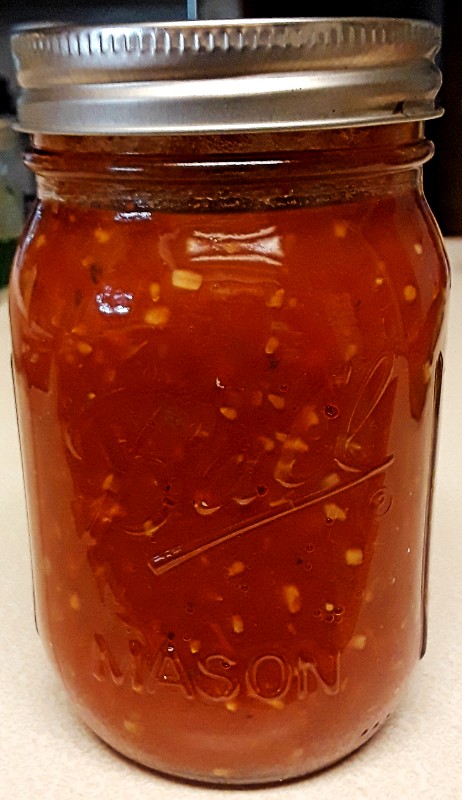
Over the years, I’ve come up with a very good recipe for canning our own pasta sauce with tomatoes grown in our garden. I’ve placed a great deal of emphasis on being able to produce a large batch easily with a minimum of fussiness. This recipe makes a versatile sauce that tastes great and makes the production process as smooth as possible.
There’s no messing around with removing the skins and seeds from tomatoes like many traditional recipes call for. We eat the skins and seeds all the time so why do they need to be removed for sauce?
Traditionally, homemade sauce calls for hours of simmering in order to reduce a batch down to the desired consistency, but that, inevitably, leaves your cooking pot with scorching on the bottom that is a real headache to clean up. I’ve found that thickening up a sauce using canned tomato paste is a lot easier than reducing down by simmering.
I purchase minced garlic to make life easier and a food processor makes short work out of the tomatoes, onions and pepperoncini.
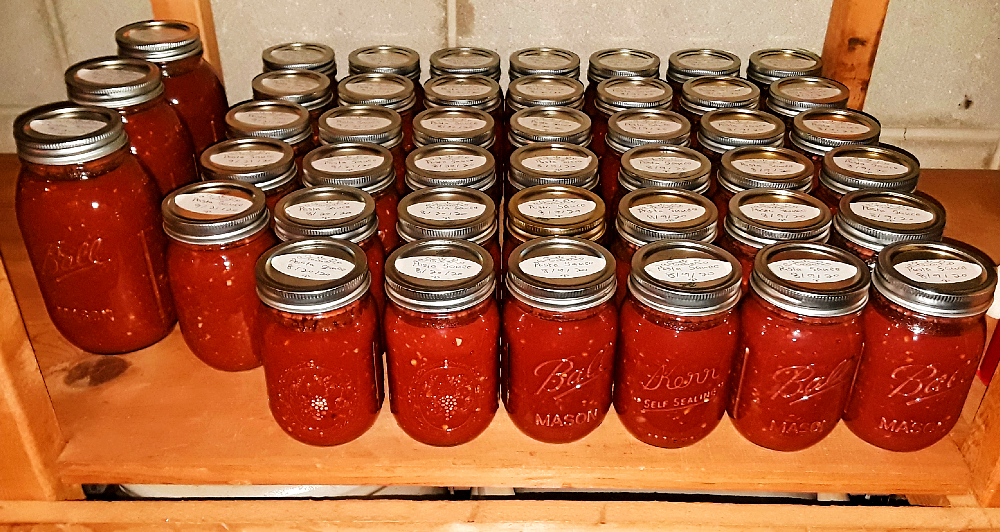
Processing a season’s worth of tomatoes is easier if you do smaller batches more frequently throughout the summer. As clusters of tomatoes ripen, puree and freeze the pulp until you have one or two gallons worth. Canning becomes a more manageable job that can be done in a few hours on a weekend afternoon. It’s more pleasant than doing an all-day marathon.
This is a versatile base sauce that is good on its own, or you can add herbs and spices to give it a new flair when the occasion calls for throughout the year.
A Season of Sauce
Sauce Ingredients:
1 Gallon Roma Tomatoes, puréed
18 oz. Tomato Paste ***
3 cups Red Onions, puréed
½ cup Minced Garlic
1 cup Pepperoncini, puréed
1 cup Roasted Red Peppers, puréed
2 tbsp. Kosher Sea Salt or Redmond Real Salt
1 tbsp. Brown Sugar
***The tomato paste is variable because the water content of different types of tomato can vary so much. Add tomato paste until you have the desired thickness of sauce.
Canning Ingredients:
Add to jars per pint before filling up with sauce
¼ tsp. Citric Acid
½ tsp. Kosher Salt or Redmond Real Salt
Directions:
Step 1: Use a food processor to purée tomatoes, onions and pepperoncini. Add the rest of the sauce ingredients and bring up to a simmer. Add more tomato paste as may be necessary in order to achieve the desired consistency.
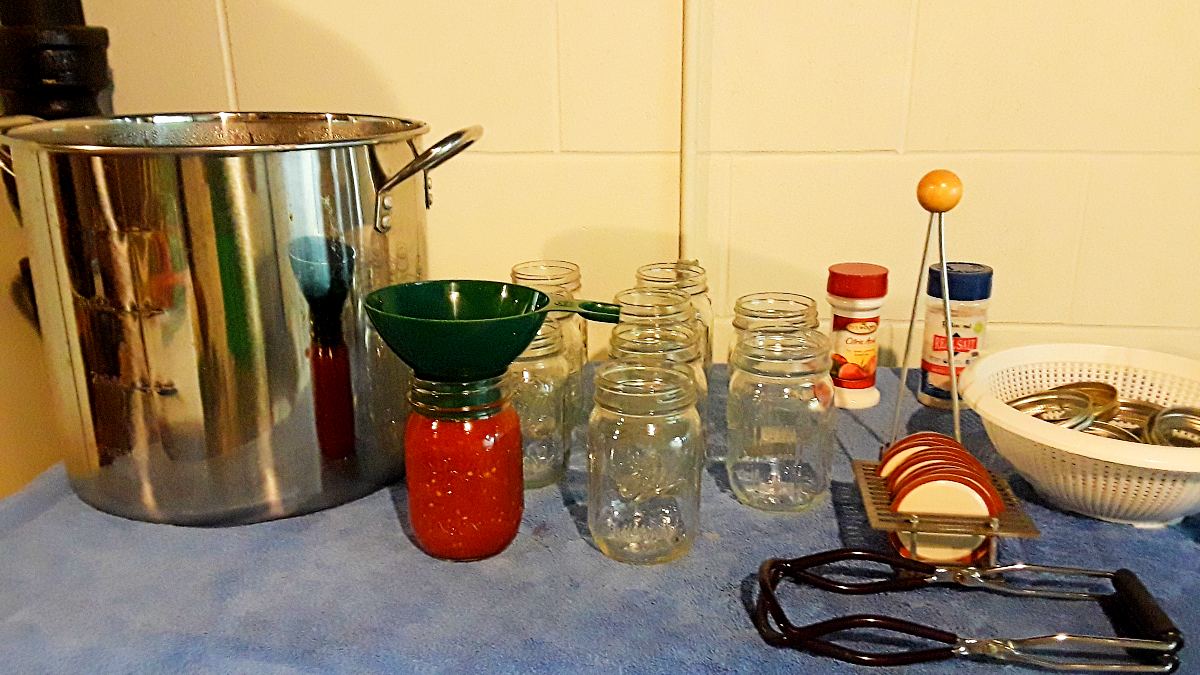
Step 2: Sterilize jars and canning rings in the water bath canner by bringing them up to a boil.
Step 3: Drain jars and add ¼ tsp. citric acid and ½ tsp. sea salt per pint to each jar. This is very important for food safety purposes.
Fill the jars with sauce up to the neck of the jar leaving one-inch headspace. Run a paper towel around the rim of the jars so they remain clean and can form a seal with the lids.
Dunk brand new canning lids in simmering water for 20-30 seconds and place them securely on the jars and screw on the bands. Return them to the water bath canner with the jars completely covered and bring to a rolling boil. Process at a full boil for 40 minutes.
If using a pressure canner, fill the canner to the manufacturer’s recommended water level and process at 11 lbs. pressure, pints for 20 minutes and quarts for 25 minutes. Allow the canner to depressurize naturally. The time to depressurize is factored into the time needed for food safety.
Remove and allow to cool. Check the seals when cooled. I like to remove the rings and wash the jars and rings and towel dry. It just looks nicer.
It’s a good idea to consult the USDA Complete Guide to Home Canning for all the science of food safety. One of the reasons this recipe can be done with the water bath canning method is because it does not contain meat, mushrooms or low-acid vegetables like peppers and celery. If it did, that would require using a pressure canner to assure food safety.
Notes:
Roma tomatoes are a preferred variety because they have a lot of pulp instead of water and therefore make a thicker sauce. Of course, as home gardeners we raise a variety and they all go in the sauce at some point if we have an excess rather than see them go to waste.
This last year, in 2020, we had our most successful tomato crop ever. Besides Roma and Cherry tomatoes, the Brandywine was a hit, but the real star was one called Fourth of July.
True to its name, we had a tomato ready for eating exactly on the Fourth of July. And it kept on producing steadily and abundantly until almost October. It produces a medium-sized fruit that is nicely balanced between meaty and juicy.
Roma tomatoes produce a gargantuan amount of fruit that all seem to ripen at the same time. We will definitely be featuring the Fourth of July more from now on.
In July of 2020, I self-isolated for 14 days after someone in the office tested positive for Covid-19. During that time I made three 10″ x 15″ pans of cinnamon rolls and ate them all myself.
The first time I ever tried making cinnamon rolls I followed a copy cat recipe for Cinnabon™ which used a huge amount of butter and heavy cream. This time, since I was going to be binge-eating, I decided to “healthy” them up.
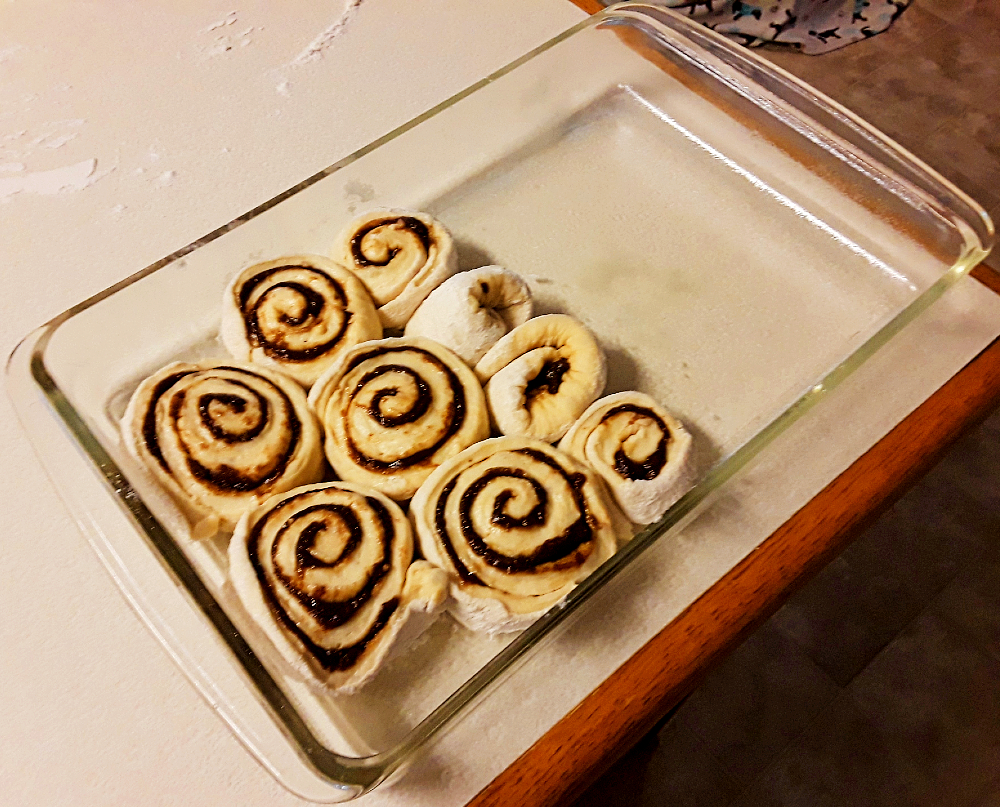
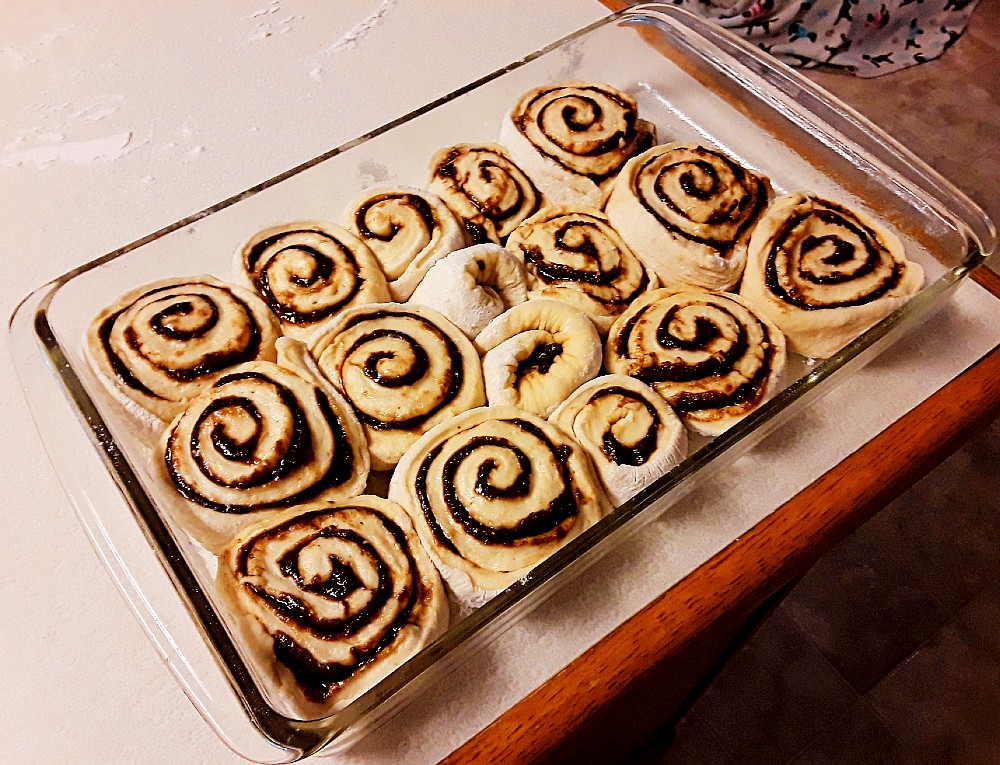
I substituted canola oil for butter and didn’t miss it a bit; completely ditched the heavy cream too. The great thing about rolls like this is, if you have the right amount of dough, you don’t have to be particularly fussy about how you arrange them in the pan. They’re going to expand to fill up the pan without slopping out and burning your oven.
Dough Ingredients:
600 grams (5 cups) Flour
66 grams (⅓ cup) Sugar
28 grams (4 tbsp.) Dry Milk Powder
2 tsp. Active Dry Yeast
2 tsp. Salt
1 egg
2 tbsp. Canola Oil
330 grams (1½ cups) Water
Filling:
¼ cup Canola Oil
1 cup Brown Sugar
2 tbsp. Cinnamon
1 tbsp. Vanilla Extract
Frosting:
1 ½ cups Powdered Sugar
1 ½ tbsp. Unsalted Butter, melted
1 ½ tsp. Vanilla Extract
2 – 4 tbsp. Milk
Mix first three ingredients. Add milk a tablespoon at a time until desired thickness.
Directions:
Step 1: Combine the dry ingredients for the dough. Add egg, canola oil and water and mix well. Knead for 10 minutes and set aside in an oiled bowl. Cover and let rise until doubled in size, usually about an hour.
Step 2: Mix the ingredients for the filling together to form a paste.
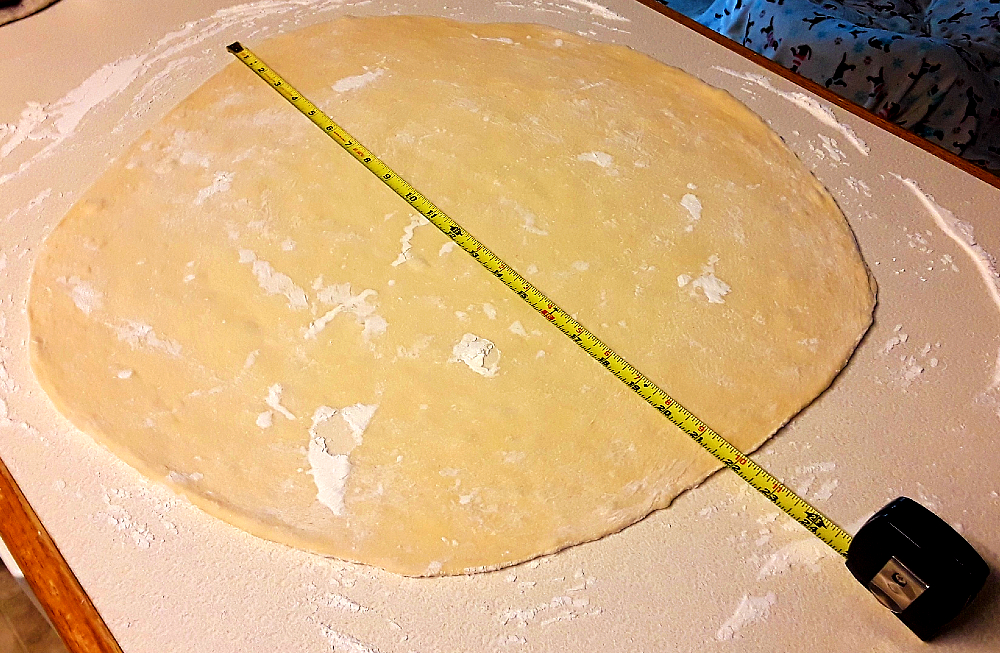
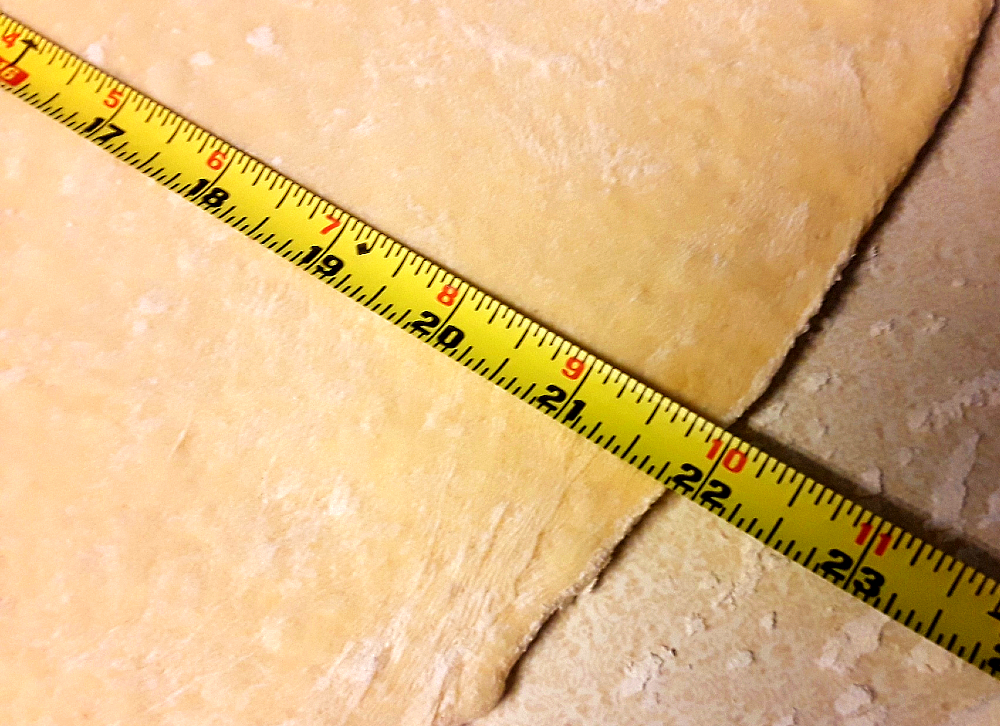
Step 3: Knead the risen dough to form a smooth ball. Let the dough relax for about five minutes. Dust a countertop with plenty of flour. Use a rolling pin to roll out the dough until it is approximately ¼ inch thick, dusting liberally with flour to prevent sticking.
If you’re talented enough to roll it out in a rectangle shape, good for you. I’m not. Don’t let it stop you. Cinnamon rolls are not precision baking.
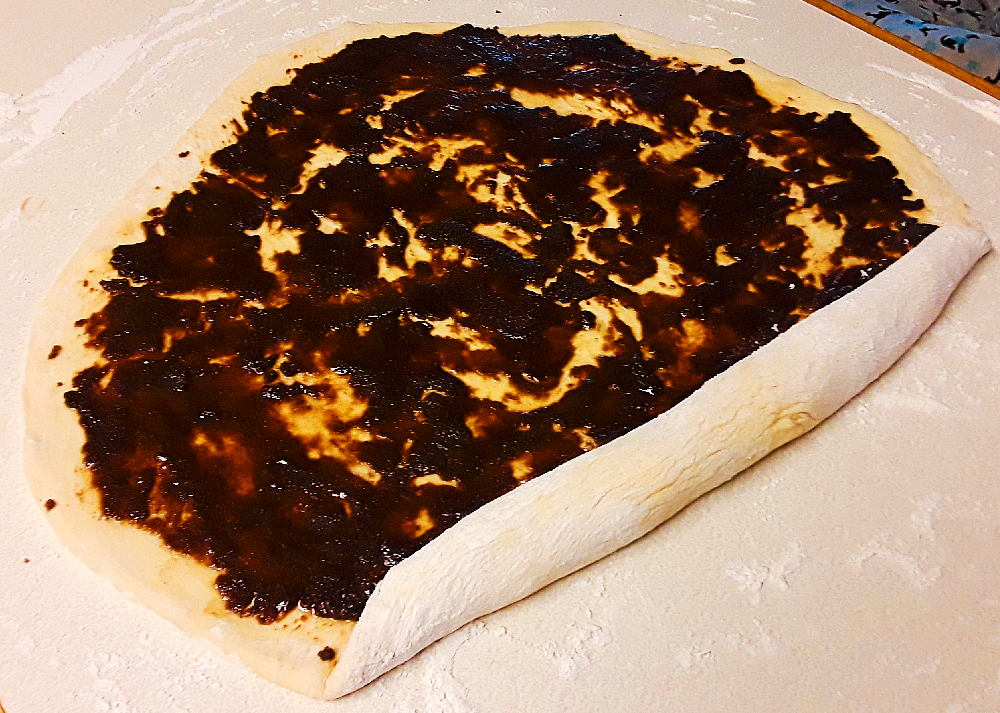
Step 4: Spread the filling around the outer edge of the dough with a spatula. Continue spreading the rest of the filling from the outside in to the middle.
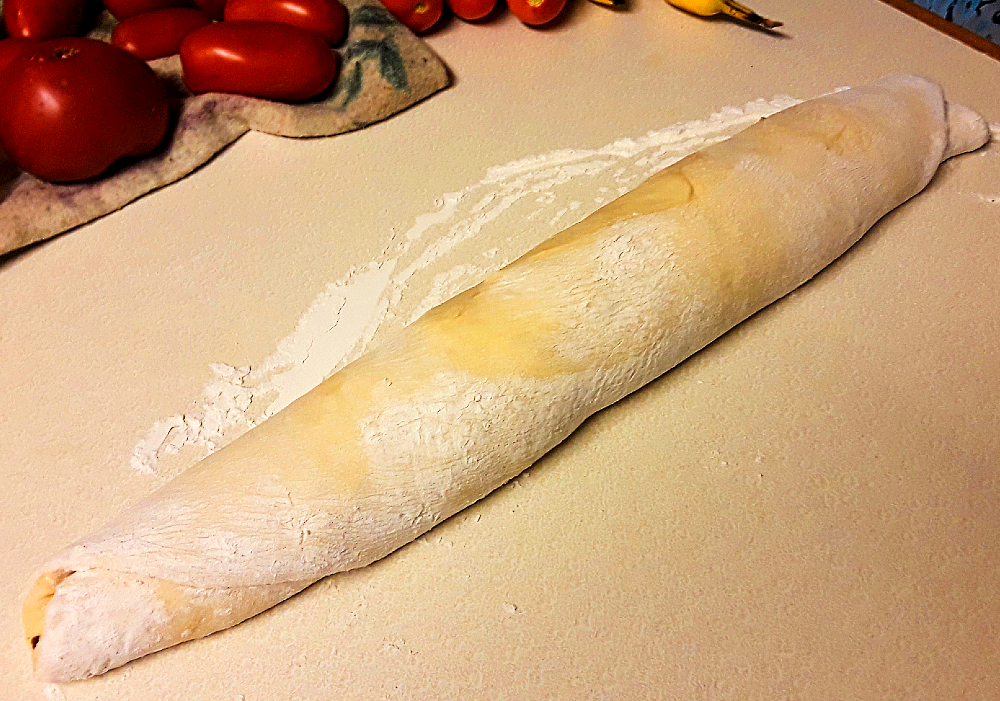
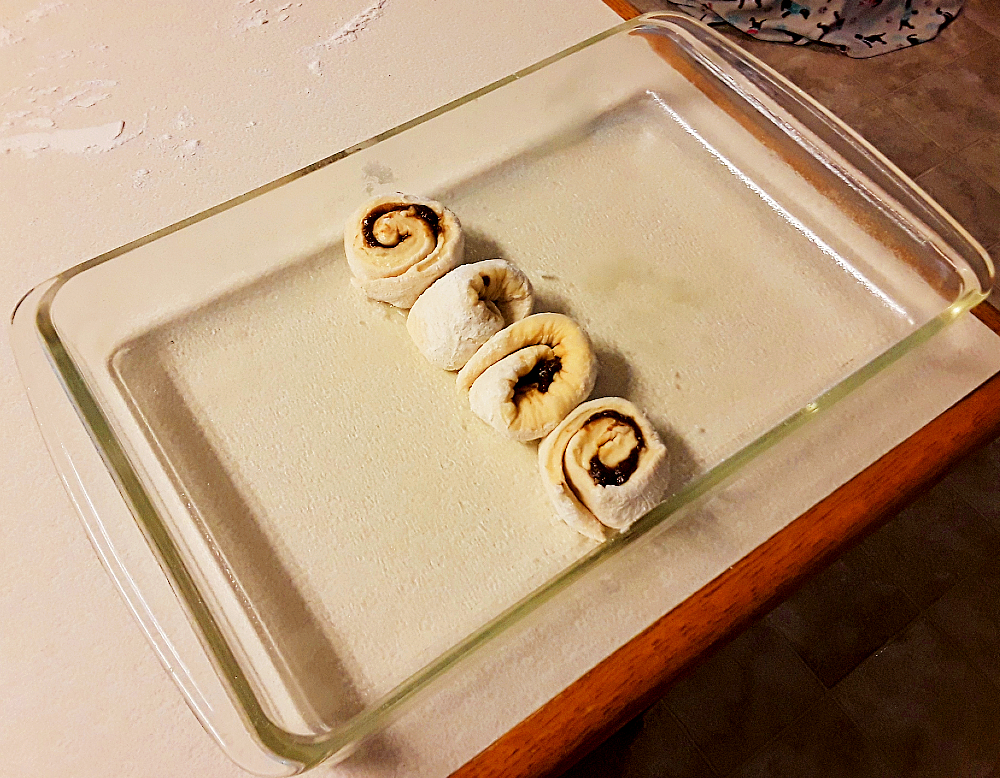
Step 5: Roll lengthwise from one end to the other. Slice into approximately two inch rounds and arrange in an oiled 13″ x 9″ pan. Place the thinner outer slices in the middle of the pan and fill up the rest of the pan with the fatter rolls from the inner part of the cylinder. The rolls will bake better that way. Let rise for about 30 minutes.
Step 6: Place the baking dish on a sheet tray and bake in an oven that has been preheated to 375°F. for 25-28 minutes.
Step 7: Spread on frosting.
Notes:
During my self-isolation period there was a commercial on TV for the Rachel Ray Show that had Guy Fieri as her guest. It showed him making a ginormous greasy burger with butter dripping off the bun. He was topping it with potato chips. I thought it looked disgusting.
But I know that’s not what my reaction is supposed to be. I’m supposed to think, “Whoa, that’s so cool ’cause it’s maxed-out extreme!”
I’m supposed to be so numbed from over-stimulation that only an ever-increasing amount of voltage will jolt me into feeling anything.
In other words, it can’t just be a good cinnamon roll, it has to be the gooey-oogliest cinnamon roll anyone could ever conceive of in order to be worth eating.
Well, whatever. I ate three pans of these in a little over a week. That would have cost me, like, $135 plus tax in Cinnabon™ land. And I didn’t have to leave home.


















 Schmecken!